






Edwardian Fish Set
These edwardian fish set items bring distinct dining heritage to the table, combining period craftsmanship with practical elegance for the modern home.
Edwardian Fish Set
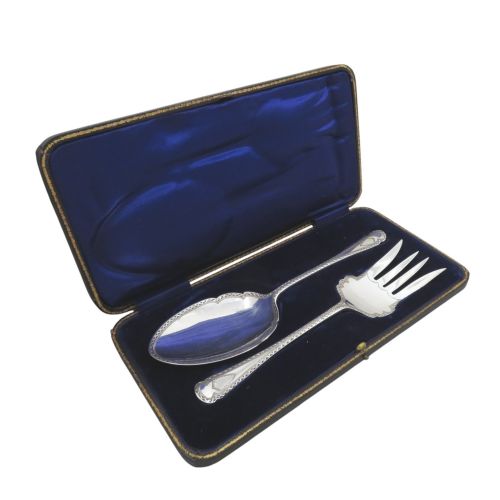
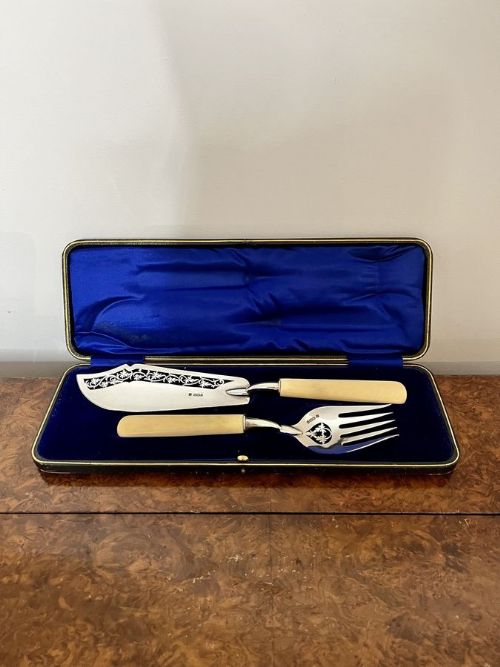
When you search for an edwardian fish set, you encounter specialised dining implements designed for the formal courses of late nineteenth and early twentieth century meals. The evidence shows these pieces span Edwardian and Victorian periods, taking forms such as servers, cutlery sets, and serving forks.
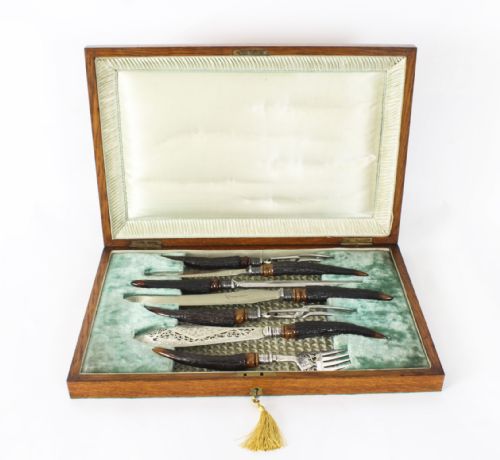
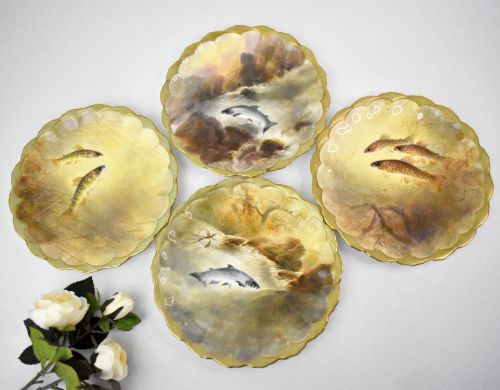
You are most likely to meet silver plated or sterling silver pieces housed in fitted cases, alongside related cabinet plates and framed prints from the era. The selection draws on materials like mother of pearl, stag antler, and wood, reflecting the diverse manufacturing practices of 1890 through 1910.
Makers such as Waring & Gillows and artists like Joseph Birbeck Senior appear in the wider inventory, linking utilitarian dining gear with named studio production. These items bridge domestic utility and decorative display, offering tangible connections to historical dining customs.
How they were made
Metalwork forms the core of these items, utilising silver plate and sterling silver shaped into servers and cutlery sets. Artisans combined these metallic elements with organic handles carved from mother of pearl or stag antler.
Presentation cases demonstrate parallel craftsmanship, constructed from wood and lined with velvet or finished in leatherette. Surface decoration relies on traditional embossing and hand painting, as seen on the cabinet plates.
Edwardian Fish Set Retail Price Guide 2026
Typical asking prices for edwardian fish set among the pieces listed under this phrase on Sellingantiques today, from the lower quarter to the upper quarter. They describe what is for sale here now, not the wider market.
Materials represented across the inventory include silver, silver plate, mother of pearl, stag antler, wood, and velvet.
What varies in quality
The standard of an edwardian fish set depends upon the integrity of the materials and the crispness of the metalwork or painted detail. Solid sterling silver commands greater regard than silver plate, while natural handle materials like stag antler and mother of pearl show varying depth of grain and carving proficiency.
The presence of original fitted cases in wood and velvet elevates a set, protecting the contents and preserving the provenance. Maker attribution, such as the output associated with Waring & Gillows, also distinguishes standard production from notable workshop output.
Waring & Gillows·Joseph Birbeck Senior
The Edwardian Fish Set Glossary
- Sterling Silver
- A silver alloy containing 92.5 percent pure silver by mass, valued for its durability and traditional use in high quality dining implements.
- Silver Plate
- A base metal coated with a layer of fine silver, providing the appearance of solid silver at a lower production cost.
- Mother of Pearl
- The iridescent internal layer of certain mollusc shells, utilised historically for decorative cutlery handles.
- Stag Antler
- The shed horn of a deer, shaped and textured to form tactile, rustic handles for serving sets and carving cutlery.
- Cabinet Plate
- A decorative ceramic plate intended for display in a cabinet or on a wall rather than for daily dining use.
Edwardian Fish Set: Frequently Asked Questions
How were fish sets used?
These sets served multi-course dining occasions where specific utensils prevented the transfer of flavours and managed delicate fish bones properly. Servers assisted hosts in portioning large fish at the table.
Individual cutlery pieces allowed diners to handle delicate fish flesh cleanly. The inclusion of matching servers ensured a unified presentation across the dining table.
How do I care for silver fish sets?
Silver and silver plate require gentle cleaning using appropriate metal polishes to maintain their lustre without abrading the surface. Hand washing in warm, soapy water prevents damage to organic handle materials.
Storing pieces in their original fitted wooden cases lined with velvet protects them from tarnish and physical impact. Avoiding harsh chemical detergents preserves both the metal and the natural antler or mother of pearl.
How can I tell Edwardian from Victorian pieces?
Edwardian pieces generally exhibit lighter, more refined decorative motifs reflecting the aesthetic tastes following the turn of the twentieth century. Victorian items tend toward heavier ornamentation, deeper embossing, and robust construction typical of the nineteenth century.
Examining hallmarks, case styles, and associated maker documentation helps establish precise chronological placement. The listings demonstrate this transition through pieces dated from the 1890s through 1910.