


Edwardian Equestrian Oil Painting
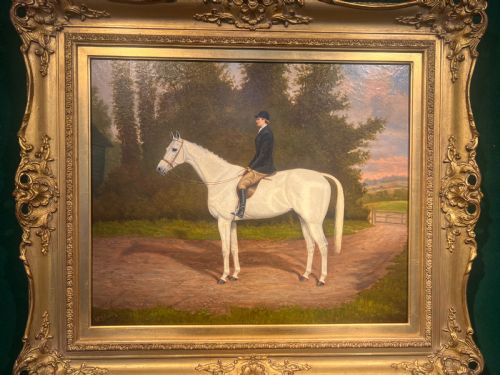
When you search for an edwardian equestrian oil painting, you are looking at canvases capturing horses, hounds and coaching scenes in oil paint.
Edwardian Equestrian Oil Painting
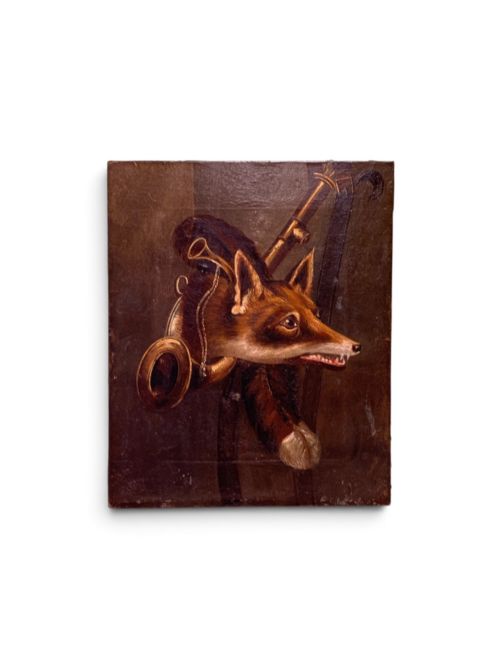
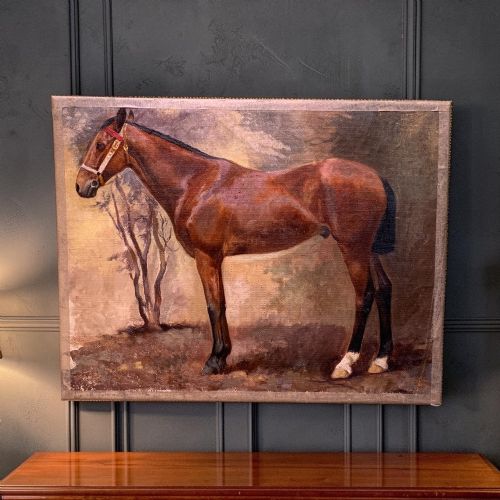
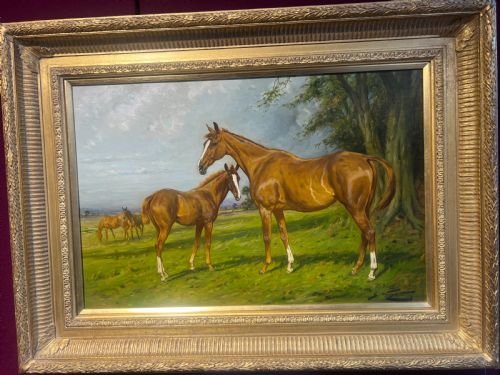
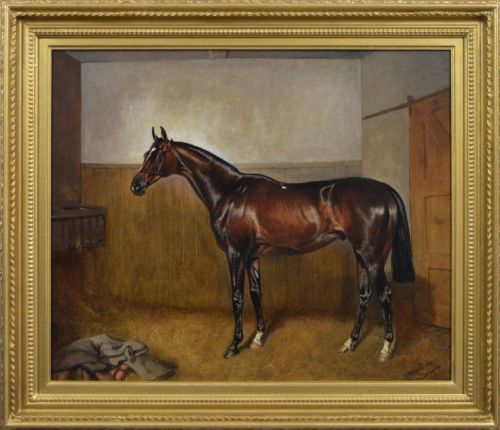
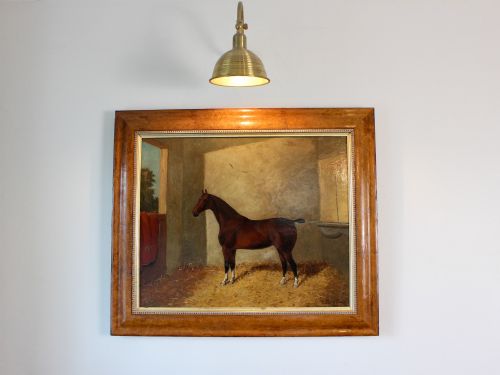
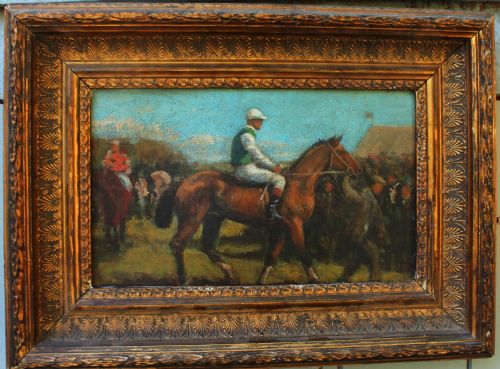
An edwardian equestrian oil painting brings together the horse portrait, the racing paddock and the coaching scene on canvas. These works span the late nineteenth century into the early twentieth century, showing thoroughbreds, hunters and heavy horses in detailed landscapes or stables.
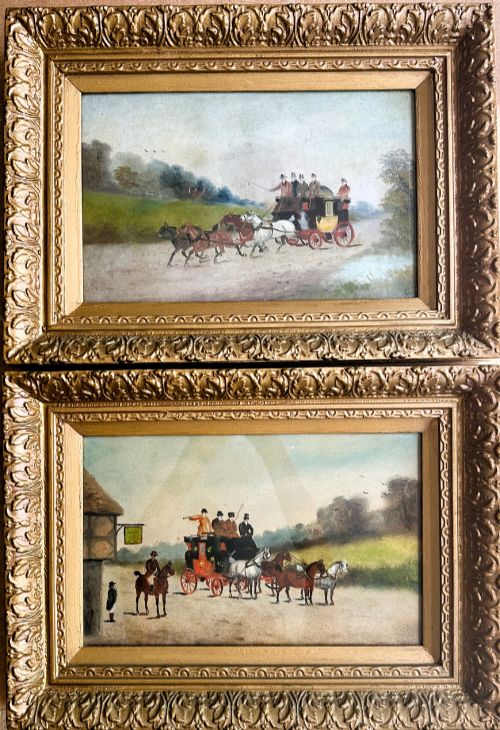
The versions you meet most often on this page include individual horse portraits, pairs of coaching oils and hunting scenes with hounds. Artists of the period recorded named racehorses, prize champions and rural countryside moments with close observation.
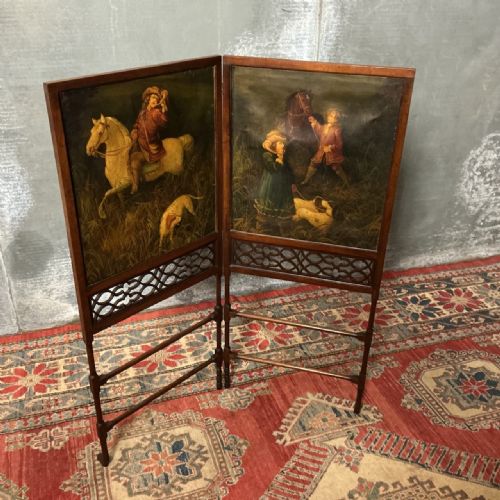
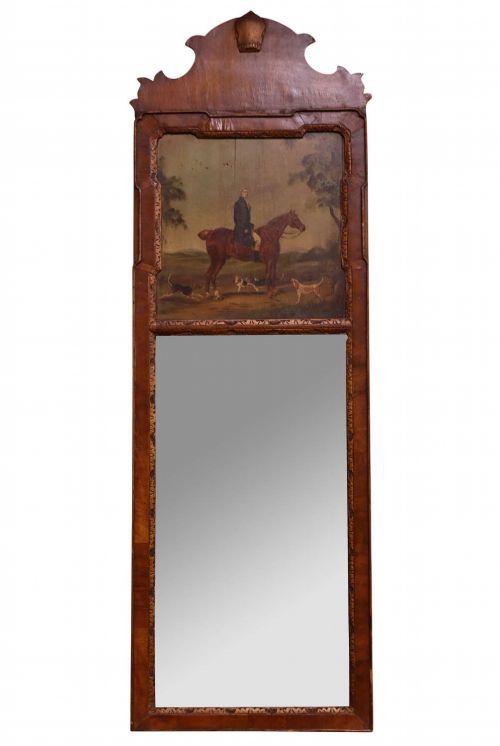
Beyond standard canvas paintings, the form extends to decorative objects where oil paintings are set into fire screens, wall mirrors and pier glass frames. These pieces combine fine art with functional woodwork from the period.
How They Were Made
The primary technique relies on oil paint applied to canvas, capturing the sheen of a horse's coat and the textures of landscape and moorland backgrounds. Some works utilise oil on board or canvas stretched over wood frames.
Frames play a structural and aesthetic role, frequently formed of carved wood, gilded wood or giltwood that frames the canvas. Wood also forms the physical support for fire screens and wall mirrors housing the paintings.
Several canvases record the exact names of nineteenth-century racehorses and their jockeys for posterity.
What Varies in Quality
Anatomy and movement separate the accomplished works from standard decorative pieces, with master painters rendering the muscle structure and posture of a horse with absolute precision. The handling of light on the coat and the integration of the animal into its background dictate the standing of the work.
The framing and housing elevate certain pieces above simple canvases, particularly when an oil painting is set into a period mahogany screen, walnut pier glass or a gilded wood frame.
George Wright·William Albert Clarke·John Alfred Wheeler·Philip Rideout·Alfred Munnings·John Sanderson Wells·Edith Alice Simkins·Valentine Thomas Garland·Alexander Maclean·Alfred Grenfell Haigh·John Charles Tunnard·Alfred Duke·John Charles Maggs·Vernon Stokes·Isaac Cullin·Thomas Blinks·Sir Edwin Henry Landseer·Walter Herbert Wheeler·Godfrey Douglas Giles
The Edwardian Equestrian Oil Painting Glossary
- Equestrian
- Pertaining to horse riding, horse racing, or the depiction of horses in art. This forms the central subject matter of the works on this page.
- Giltwood
- Wood that has been covered with a thin layer of gold leaf or gilt. This material is common in the frames housing these paintings.
- Pier Glass
- A large tall mirror designed to be hung on the pier between windows. In some instances, these incorporate an oil painting into the woodwork.
- Coaching
- A scene depicting horse-drawn mail coaches, stagecoaches or private carriages on roads. These compositions often include horses, drivers and hounds.
Edwardian Equestrian Oil Painting: Frequently Asked Questions
What subjects appear in these paintings?
These works feature named racehorses, hunters, hackney champions and working horses alongside stable hands and jockeys. Many compositions also capture hunting hounds, coaching scenes and rural landscapes.
Subjects range from formal portraits of thoroughbreds to action-filled racing paddocks and snow-covered coaching routes.
How do I identify the period?
The period is indicated by the painting style, clothing of figures, and framing techniques characteristic of the late nineteenth and early twentieth centuries. Signatures and dates on the canvas often provide direct evidence of the exact year of creation.
Stylistic markers align closely with Edwardian and Victorian sporting art traditions.
Where were these paintings displayed?
Original owners typically hung these works in country houses, estate reception rooms and stables. Some pieces were integrated directly into domestic furnishings such as fire screens and wall mirrors.
They served as celebrations of prized livestock, racing victories and rural sporting life.
How should I care for an oil on canvas?
Keep paintings away from direct sunlight and fluctuating humidity to protect the oil paint and canvas substrate. Dust the surface gently with a soft, dry brush and avoid chemical cleaning agents.
Frames require simple dusting, taking care not to damage gilded wood surfaces.