

Edwardian Crafting Table
When you handle an edwardian crafting table, you touch a functional piece shaped by the honest construction methods of the early twentieth century.
Edwardian Crafting Table
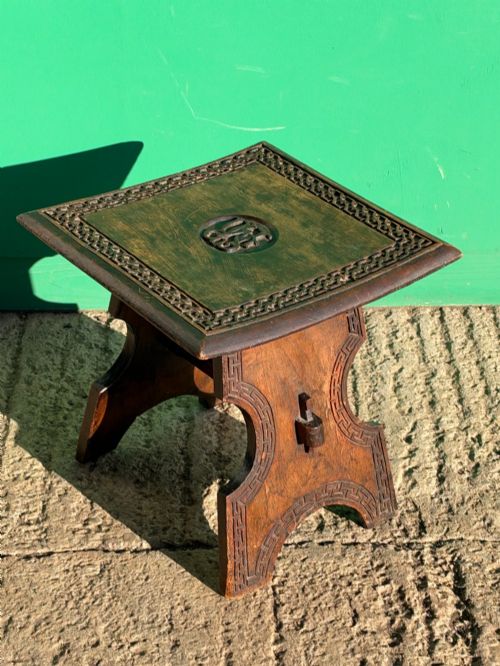
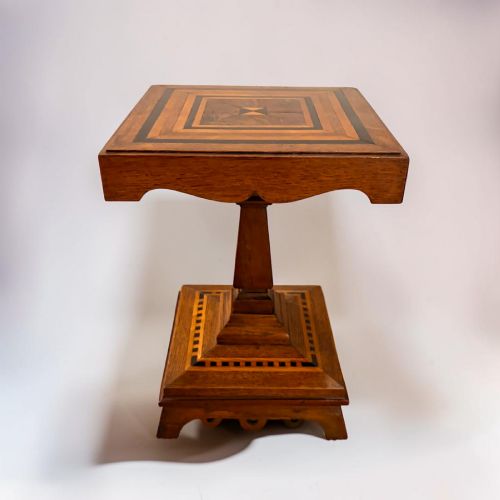
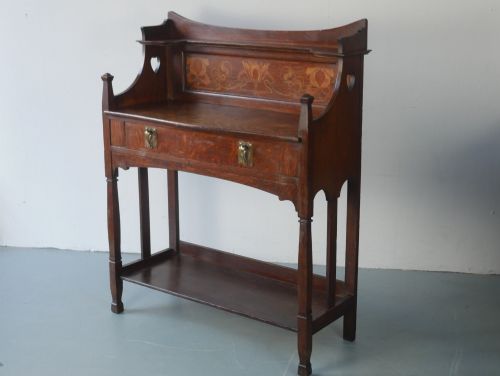
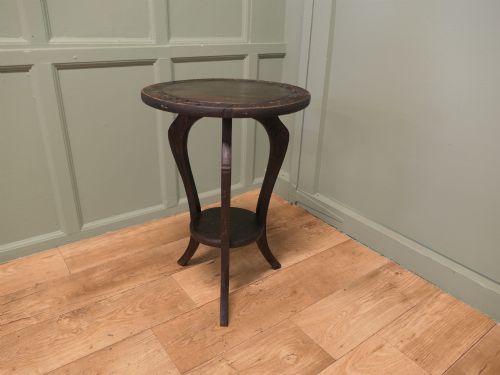
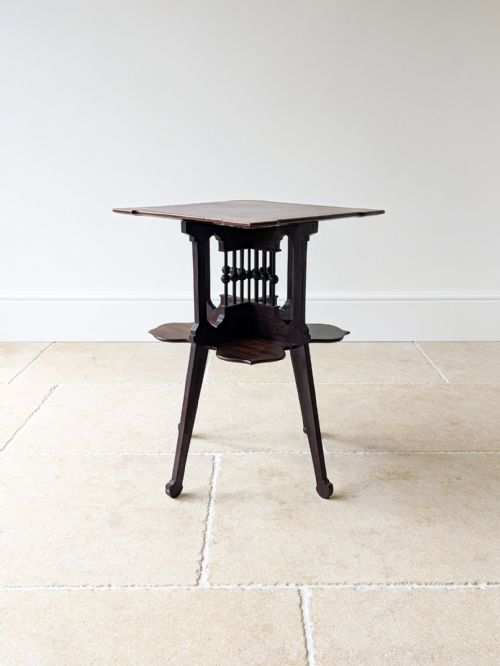
An edwardian crafting table brings together the utility of the early twentieth century and the distinct design principles of the Arts and Crafts movement. Buyers searching for an edwardian crafting table encounter pieces that bridge domestic workspace and display, often sharing forms with side tables, occasional tables, and compact desks.
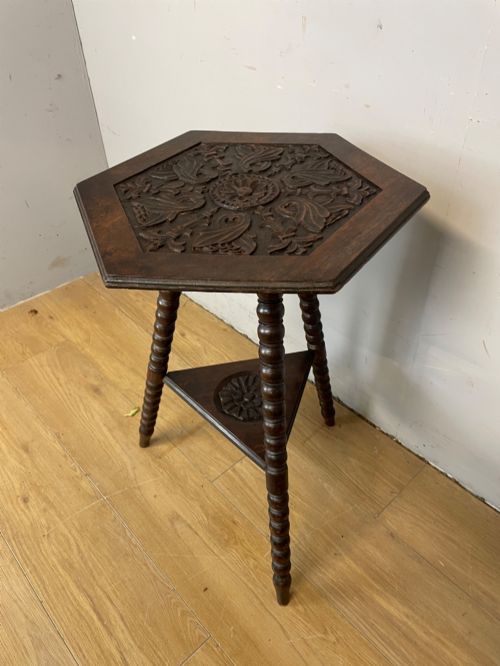
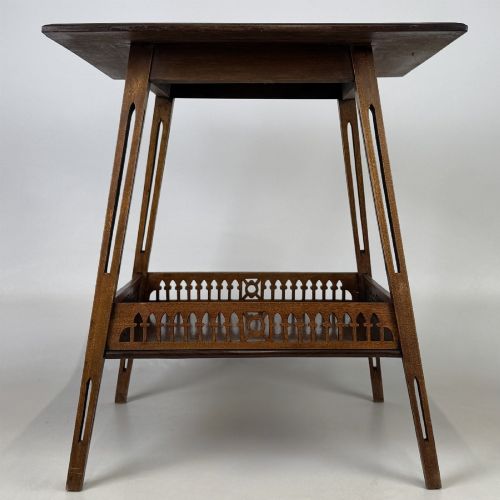
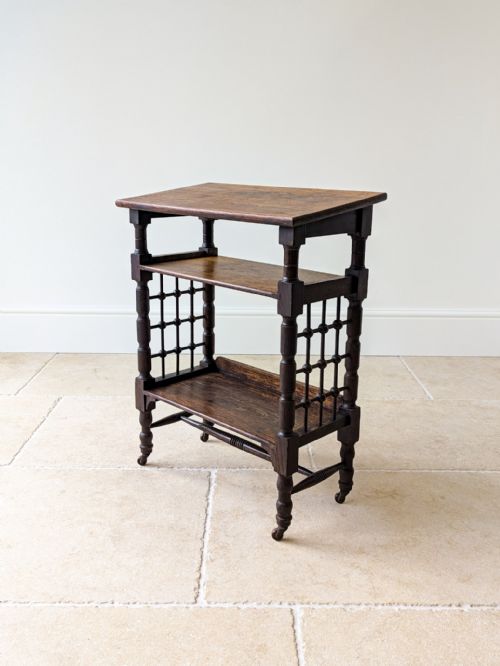
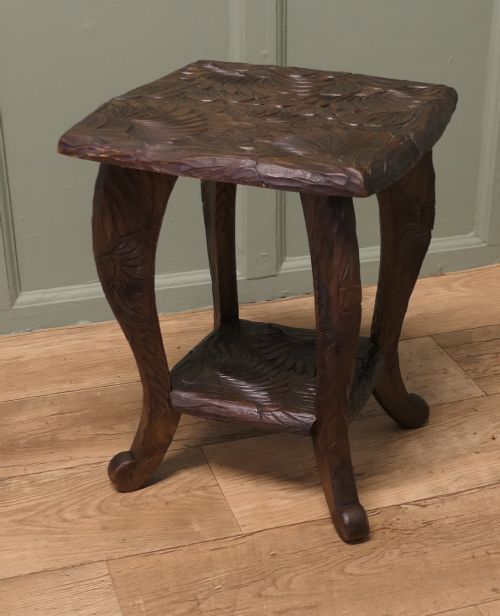
The material palette spans solid oak, mahogany, and ash, frequently accompanied by brass hardware, ceramic tiles, and leaded glass inserts. Construction leans toward practical utility, with octagonal tops, tapered legs, and integrated magazine racks appearing alongside carved floral motifs and linenfold panels.
While dating primarily from the Edwardian period, many examples carry stylistic influences from late Victorian decades and the broader Arts and Crafts ethos. These tables served practical daily functions in period homes, functioning as writing surfaces, plant stands, or occasional furniture for small rooms.
Materials and construction methods
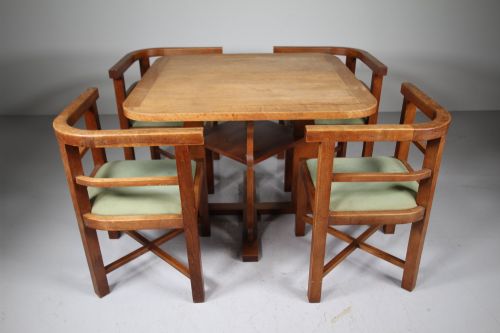
Joinery on these tables relies on traditional solid timber construction, utilising oak, mahogany, elm, and ash to build durable frames that endure heavy daily use. Workshops employed quarter-sawn oak to expose characteristic medullary rays, enhancing both structural stability and visual texture.
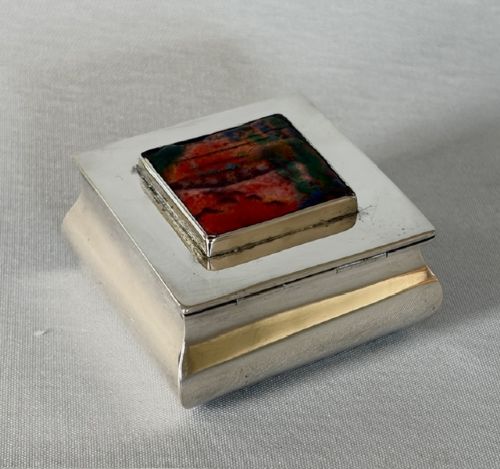
Metal elements, particularly brass and pewter, appear in handles, hinges, and decorative inlays, while ceramic tiles provide heat-resistant surfaces for plant stands and smoking tables. Waxed and limed finishes protect the timber grain without concealing the natural characteristics of the wood.
Edwardian Crafting Table Retail Price Guide 2026
Typical asking prices for edwardian crafting table among the pieces listed under this phrase on Sellingantiques today, from the lower quarter to the upper quarter. They describe what is for sale here now, not the wider market.
Listings feature periods spanning from the late nineteenth century through the nineteen-thirties, with solid oak and brass dominating the material selection.
Factors that define quality
Quality rests upon the selection of timber and the integrity of the joinery rather than surface ornamentation alone. Solid oak frames joined with visible pegged tenons demonstrate superior construction compared to simpler assemblies fastened solely with modern adhesives.
The presence of registered maker marks, hand-beaten metalwork, or hand-painted ceramic tile inserts elevates a piece above standard commercial production. Crisp carving on panels and thoughtful proportions in smaller occasional tables separate workshop output from mass-market factory furniture.
Shapland & Petter·Leonard Wyburd·Finnigans·Archibald Knox·William Birch
The Edwardian Crafting Table Glossary
- Arts and Crafts
- A design movement promoting handcraftsmanship, simple forms, and local materials as a reaction against industrial mass production. This style heavily influences the proportions and decorative details found on early twentieth-century tables.
- Linenfold
- A style of wood carving that imitates folded linen cloth, frequently seen on panelled doors and cupboard fronts. It adds texture and architectural interest to upright surfaces.
- Refectory
- A long, narrow table style originally designed for communal dining halls, adapted in smaller proportions for domestic use during the period. These versions retain strong stretcher bases for stability.
- Solid Oak
- Timber milled directly from the hardwood tree rather than constructed from manufactured veneers over a secondary core. It provides weight and longevity to structural furniture.
- Tapered Leg
- A leg that narrows gradually toward the foot, lightening the visual profile of heavier tables. This detail appears frequently on Arts and Crafts occasional furniture.
Edwardian Crafting Table: Frequently Asked Questions
How do I clean wooden surfaces?
Apply a traditional beeswax polish sparingly with a soft cloth and buff gently along the direction of the grain. Avoid modern silicone sprays that build up a sticky residue over time.
Keep wooden furniture away from direct heat sources and strong sunlight to prevent the timber from drying out and splitting.
Were these tables used for sewing?
Many compact tables with interior compartments or lower shelves served dual purposes as work tables for needlework and general occasional use in the parlour.
The inclusion of drop leaves or fitted trays often indicates a surface intended for domestic craft activities.
How do I date an edwardian table?
Examine the construction methods underneath, looking for hand-cut joinery, slotted screw heads, and secondary timbers used in drawer linings. Labels or stamped maker marks on the underside provide the most reliable chronological markers.
Compare the overall design vocabulary against documented stylistic transitions from Victorian revivalism to early twentieth-century simplicity.
Can I place a plant on the tile top?
Ceramic tile inserts were specifically manufactured to resist moisture and soil, making them ideal surfaces for holding potted plants and vases.
Ensure excess water is wiped away promptly to protect the surrounding wooden framing from moisture ingress.