

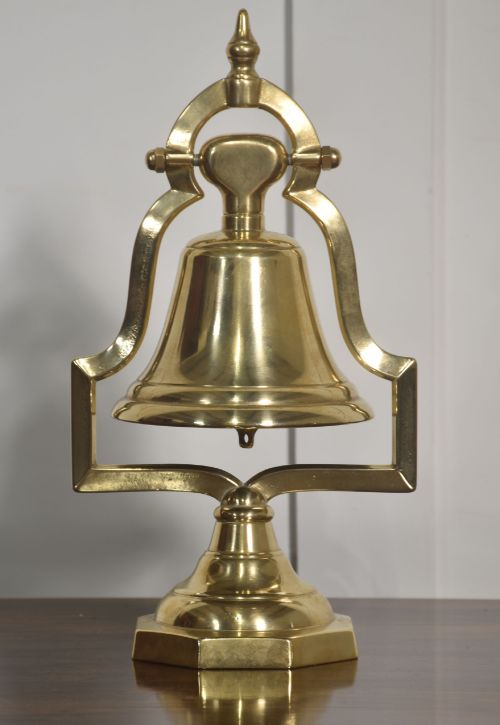


Edwardian Counter Bell
An edwardian counter bell summons service with a sharp ring from a brass dome mounted on wood or metal.
Edwardian Counter Bell
An edwardian counter bell is a functional desk accessory designed for shops, hotels, and reception desks during the early twentieth century. Buyers seeking this phrase encounter polished brass domes, oak stands, and mechanical desk bells dating from the Victorian and Edwardian eras.
The most common versions on this page combine cast brass mechanisms with wooden bases, often utilising oak or polished brass to withstand daily use. Alongside standard desk bells, related items such as table bells and balance scales appear in brass, silver plate, and sterling silver.
Materials and construction
These bells rely on cast brass and bronze for the resonant dome and internal clapper mechanism, which delivers a crisp, clear tone when depressed or struck. Wooden elements like oak serve as substantial bases to anchor the weight of the metal components.
Silver plating and sterling silver finishes appear on select models designed for more formal reception spaces, while cast iron and wood provide robust support for larger table gongs and school bells.
Edwardian Counter Bell Retail Price Guide 2026
Typical asking prices for edwardian counter bell among the pieces listed under this phrase on Sellingantiques today, from the lower quarter to the upper quarter. They describe what is for sale here now, not the wider market.
Judging quality in counter bells
Quality rests in the weight of the cast brass and the responsiveness of the internal spring mechanism, which should produce an immediate, resonant tone without hesitation. Finer examples feature crisp engraving on the dome and solid hardwood bases fitted neatly to the metal mountings.
Lesser pieces show thin plating wear, loose mechanical action, or replacement wooden stands that lack the original proportions and finish of the period.
The Edwardian Counter Bell Glossary
- Counter bell
- A bell mounted on a fixed base designed to sit upon a shop counter or hotel reception desk for summoning assistance. These domestic hardware items were essential for retail trade.
- Cast brass
- Molten brass poured into a mould to create solid, heavy components with smooth contours. This method provided durability for everyday commercial use.
- Sterling silver
- An alloy containing ninety-two point five percent silver by mass, used for luxury desk accessories and novelty bells bearing hallmarks. It denotes a high-status object.
- Oak
- A dense, durable hardwood utilised for the sturdy bases that support heavy brass desk bells. Its grain provides both stability and visual contrast to polished metal.
Edwardian Counter Bell: Frequently Asked Questions
How do you use an edwardian counter bell?
Pressing the plunger on top drives an internal clapper against the brass dome to produce a sharp ring.
In period shops and hotels, this signal alerted staff behind the scenes that a customer required attention.
What materials are most common?
Brass and oak dominate these pieces, offering the weight and durability needed for commercial environments.
Silver plate and sterling silver also appear on examples made for more formal or upscale settings.
How do I date a counter bell?
Stylistic clues like Victorian brasswork or Edwardian oak mounts help place the piece within the late nineteenth or early twentieth century.
Hallmarks on silver versions provide precise assay office dates and maker marks.
Are these bells still functional?
Most surviving examples retain their internal springs and strikers in fully working order.
A gentle press on the plunger tests the clarity and resonance of the metal dome.