


Edwardian Copper Box
These edwardian copper box examples bring together sturdy utility and hand-worked metal design for everyday storage.
Edwardian Copper Box
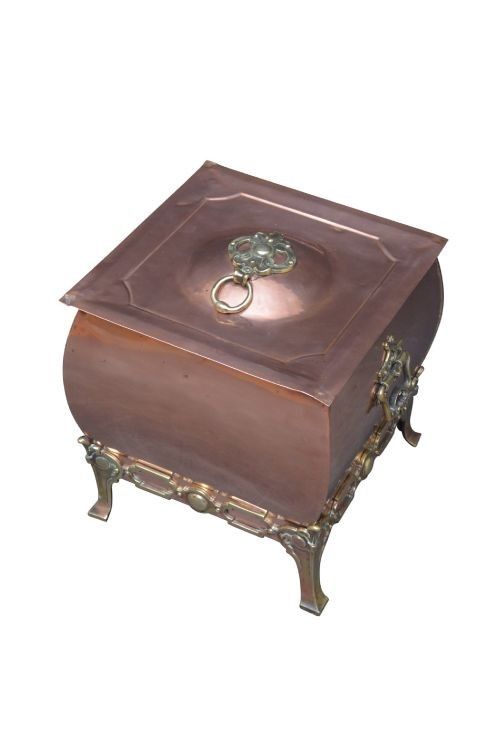
When searching for an edwardian copper box, you encounter practical fireside pieces, desk accessories, and small tabletop receptacles created during the early twentieth century. The selection leans heavily toward hearth items, including coal scuttles, log bins, and purdonium buckets built to manage fuel in the home.
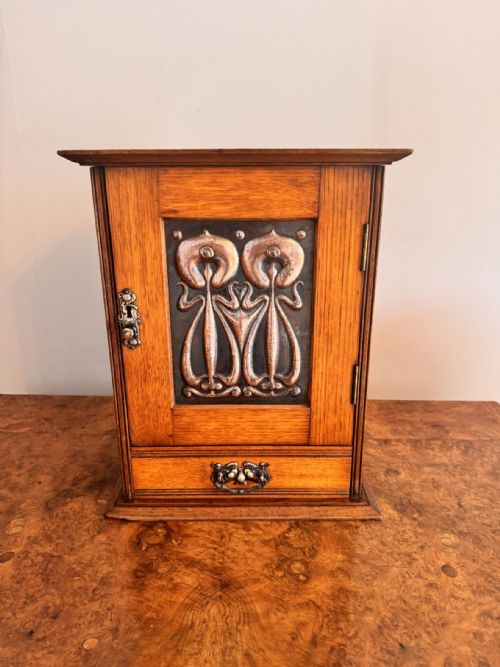
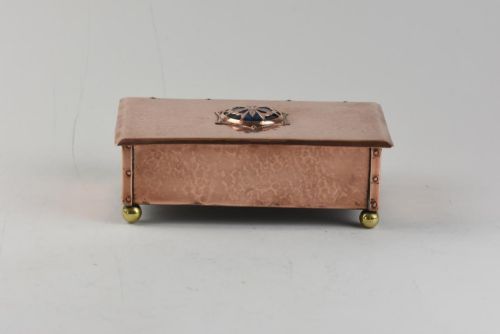
Beyond fireside accessories, the forms span desktop letter racks, cigar boxes, and trinket receptacles influenced by the Arts and Crafts and Art Nouveau movements. These objects combine robust timber carcases with decorative metal panels, often displaying hand-hammered surfaces that reflect the period's preference for visible craftsmanship.
Materials and construction
Makers built the structural carcases of these pieces using solid oak or mixed woods, applying sheet copper and brass to the exterior surfaces. Wrought iron and cast elements frequently provided structural support, hinges, and handles for heavy fireside containers.
Surface ornamentation relied on repoussé techniques, where artisans hammered designs from the reverse to create raised motifs on the metal. Enamel cabochons, brass overlays, and specialised patination finished the exteriors, sometimes paired with applied copper butterfly details or galleon motifs.
Materials recorded across the inventory include copper, brass, oak, iron, and enamel combined within single items.
Judging quality and execution
Superior examples distinguish themselves through the depth and crispness of the hand-hammered repoussé work rather than simple machine stamping. The integration of the metal panels with the underlying timber structure demonstrates the maker's joinery skill.
Quality also rests in the retention of original patination, well-cast hardware, and the careful placement of decorative elements like enamel cabochons. Pieces featuring distinct stylistic motifs in the manner of William Morris show greater artistic ambition than plain utility items.
Hunter and Palmer
The Edwardian Copper Box Glossary
- Repoussé
- A metalworking technique where the artisan hammers a design from the reverse side to form a raised relief on the front. This method defines the decorative panels of many pieces.
- Purdonium
- A specialised coal box or scuttle featuring a forward-tilting drawer or hopper for dispensing fuel. These items combine tidy storage with fireside convenience.
- Cabochon
- A polished, convex stone or piece of enamel lacking facets, often mounted centrally on metalwork. They add colour and focal contrast to Arts and Crafts designs.
- Patina
- The surface sheen and coloration developed through age, handling, and oxidation. A bronze patina enhances the visual depth of the metal.
Edwardian Copper Box: Frequently Asked Questions
How do I clean an old copper box?
Dust the surface gently with a dry, soft cloth to remove accumulated particles without disturbing the underlying surface. Avoid harsh chemical polishes that strip away the aged patination collected over decades.
For stubborn grime, use a very mild soapy solution on a damp cloth, drying the metal immediately afterwards. Preserving the natural darkened areas maintains the historical character of the piece.
Were these boxes used for coal?
Many larger receptacles served directly as coal scuttles, log bins, or purdoniums positioned beside the hearth. Their metal linings contained dirt and ash while protecting surrounding timber.
Smaller variants functioned as cigar receptacles, letter racks, or desktop storage for household correspondence. Each form matched the specific domestic utility required by Edwardian households.
How do I spot Arts and Crafts style?
Look for visible hand-hammered textures, exposed rivets, and motifs derived from nature such as flowers, leaves, and insects. These characteristics reject mass-produced uniformity in favour of visible artisan skill.
The integration of copper panels onto solid oak frames provides a typical material pairing for the movement. Stylised lettering and geometric strapwork further indicate this aesthetic.
Can I use these boxes outdoors?
These items were built strictly for indoor domestic environments, utilising timber carcases and interior components sensitive to moisture. Placing them outside exposes the wood and unsealed iron parts to dampness.
Keep them in dry living spaces or hallways to prevent warping of the oak structures and active corrosion on the metal surfaces.