


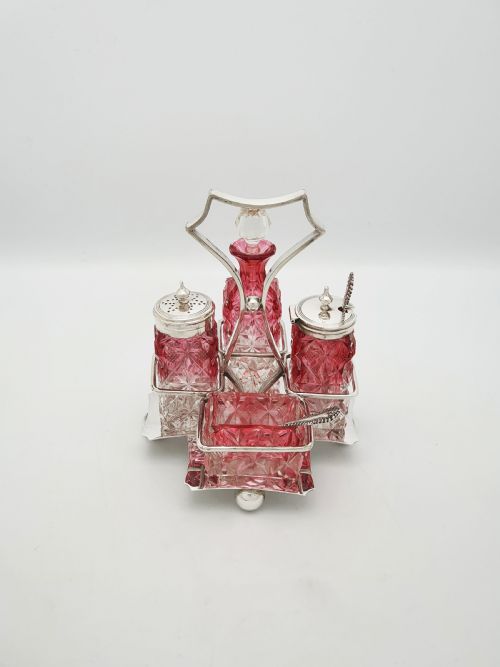


Edwardian Condiment Stand
An edwardian condiment stand holds sauces and seasonings for the dining table, combining silver plate with cut glass to anchor a formal meal.
Edwardian Condiment Stand
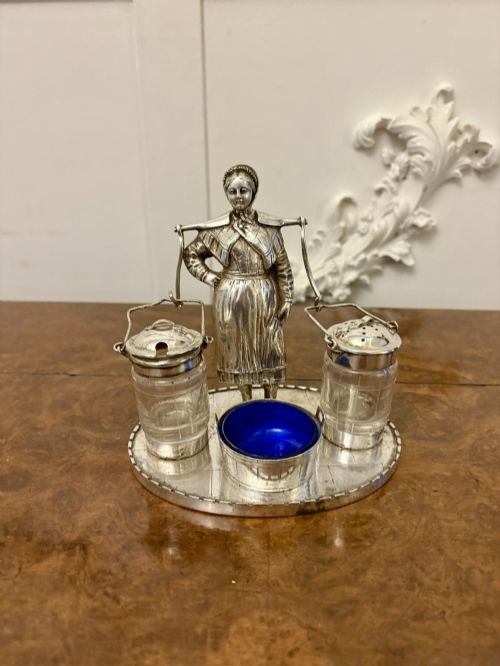
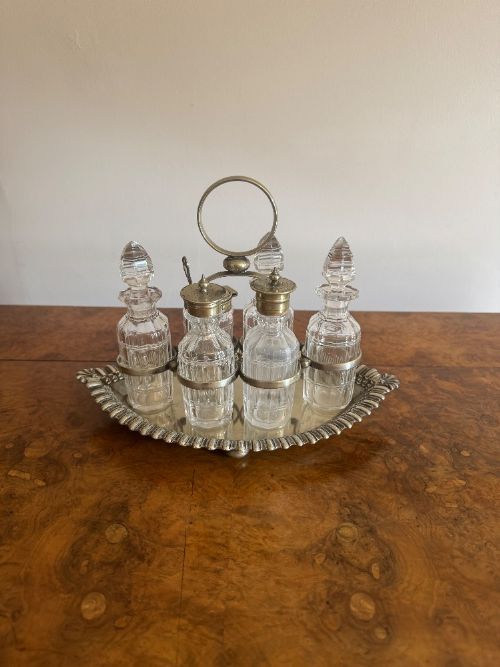
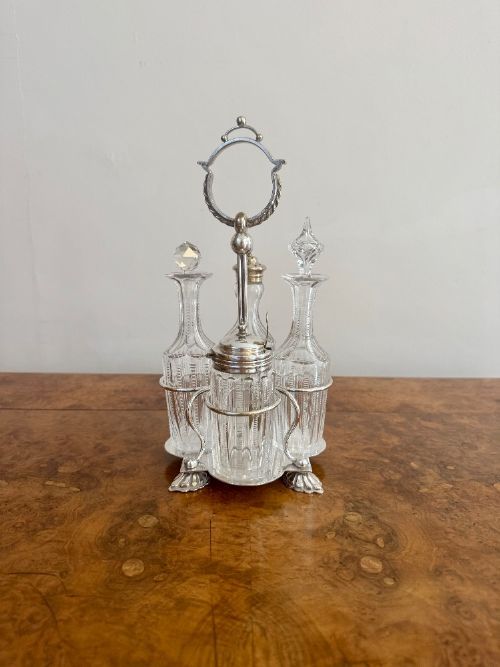
The edwardian condiment stand encompasses silver plated frames fitted with glass bottles, cruet sets, and preserve dishes designed for dining tables. These pieces span the Edwardian period alongside Victorian and Art Deco examples, utilising silver plate frames to hold multiple glass containers.
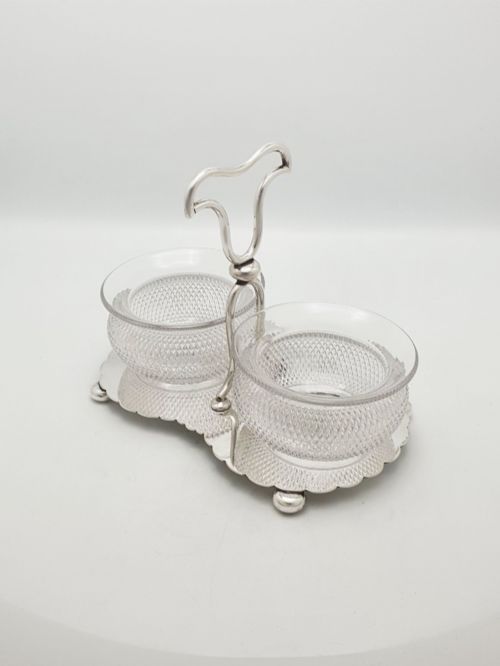
Most selections on this page feature silver plate combined with cut glass, crystal, cranberry glass, or cobalt glass, forming six bottle cruet sets and twin preserve bowls. Alongside standard cruet sets, the selection includes relish caddies, jam dishes on stands, and open salts.
Makers such as Walker and Hall appear among these tablewares, alongside English silver plated novelties registered in the Victorian era. The primary forms remain the multi-bottle cruet set and the framed glass preserve dish.
Materials and construction
Makers built these stands using silver plate over a base metal framework, engineered to support multiple glass bottles or jars simultaneously. The metal frames often feature shaped handles, decorative feet, and secure collars to hold each bottle in place.
The glass elements rely on cut glass, crystal, cranberry flashed glass, and cobalt glass, shaped into bowls, jars, and condiment bottles. Many glass inserts feature distinct cutting patterns or coloured glass bodies designed to catch the dining room light.
Edwardian Condiment Stand Retail Price Guide 2026
Typical asking prices for edwardian condiment stand among the pieces listed under this phrase on Sellingantiques today, from the lower quarter to the upper quarter. They describe what is for sale here now, not the wider market.
Listings feature silver plate, cut glass, cranberry glass, and cobalt glass across Edwardian, Victorian, and Art Deco periods.
Evaluating quality and execution
Quality rests in the weight and proportion of the silver plated frame, where sturdier stands support larger bottle counts without flexing. The integrity of the silver plate over the underlying metal determines the durability of the piece.
The execution of the glass components separates standard production from finer examples, visible in the depth of the glass cutting and the matching of sets. Complete sets retaining their original matching cut glass bottles or preserve bowls command greater interest.
Walker & Hall
The Edwardian Condiment Stand Glossary
- Cruet set
- A matched collection of bottles or jars for holding condiments like oil, vinegar, salt, and mustard, held within a dedicated stand. These sets formed an essential part of formal dining arrangements.
- Silver plate
- A layer of silver bonded to a base metal core, commonly used for manufacturing durable tableware and stands during the nineteenth and early twentieth centuries. This technique provided the appearance of solid silver at a lower cost.
- Cranberry glass
- A rich red glass produced by adding gold chloride to the molten glass batch during manufacture. It frequently appears in Edwardian jam dishes and cruet inserts.
- Relish caddy
- A specialised stand designed to hold glass dishes for pickles, relishes, or preserves at the table. These pieces often feature an integrated carrying handle.
- Open salt
- A small glass or silver plated dish used for serving loose salt alongside individual place settings. Guests used small spoons or pinches to take salt from the container.
Edwardian Condiment Stand: Frequently Asked Questions
What is an edwardian condiment stand used for?
These stands held sauces, vinegars, mustards, and seasonings for guests during formal meals. They kept multiple bottles organised on a single portable base in the centre of the table.
Today, they function as decorative table centrepieces or serve to hold condiments during dinner parties just as they did a century ago.
How do I clean silver plate?
Clean silver plate using a soft cloth and a dedicated silver polish designed for plated items. Avoid harsh abrasives that can wear away the thin silver layer.
Wash glass inserts separately in warm soapy water and dry them completely before placing them back into the metal frame.
Are the glass bottles original?
Many pieces retain their original cut glass or coloured glass bottles, shaped specifically to fit the frames. Replacements do occur over time due to accidental breakage of the glass elements.
Matching glass patterns and consistent wear help indicate whether the bottles belong to the original stand.
How do I date these stands?
Dating relies on stylistic clues, manufacturer marks stamped into the metal, and registration numbers where present. Edwardian pieces typically date from around 1901 to 1910, with some overlapping Victorian and Art Deco examples.
Design motifs and the type of glass used provide further context for determining the period of manufacture.