

Edwardian Compactum
An Edwardian compactum is a capacious fitted wardrobe combining hanging space, drawers and shelving designed to organise a whole bedroom in one handsome piece.
Edwardian Compactum
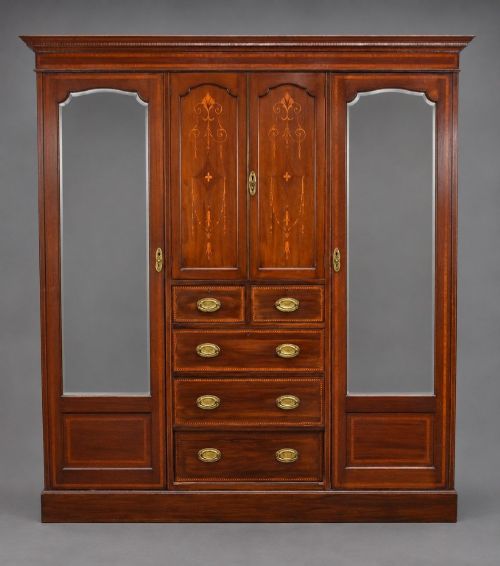
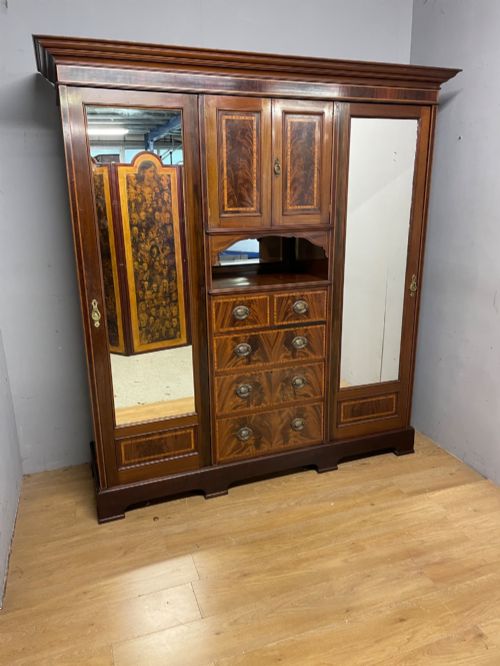
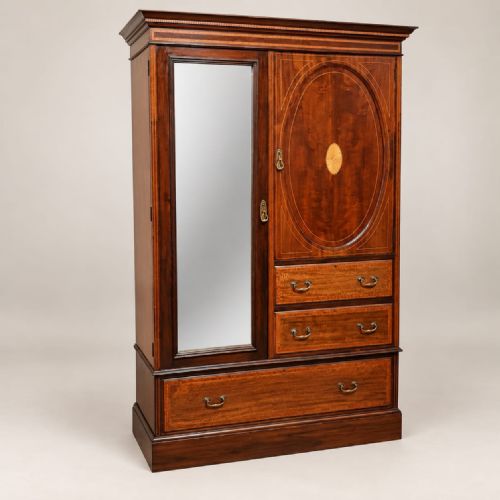
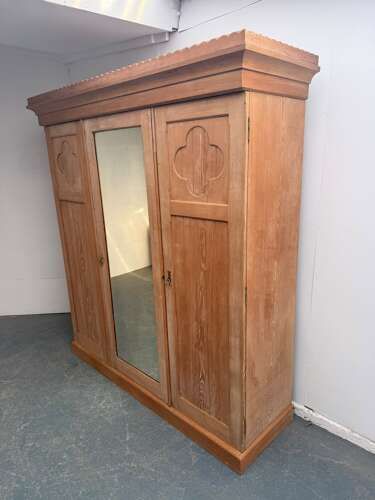
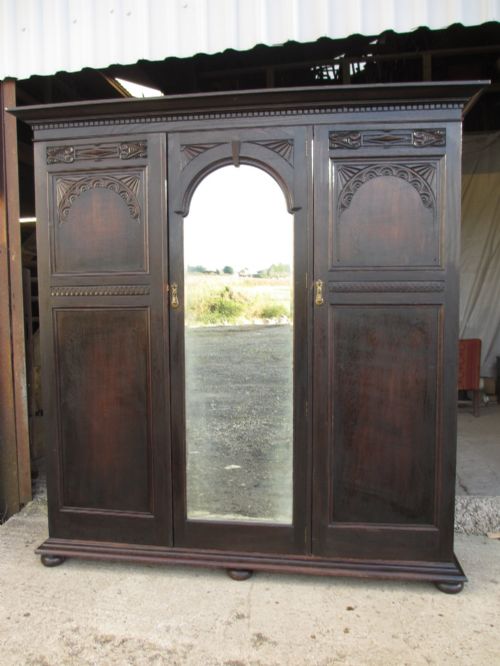
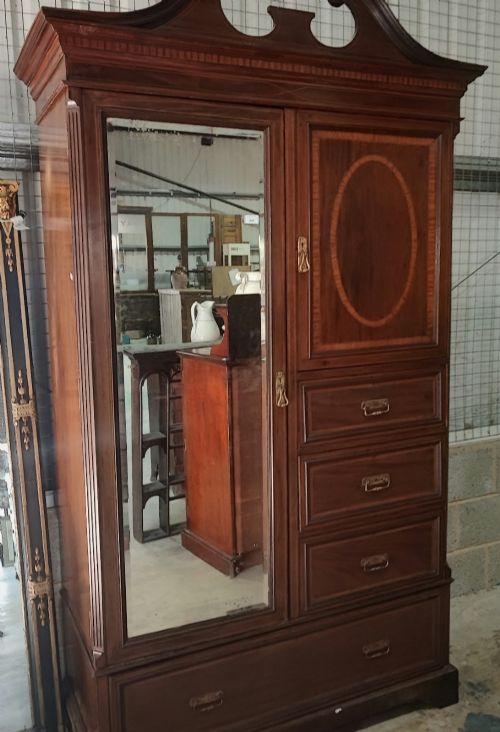
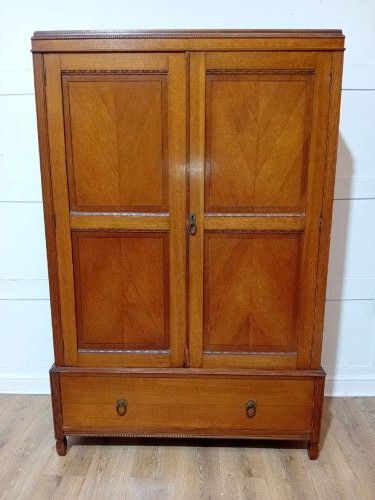
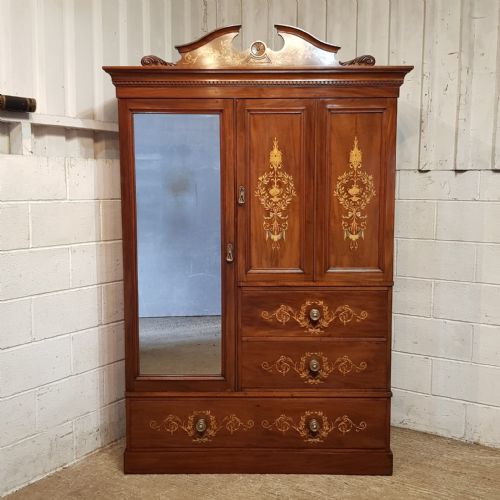
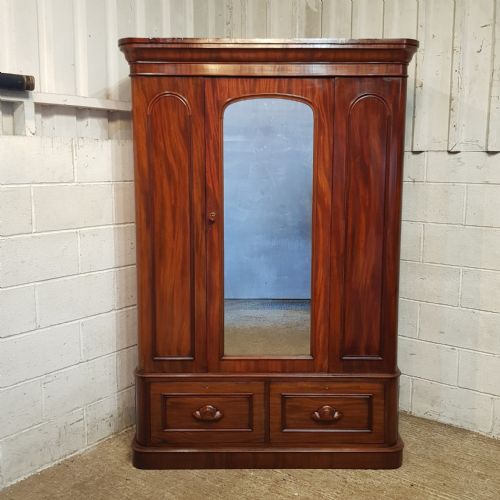
The edwardian compactum is essentially a hybrid wardrobe that brings together multiple storage functions within a single timber frame. Buyers encounter these substantial pieces in formats ranging from double configurations to expansive triple door designs featuring central mirror panels.
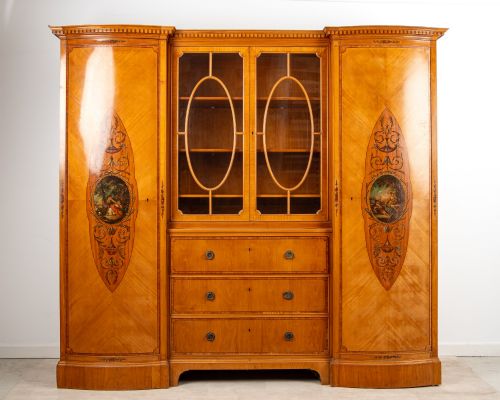
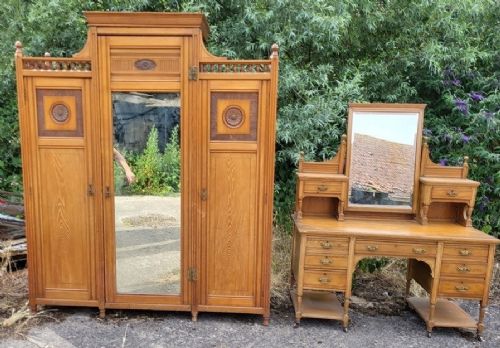
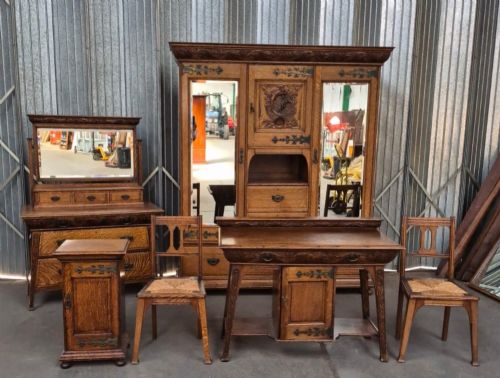
Many examples span the late Victorian and Edwardian periods, carrying the hallmarks of distinct design movements such as Arts and Crafts or Sheraton Revival. These larger bedroom furnishings often form part of larger bedroom suites, accompanied by matching dressing tables or washstands.
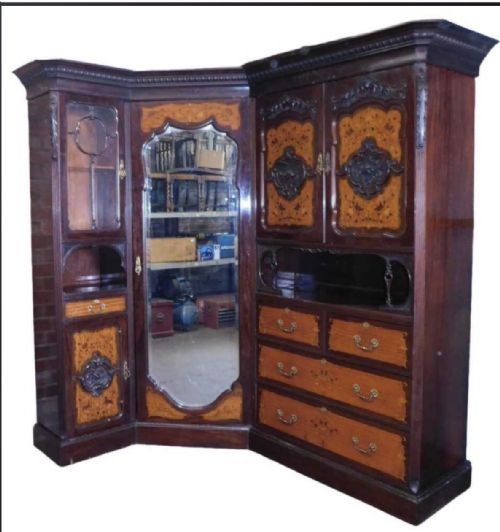
While some pieces adhere to strict symmetrical lines, others utilise breakfront facades or corner footprints to maximise internal capacity. The interior typically divides into hanging sections flanked by linen drawers, sliding trays, or small cupboards.
How they were made
Cabinet makers constructed these large carcasses from solid timbers like oak, ash, walnut and mahogany, frequently applying veneers of satinwood or burr walnut to prominent surfaces. Drawer linings and interior partitions were often fashioned from secondary softwoods to manage the immense weight of the timber frame.
Surface enrichment relied on varied decorative techniques including boxwood stringing, marquetry inlay, hand-painted panels and carved details. Structural rigidity was achieved through deep cornices, panelled doors, and heavy brass or iron hardware designed to support heavy mirrored glass.
Edwardian Compactum Retail Price Guide 2026
Typical asking prices for edwardian compactum among the pieces listed under this phrase on Sellingantiques today, from the lower quarter to the upper quarter. They describe what is for sale here now, not the wider market.
Some wardrobes conceal tiny sliding trays once reserved strictly for stiff collars and folded pocket handkerchiefs.
What varies in quality
Quality rests primarily on the ambition of the timber selection and the precision of the cabinet work joining the separate compartments. Pieces built by prominent makers display more intricate marquetry, superior grain matching across large panel surfaces, and heavier brass fittings.
The architectural presence of a piece depends heavily on the depth of the mouldings and the stability of the large mirror doors. Simpler workshop pieces rely on plain golden oak or ash, whereas top tier examples integrate complex breakfront cornices and hand-painted artistry.
Edwards and Roberts·Harris Lebus·Shapland and Petter·Maple and Co·Heals·Gillows of Lancaster
The Edwardian Compactum Glossary
- Compactum
- A large fitted wardrobe combining hanging space, drawers, and shelving within one multi-compartment carcass. This hybrid design first gained popularity during the late nineteenth and early twentieth centuries.
- Breakfront
- A cabinet facade where the central section projects forward from the flanking wings. This architectural arrangement creates depth and visual interest on large triple wardrobes.
- Marquetry
- The art of applying decorative pieces of veneer to a structure to form intricate pictorial designs. Craftsmen utilised various coloured woods to achieve floral or geometric motifs.
- Stringing
- Thin inlaid lines of contrasting timber used to outline panels, drawer fronts, and cornices. This subtle linear decoration defines the edges of Edwardian cabinet work.
- Gentleman's wardrobe
- A specific storage piece featuring internal sliding trays or shirt drawers alongside standard hanging space. These compartments were traditionally dedicated to folded menswear.
Edwardian Compactum: Frequently Asked Questions
How do I fit a compactum in a modern bedroom?
Because these wardrobes were built on a grand scale, checking ceiling heights and floor space is essential before placement. Many examples are modular or dismantle into sections to assist with transport and installation.
Positioning them away from direct heat sources helps protect the polished timber surfaces and prevents the large wooden panels from warping over time.
How do I distinguish Edwardian from Victorian styles?
Victorian pieces tend to use darker, heavier timbers like mahogany and feature robust, highly carved decorative elements. They lean towards formal symmetry and imposing architectural proportions.
Edwardian designs often embrace lighter woods such as satinwood and ash, reflecting the influence of the Arts and Crafts movement or Sheraton Revival with simpler lines and brighter finishes.
What maintenance do these wardrobes need?
Regular dusting with a soft, dry cloth preserves the polished timber finish without building up unwanted residues. Applying a traditional wax occasionally feeds the wood and maintains its natural lustre.
Keeping the interior well-ventilated and avoiding damp environments ensures the antique hinges, locks, and mirror plates remain in good working order.