





Edwardian Clerk Writing Desk
An edwardian clerk writing desk offers practical workspace and compartmentalised storage, bringing period character to a home office.
Edwardian Clerk Writing Desk
An edwardian clerk writing desk brings functional workspace and compact storage together in traditional forms, frequently appearing as roll top or pedestal desks. These pieces originate from the Edwardian period alongside late Victorian and interwar eras, reflecting the administrative needs of past offices.
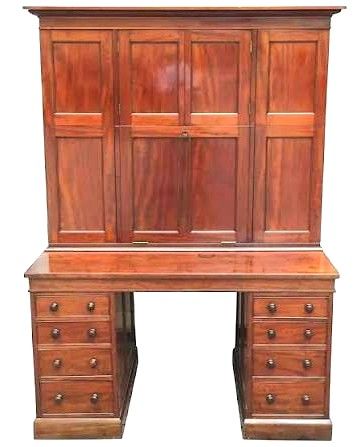
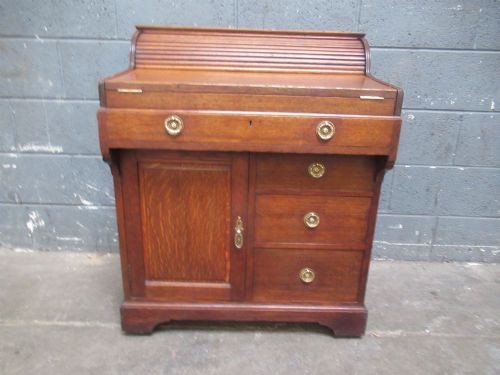
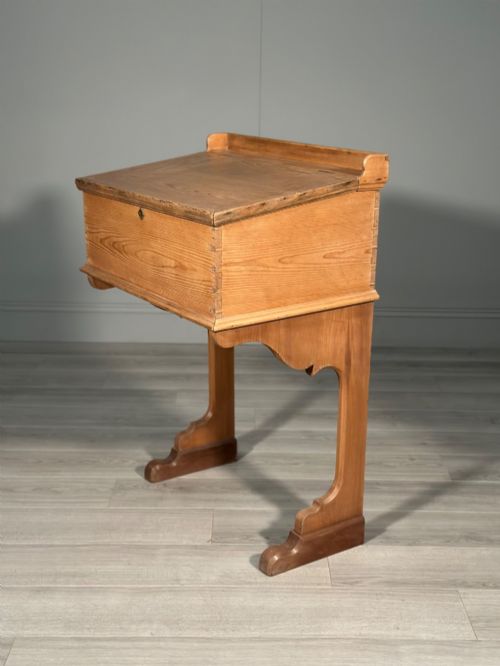
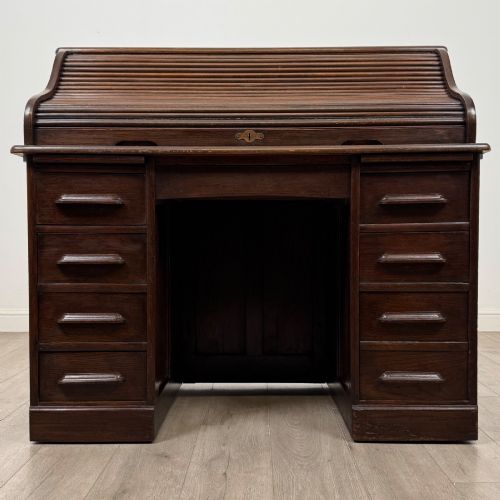
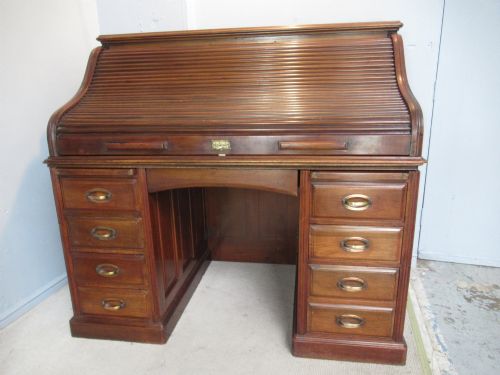
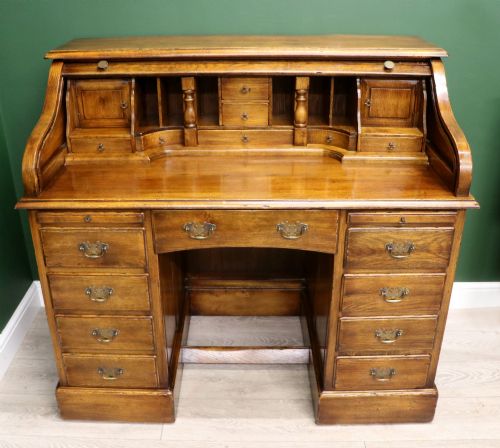
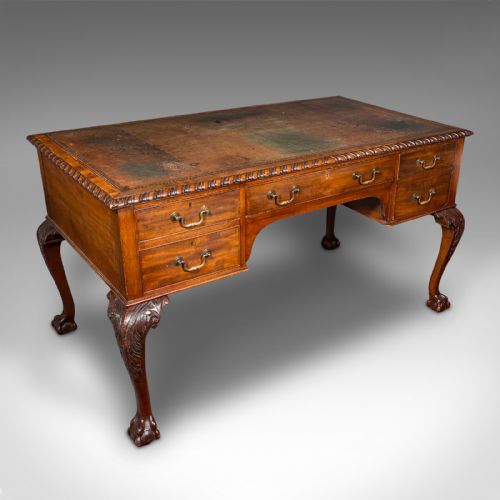
Buyers encounter variations such as roll top desks with tambour shutters, Dickens style writing desks with elevated galleries, and kneehole pedestal forms. Solid oak, walnut, and mahogany provide the primary structure for these practical furnishings.
Desk configurations include leather inset writing surfaces and numerous interior pigeonholes designed for correspondence and ledgers. Many examples retain original brass hardware and fitted pedestals for organising documents.
How they were made
Cabinet makers constructed these desks using timber such as oak, walnut, mahogany, and pitch pine, often enhanced by marquetry inlay. The framework relies on sturdy joinery to support heavy writing surfaces and pedestal compartments.
Tambour shutters utilise slats of wood glued to canvas backing, allowing the flexible roll top mechanism to glide smoothly over interior pigeonholes. Leather inset writing surfaces are tooled and secured directly into the desktop timber.
Drawers feature traditional joints and internal partitions, while brass handles and gallery rails provide functional detailing. Panel construction gives rigidity to pedestal sides and backing boards.
Edwardian Clerk Writing Desk Retail Price Guide 2026
Typical asking prices for edwardian clerk writing desk among the pieces listed under this phrase on Sellingantiques today, from the lower quarter to the upper quarter. They describe what is for sale here now, not the wider market.
Post Masters and clerks kept endless ledgers safe behind these sliding wooden shutters.
What varies in quality
Timber selection and grain figure dictate the visual presence of each piece, distinguishing fine burr walnut and figured mahogany from standard oak. The execution of marquetry inlay and the neatness of internal pigeonhole joinery show the skill of the maker.
The smooth operation of the tambour roll top mechanism indicates the precision of the initial construction and subsequent care. Original hardware such as brass handles and fitted leather writing panels preserve the integrity of the desk.
Heal & Sons
The Edwardian Clerk Writing Desk Glossary
- Tambour
- A flexible sliding shutter formed of narrow strips of wood attached to canvas, used to enclose the upper storage section of a roll top desk.
- Dickens desk
- A large pedestal desk featuring an elevated stationary box or gallery with small drawers and pigeonholes above the main writing surface.
- Pedestal desk
- A freestanding desk comprising a flat writing top supported by two banks of small drawers reaching down to the floor.
- Kneehole desk
- A desk with a central recess for the user's legs, flanked by pedestals containing drawers.
- Marquetry
- Decorative patterns formed by fitting contrasting veneers into timber surfaces.
Edwardian Clerk Writing Desk: Frequently Asked Questions
How do I use an edwardian clerk writing desk today?
These desks suit modern home offices by providing generous surface space and built-in organisation for paperwork and laptops.
The enclosed compartments and drawers keep clutter hidden while maintaining a traditional aesthetic in the room.
What is a tambour roll top mechanism?
The tambour consists of narrow wooden slats fixed to a flexible backing, allowing the top to slide smoothly along curved tracks.
This design secures the writing surface and pigeonholes when closed without requiring swinging doors.
How do I distinguish an Edwardian desk from a Victorian one?
Edwardian desks often display lighter timbers and simpler lines, whereas Victorian pieces frequently feature darker, heavier mahogany or walnut with more ornate carving.
Construction details and secondary woods can also help confirm the manufacturing period.
How do I care for the leather writing surface?
Leather inserts benefit from occasional cleaning with a damp cloth followed by a suitable leather conditioner to prevent drying.
Avoiding direct sunlight and excessive moisture preserves the supple texture and tooling of the hide.