



Edwardian Cityscape Art
Edwardian cityscape art captures bustling urban streets and quiet river reaches with fluid immediacy, bringing period atmosphere straight into your sitting room.
Edwardian Cityscape Art
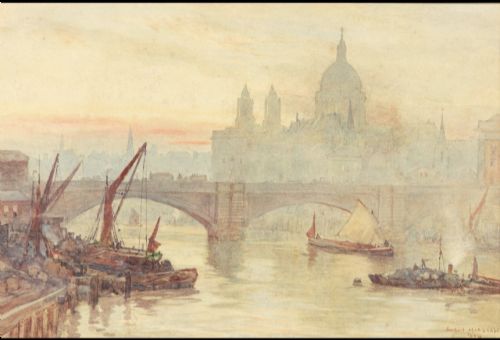
Edwardian cityscape art encompasses watercolour paintings and oil on board works depicting urban views, street scenes, and river settings. These pieces capture recognisable locations such as London, York, and Venice during the late nineteenth and early twentieth centuries.
A buyer examining this selection meets works created across the Edwardian era alongside late nineteenth century and 1920 pieces. Watercolour paintings on paper dominate the selection, portraying damp streets, grand cathedrals, and misty waterways with atmospheric restraint.
Subjects range from bustling London squares and bridges to sunlit Venetian canals and quiet winter twilights. The artists working in this genre recorded the changing character of the modern city through rapid observation and fluid media.
Materials and Technique
Watercolour paint applied to paper forms the primary medium for these urban views, allowing artists to capture shifting light and weather conditions quickly. Ink often supplements the watercolour to define architectural details and street outlines with sharp precision.
Oil on board provides an alternative surface for artists working with heavier pigments and richer textures. Giltwood and composition frames enclose many of the works, complementing the tonal palette of the paintings within.
Edwardian Cityscape Art Retail Price Guide 2026
Typical asking prices for edwardian cityscape art among the pieces listed under this phrase on Sellingantiques today, from the lower quarter to the upper quarter. They describe what is for sale here now, not the wider market.
Factors That Distinguish Quality
Quality rests upon the artist's ability to handle perspective and capture the specific atmosphere of a location rather than mere topographical accuracy. Stronger works demonstrate confident brushwork and a sophisticated balance of light and shadow.
The sensitivity with which the medium is handled separates routine topographical illustration from accomplished impressionist interpretation. Subtle tonal control in watercolours or confident handling of pigment on board elevates the visual impact of the scene.
Herbert Menzies Marshall·Charles James Lauder·George Whyatt·David Small·Walter Duncan·Henry Wimbush·William A Macdonald·John D Walker·Matthew Hale
The Edwardian Cityscape Art Glossary
- Watercolour
- A paint consisting of pigment suspended in a water-soluble binder, used on paper to create translucent washes of colour. Artists employ this medium to capture transient effects of light and atmosphere.
- Oil on Board
- A painting technique where oil paint is applied to a rigid wooden board rather than canvas. This method provides a firm support suited to rapid, textured application.
- Giltwood
- Wood carved and covered with a thin layer of gold leaf or gilt, frequently used for traditional picture frames. It adds a warm metallic border that enhances the artwork.
- Composition
- A moulded material made from whiting, resin, and glue, used to create decorative ornamentation on picture frames. It offers a cost-effective alternative to carved wood.
- Impressionism
- A style of painting emphasising small, thin brush strokes and accurate depiction of light in its changing qualities. British practitioners applied these principles to local urban and rural subjects.
Edwardian Cityscape Art: Frequently Asked Questions
What subjects appear in Edwardian cityscape art?
These works depict urban environments, including London streets, bridges over the Thames, cathedral views, and Venetian canals. Artists also recorded quieter moments such as winter twilights and river scenes.
The selection focuses heavily on British landmarks alongside continental watercolours from the same period, reflecting contemporary travel and urban life.
How should I frame and display these watercolours?
Watercolour paintings require protection from direct sunlight to prevent the pigments and paper from fading over time. Standard conservation framing with acid-free mounts preserves the integrity of the work.
Displaying these pieces away from humid environments ensures the paper and any giltwood framing remain stable for decades.
How do I distinguish Edwardian pieces from Victorian works?
Edwardian works often share stylistic traits with late Victorian British impressionism, making exact chronological separation a matter of documented dates rather than stark visual differences. Artists active across both eras continued their methods into the twentieth century.
Examining recorded artist dates and signature styles helps place a specific painting within its correct period context.
What is the difference between watercolour and oil on board here?
Watercolours on paper offer a translucent quality well-suited to capturing atmospheric mist, rain, and fleeting evening light. They rely on the white of the paper to generate luminosity.
Oil on board provides a heavier, more opaque finish that allows for built-up textures and deeper colour saturation within the street scene.