
Edwardian Chain Bracelet
An Edwardian chain bracelet brings tangible weight and intricate craftsmanship to the wrist, offering a wearable piece of early twentieth-century design.
Edwardian Chain Bracelet
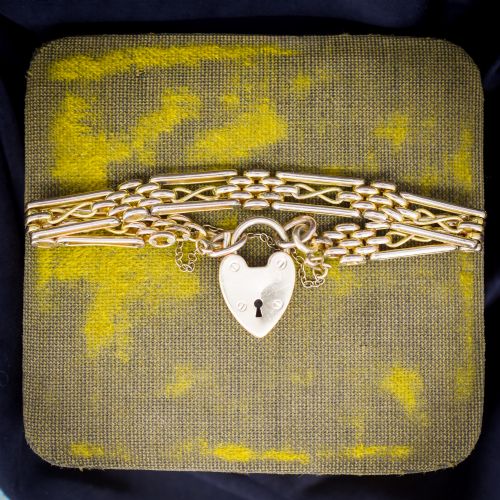
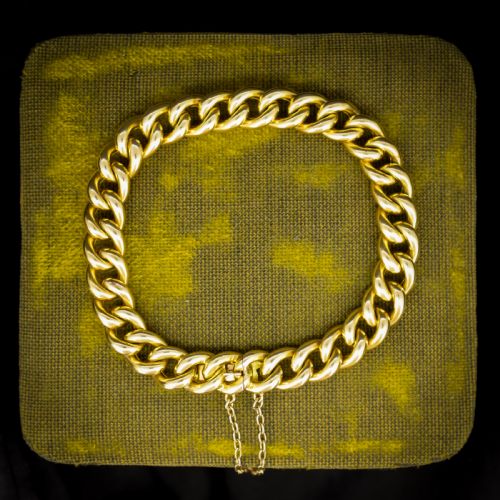
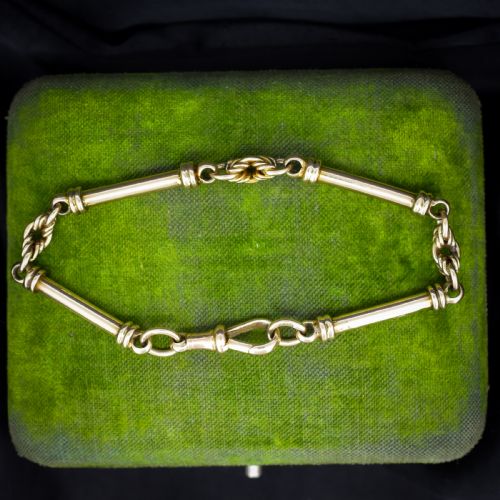
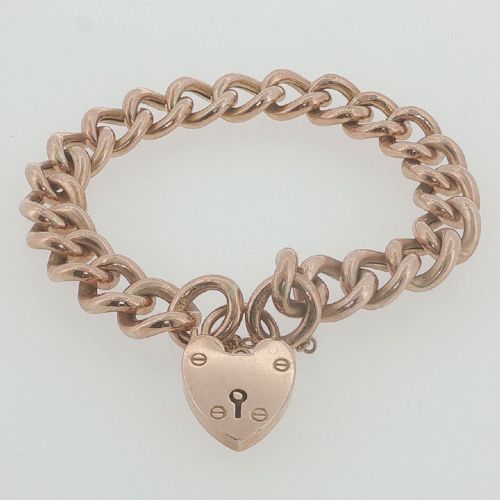
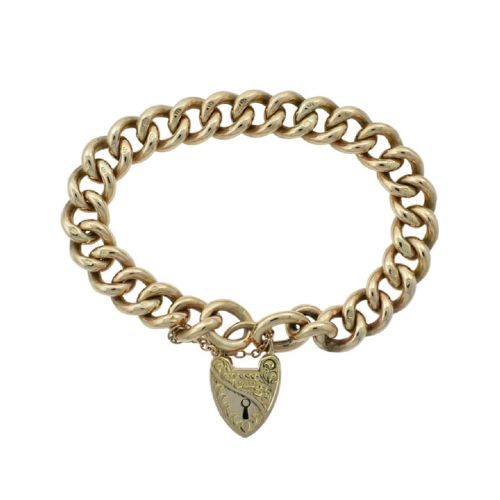
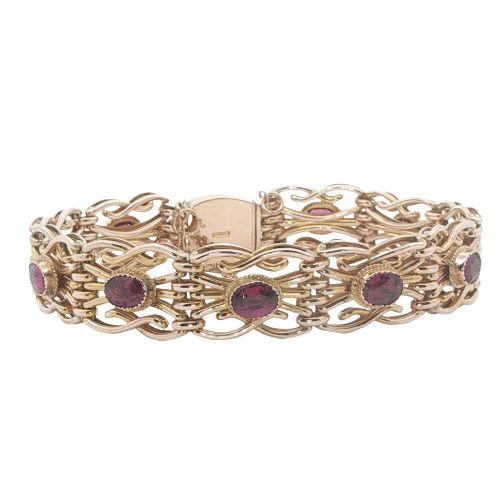
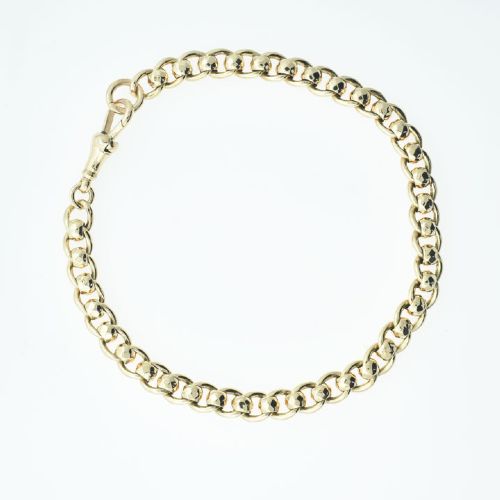
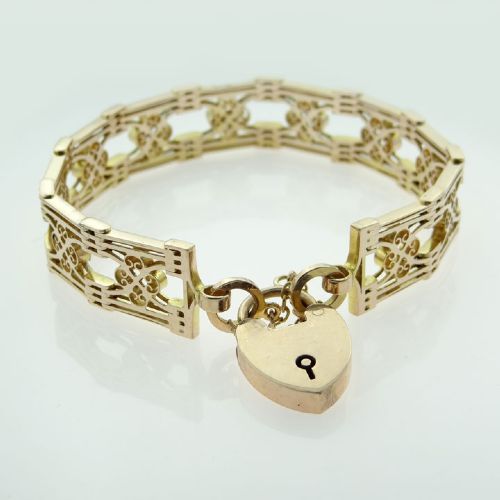
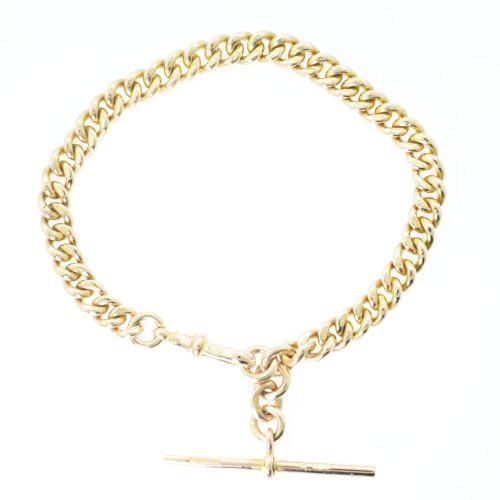
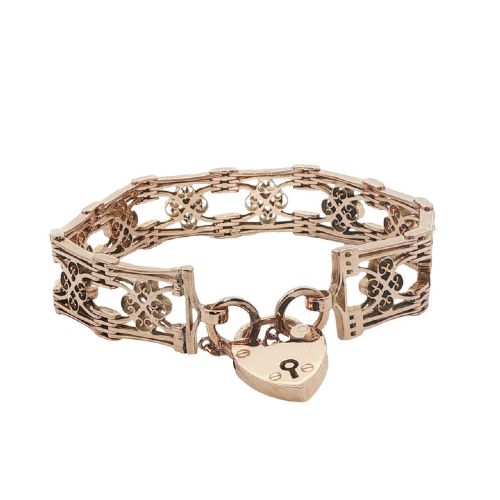
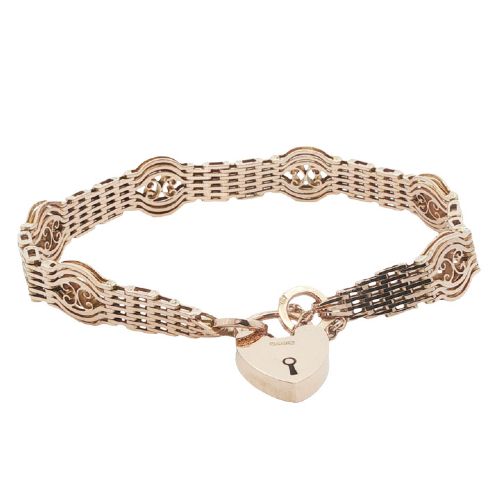
When you search for an edwardian chain bracelet, you encounter articulated links fashioned primarily in gold during the early decades of the twentieth century. The selection ranges from robust curb and gate links to refined assemblies incorporating decorative padlocks, dog clips, and T-bars.
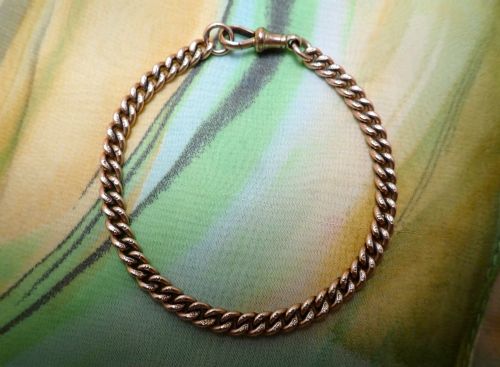
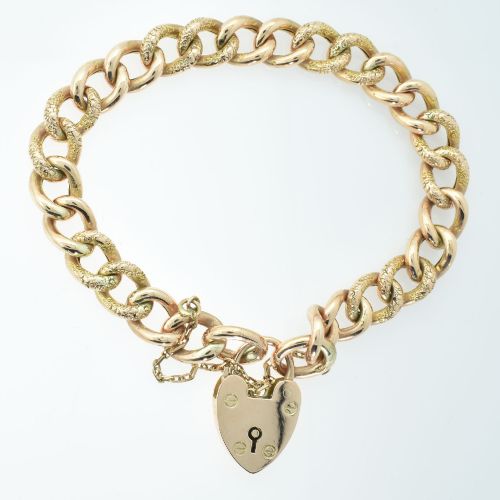
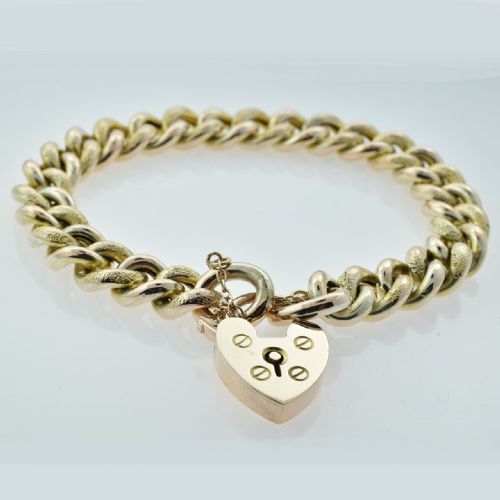
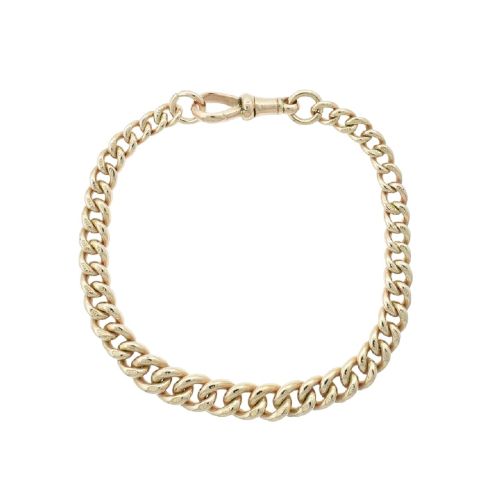
The pieces appearing on this page span the Edwardian period alongside adjacent Victorian and early twentieth-century eras, reflecting how watch chains and traditional links were repurposed into wristwear. You are most likely to meet 9ct rose gold curb link bracelets secured with heart padlocks or dog clips.
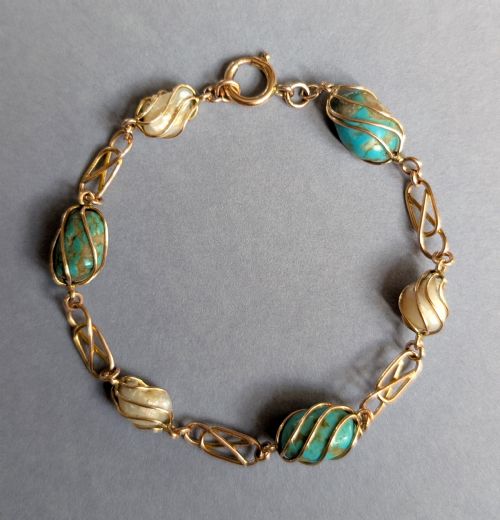
Beyond standard link configurations, variants incorporate gemstones such as turquoise, pearls, and diamonds, or feature half-engraved surface patterns. These items originate from a time when jewellers prioritised substantial metal weight and secure mechanical fastenings.
How they were made
The construction of these pieces relies on gold alloys, predominantly 9ct and 15ct rose and yellow gold, shaped into hollow or solid links. Metalworking techniques include hand-engraving, casting, and wire-forming, often combining curb chains with decorative padlocks or swivel dog clips.
Set pieces integrate gemstones like turquoise, pearls, and sapphires using claw or bezel settings soldered directly to the central links. Silver, niello, and enamel also appear as structural or decorative elements, demonstrating diverse manufacturing origins across the period.
Listings demonstrate a strong prevalence of 9ct rose gold, alongside 15ct gold, silver, and gemstone accents including turquoise and pearls.
What varies in quality
Quality in these bracelets is determined by the heft of the metal, the integrity of the link joints, and the crispness of any hand-engraving. Solid gold construction and substantial gram weights distinguish sturdier examples from lighter, hollow alternatives.
The sophistication of the mechanism, whether a functioning heart padlock, a secure dog clip, or a concealed clasp, influences the overall standard of the piece. Additionally, the presence of matched gemstones and well-executed decorative motifs elevates the refinement of the design.
The Edwardian Chain Bracelet Glossary
- Curb link
- A type of chain composed of identical interlocking links that lie flat against the wrist. This pattern provides a flexible and durable foundation for heavier gold bracelets.
- Heart padlock
- A heart-shaped clasp mechanism frequently utilised to secure Edwardian and Victorian bracelets. These padlocks often feature detailed engraving on the front face.
- Dog clip
- A spring-loaded swivel fastening commonly attached to watch chains and bracelets. It allows the wearer to securely attach the ends of the chain or suspend charms.
- Gate bracelet
- A style featuring rigid parallel bars connected by small links, resembling a traditional gate. They are typically finished with a padlock fastening.
- Albert chain
- A heavy chain originally designed to secure a pocket watch to a waistcoat. Many survive converted into substantial wrist bracelets.
Edwardian Chain Bracelet: Frequently Asked Questions
How do I fasten an edwardian chain bracelet?
Most pieces utilise either a spring-loaded dog clip or a heart-shaped padlock that snaps onto a designated ring or link. These clasps were engineered for daily utility and secure fastening.
Ensure the spring mechanism moves smoothly and closes firmly before wearing the piece actively on your wrist.
Were these always worn as bracelets?
Many items originating from this era began life as pocket watch chains or Albert chains before being adapted for the wrist. The inclusion of T-bars and dog clips points directly to this original tailoring use.
Over time, jewellers and owners repurposed these sturdy gold chains into the configurations seen today.
Can I wear an edwardian chain bracelet daily?
Solid gold and substantial curb link variations tolerate regular wear provided the link connections remain secure and unworn. Lighter or hollow examples require more mindful handling to prevent accidental denting.
Checking the security of any gemstone settings and clasp mechanisms periodically helps preserve the piece.
What is rose gold in these pieces?
Rose gold is an alloy of gold combined with copper, which imparts a warm, reddish tint to the metal. It was the predominant gold colour used during the Edwardian era.
The specific copper ratio determines the depth of the pink hue across different chains and padlocks.