

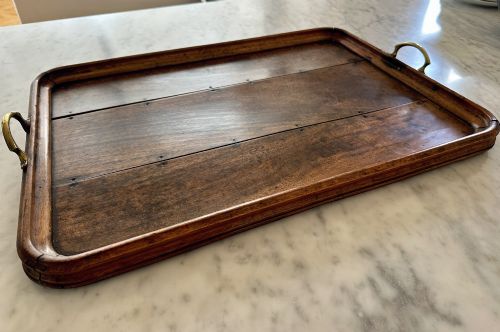
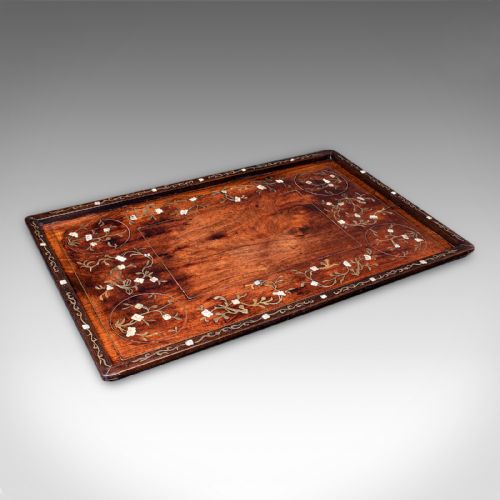


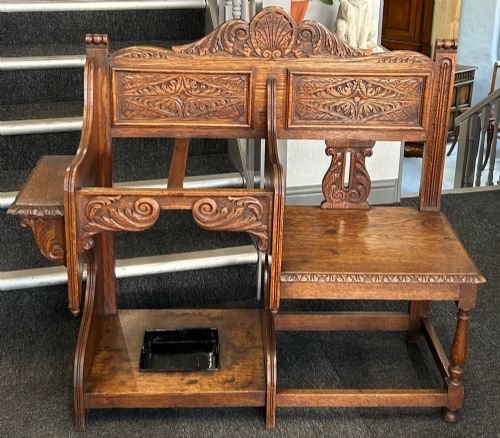
Edwardian Carved Wooden Tray
An edwardian carved wooden tray brings a functional elegance to the home, crafted to serve tea or display drinks with period distinction.
Edwardian Carved Wooden Tray
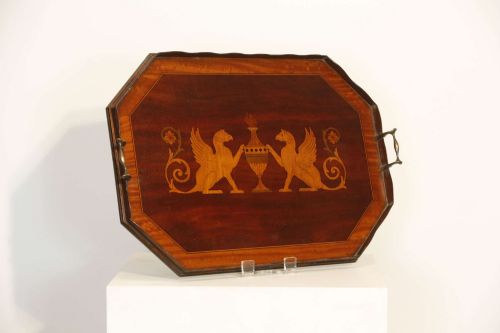
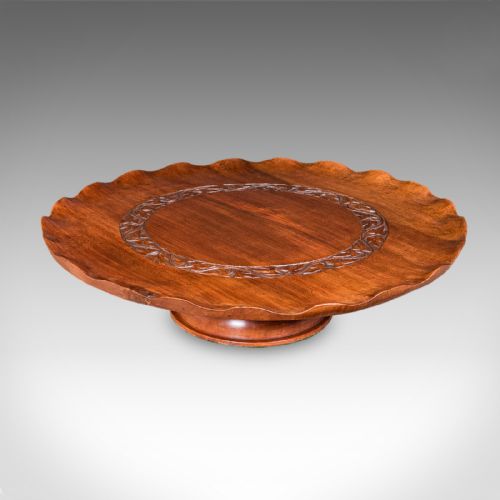
An edwardian carved wooden tray is a functional domestic accessory designed for serving or display, most frequently encountered in mahogany or oak across this selection. These pieces date principally from the early twentieth century and often incorporate inlaid details or raised galleries.
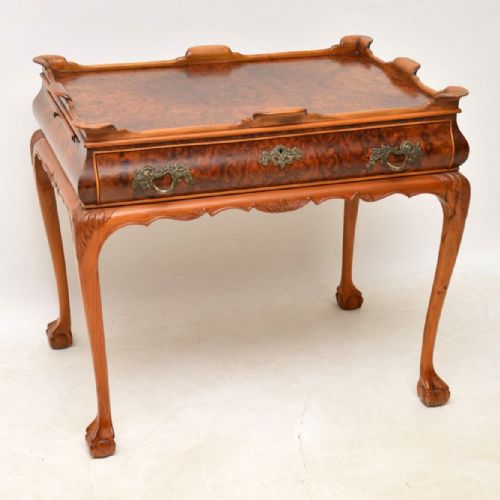
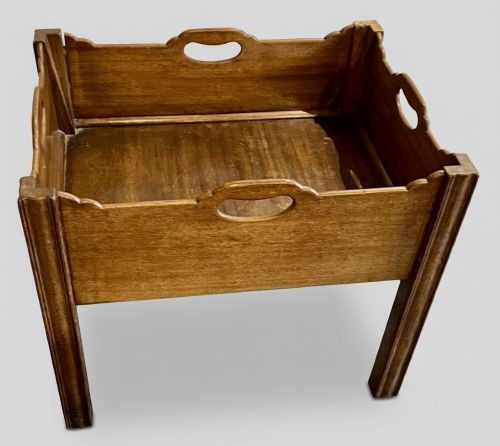
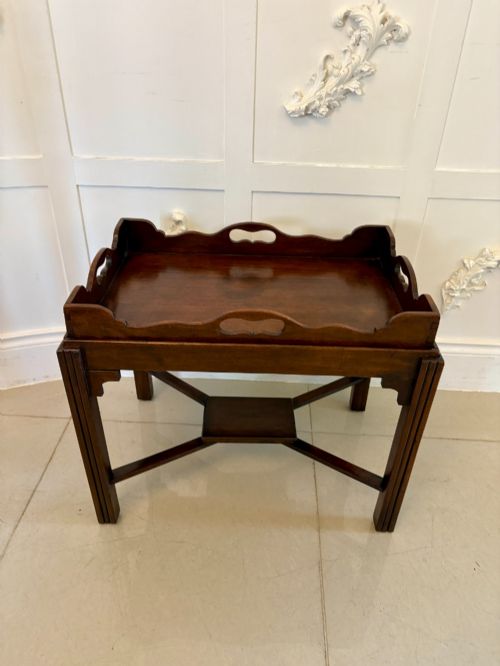
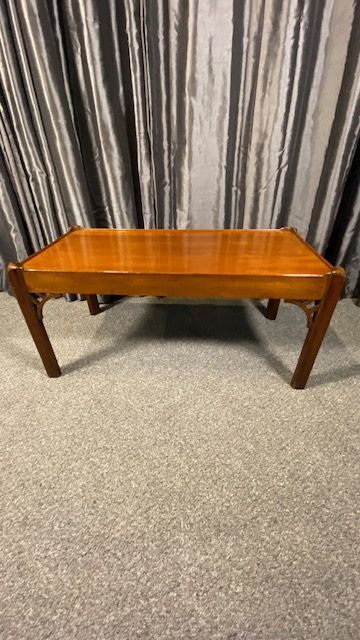
The objects span serving trays, butler trays on stands, and occasional tray-top tables originating from the Edwardian era and adjacent Victorian periods. Buyers encounter both standalone items and versions fitted to folding or fixed wooden stands.
How they were made
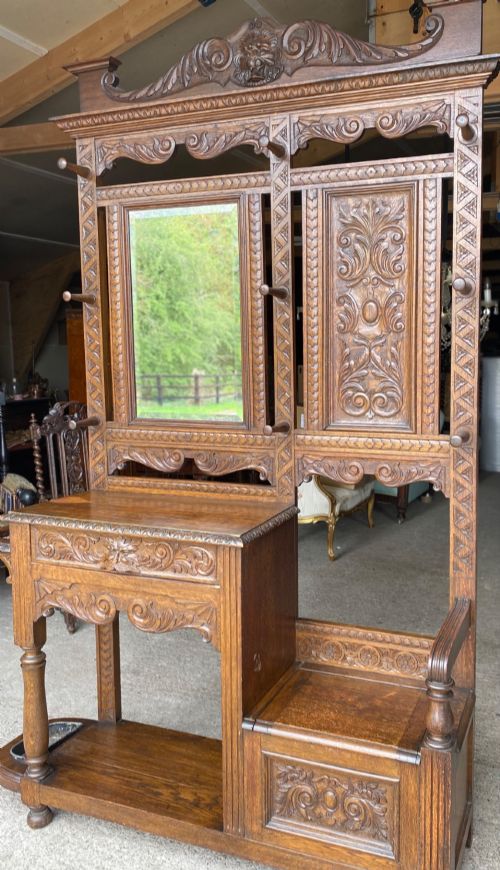
Cabinetmakers utilised hardwoods such as oak, mahogany, walnut, and satinwood, often combining structural timber with intricate surface carving or marquetry. Brass handles, galleries, and metal mounts frequently accent the woodwork.
Joinery techniques relied on solid timber construction, with raised edges, scalloped edging, or gallery rims secured to flat bases to retain items during transport.
Edwardian Carved Wooden Tray Retail Price Guide 2026
Typical asking prices for edwardian carved wooden tray among the pieces listed under this phrase on Sellingantiques today, from the lower quarter to the upper quarter. They describe what is for sale here now, not the wider market.
Listings feature items from the 19th Century, Victorian, and Edwardian periods, constructed in oak, mahogany, walnut, satinwood, brass, and metal.
What varies in quality
Quality rests in the crispness of the hand-carving and the selection of figured timber veneers like mahogany or walnut. Superior examples display precise inlay work and robust joinery in the handles and gallery rims.
Subtleties in the proportion of the raised edges and the integrity of the underlying stand separate standard utility items from finer decorative pieces.
The Edwardian Carved Wooden Tray Glossary
- Gallery
- A raised wooden or metal border around the edge of a tray or table top to prevent items from sliding off. It is often pierced or fret-cut in decorative patterns.
- Marquetry
- The art of applying pieces of veneer to a structure to form decorative patterns and pictures. Craftsmen used contrasting woods to achieve pictorial depth.
- Butler tray
- A portable wooden tray with hinged or fixed sides, traditionally lifted from its stand for serving. Many Edwardian iterations sit upon dedicated folding wooden stands.
- Inlay
- A technique where pieces of a contrasting material are set into the surface of a base timber to create flat ornamentation. Satinwood and darker hardwoods frequently provide this contrast.
Edwardian Carved Wooden Tray: Frequently Asked Questions
How were butler trays used?
Butler trays were utilised in large households to transport food and drink from the kitchens to the living rooms. The removable tray sat upon a folding wooden stand for easy storage when not in service.
In modern interiors, they function effectively as coffee tables or portable side surfaces for entertaining guests.
What woods are common?
Makers relied heavily on oak and mahogany for their durability and rich grain patterns. Walnut and satinwood appear frequently in more decorative tray designs and inlaid occasional furniture.
Metal handles and brass fittings often complement these primary timber selections.
How do I spot an Edwardian piece?
Edwardian items typically display lighter proportions and refined inlay work compared to heavy Victorian predecessors. Stylistic influences often include Arts and Crafts simplicity or Edwardian neoclassical revival motifs.
Construction methods and timber conditioning also point clearly to the turn of the twentieth century.
Can I use these for daily serving?
Most solid wood trays remain structurally sound for carrying drinks and light refreshments. Care should be taken to protect antique polished surfaces from direct moisture and heat.
Many collectors prefer to use them as stationary display pieces on tables or sideboards.