

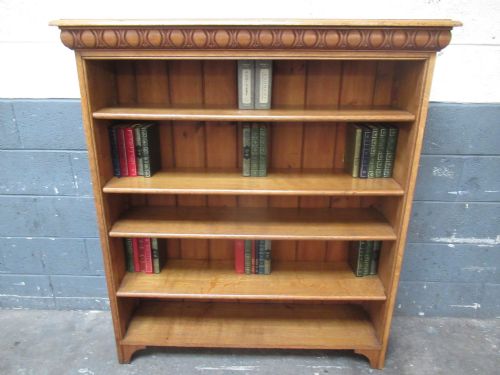
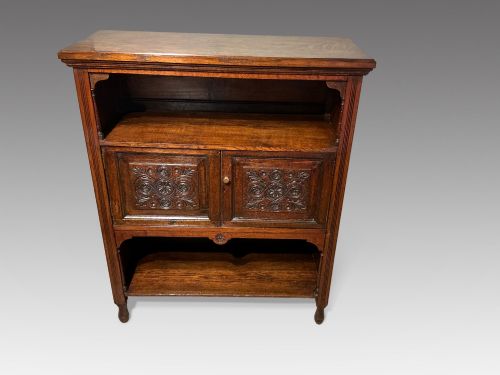
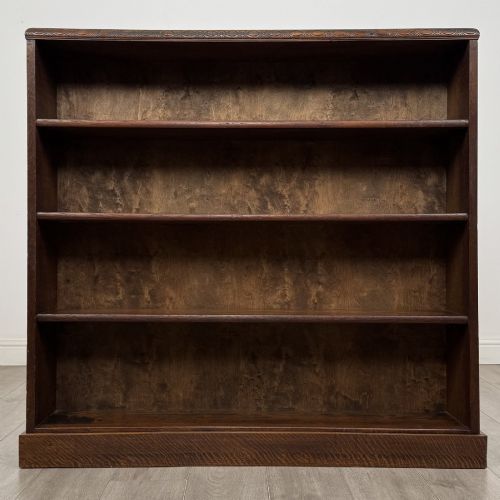

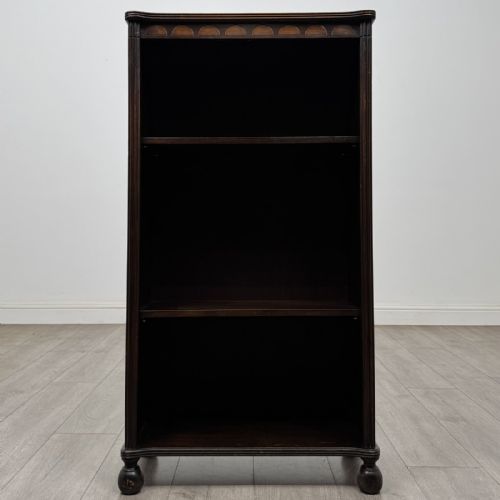



Edwardian Carved Shelving
Edwardian carved shelving brings together functional timber storage and decorative display from the early twentieth century.
Edwardian Carved Shelving
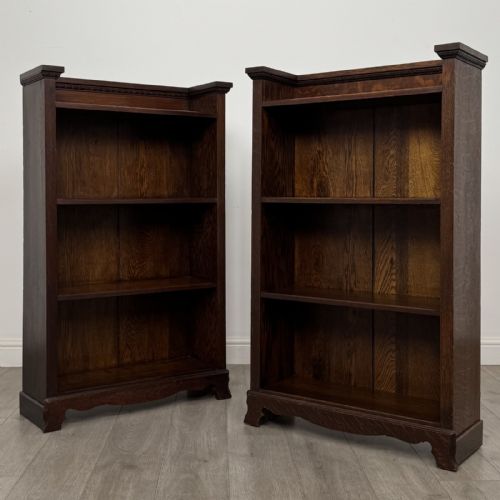
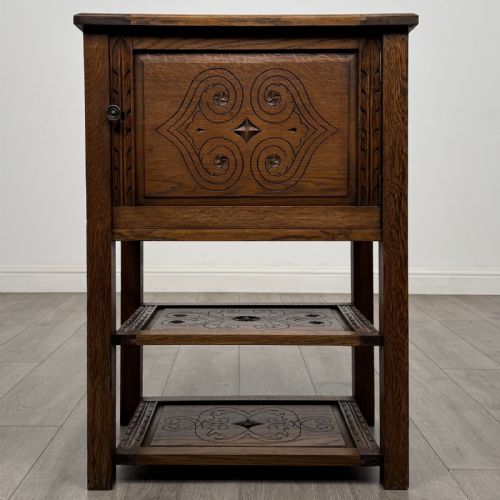
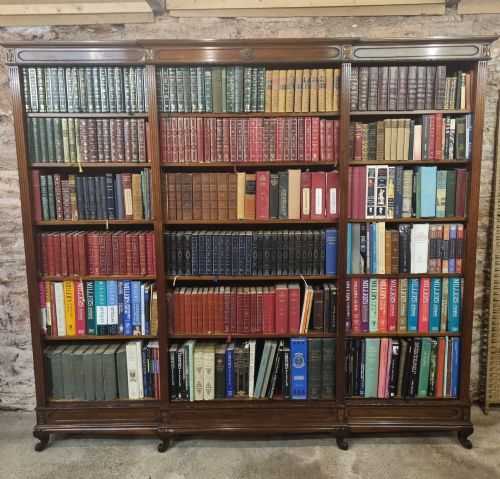
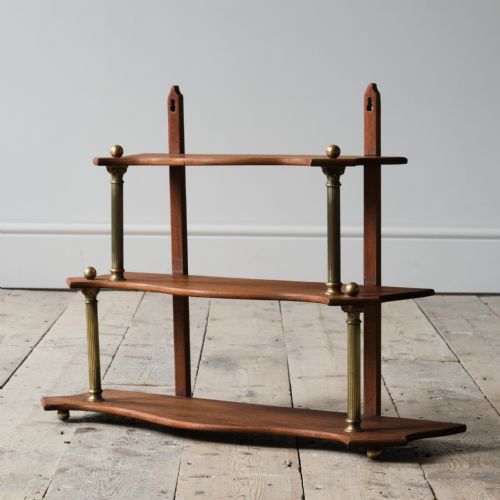
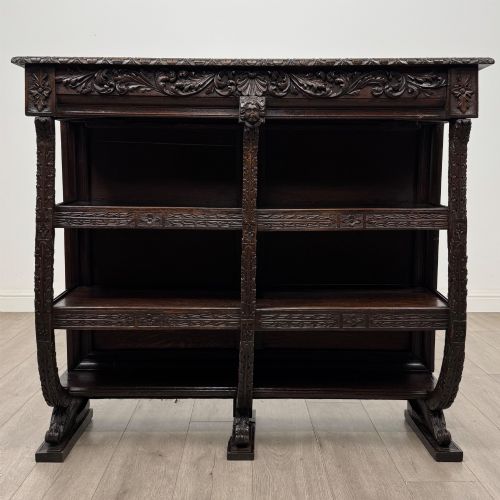
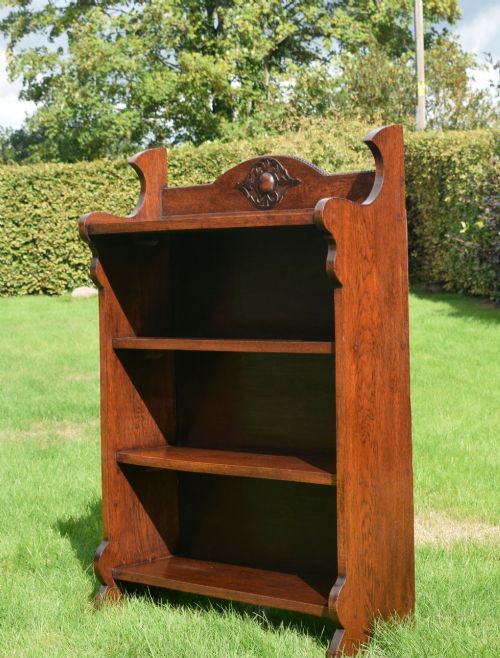
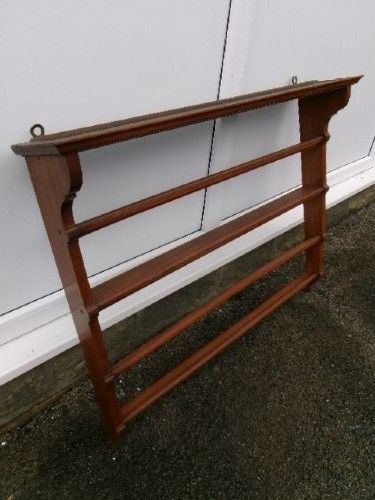
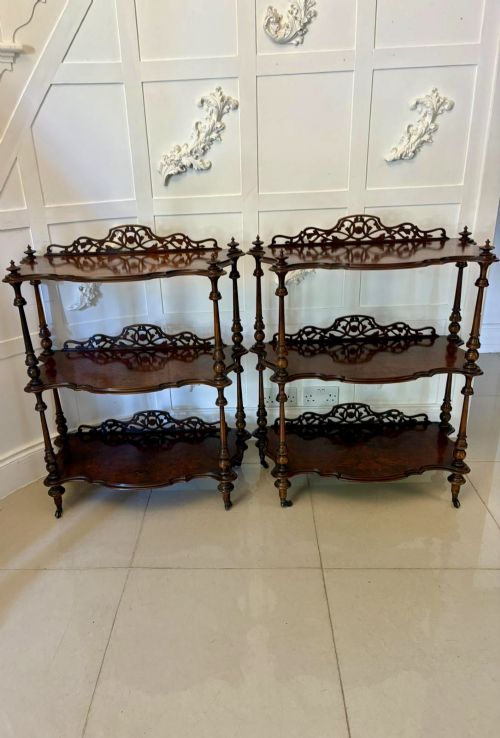
Edwardian carved shelving comprises wall-hanging racks, bookcases, and whatnots designed to organise and display books and ornaments. These pieces date principally from the Edwardian period and the early twentieth century, alongside related Victorian and nineteenth-century examples.
Stylistically, these pieces draw upon Arts and Crafts, Jacobean Revival, and Victorian traditions. They serve practical needs in halls, bedrooms, and libraries while adding architectural interest to plain walls.
The Spectrum of Quality
Quality rests upon the selection of timber and the precision of the carving. Dense hardwoods like burr walnut and golden oak with crisp, deliberate carving represent the higher tier of production.
Construction methods also distinguish standard utility items from finer pieces. Thoughtful integration of adjustable shelving, pegged joinery, and supplementary materials such as brass elevate a piece above basic manufacturing.
Edwardian Carved Shelving Retail Price Guide 2026
Typical asking prices for edwardian carved shelving among the pieces listed under this phrase on Sellingantiques today, from the lower quarter to the upper quarter. They describe what is for sale here now, not the wider market.
Some Victorian whatnots possess three legs, requiring careful placement to avoid an unexpected wobble during dusting.
Edwards & Roberts
The Edwardian Carved Shelving Glossary
- Whatnot
- A set of open shelves designed for displaying ornaments or books, standing on legs or hanging on a wall. These tiered pieces gained popularity during the Victorian and Edwardian eras.
- Breakfront
- A piece of furniture whose central section projects forward from the flanking parts. This layout creates depth and visual interest in larger bookcases and cabinets.
- Fret-cut
- Woodwork pierced with decorative patterns using a fretsaw. This technique creates openwork panels and brackets seen on lighter wall shelves.
- Pegged
- Joined using wooden dowels or pins instead of metal fasteners alone. This traditional method secures structural joints in solid oak and other timbers.
Edwardian Carved Shelving: Frequently Asked Questions
Where should I hang wall shelves?
Wall-hanging shelves suit narrow spaces such as hallways, bedrooms, or above desks where floor space is limited. Ensure they are fixed securely to wall studs to bear the weight of books.
Lighter mahogany or satinwood racks fit well in private rooms, while sturdier oak versions handle heavier volumes in studies.
How do I adjust wooden shelves?
Many period bookcases feature adjustable shelves supported by wooden ratchets, metal pins, or side grooves. Lift the shelf gently to disengage it from the supports before moving it to a new slot.
Avoid forcing tight timber boards to prevent splitting the interior lining of the bookcase.
What is a whatnot used for?
A whatnot is a multi-tiered open shelf unit intended for displaying ornaments, ceramics, and small collections. They were placed in Victorian and Edwardian reception rooms to showcase household treasures.
The stacked platforms allow visibility from multiple angles within a room.
How do I clean carved oak?
Dust carved oak regularly with a soft, dry cloth to prevent dirt settling into the recesses of the carving. Avoid silicone sprays or heavy liquid polishes that build up in the textured grain.
Apply a traditional beeswax sparingly once or twice a year to nourish the timber.