




Edwardian Carved Oak Pedestal Desk
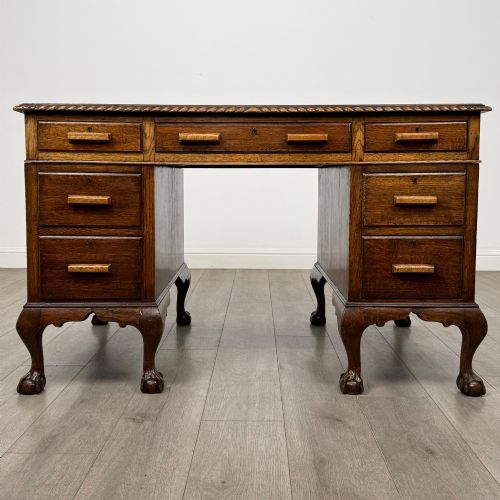
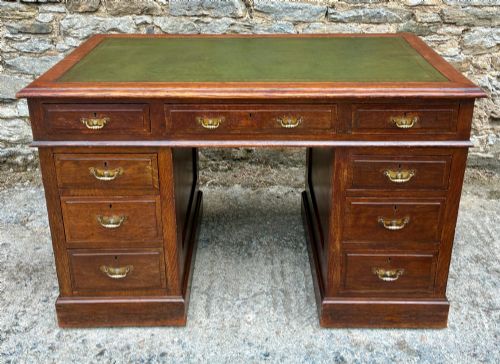
These heavy, substantive pieces are an edwardian carved oak pedestal desk, offering deep drawers and robust timber surfaces built for serious daily correspondence.
Edwardian Carved Oak Pedestal Desk
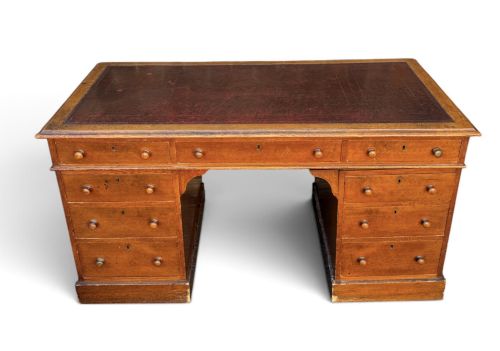
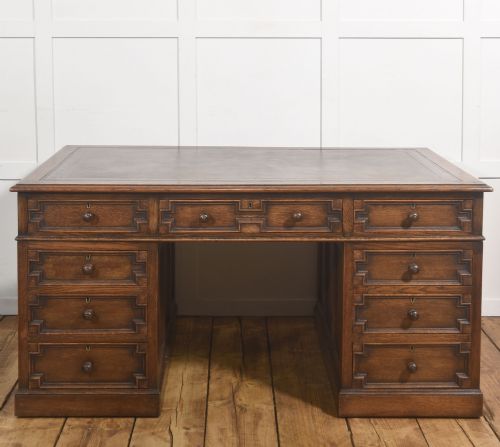
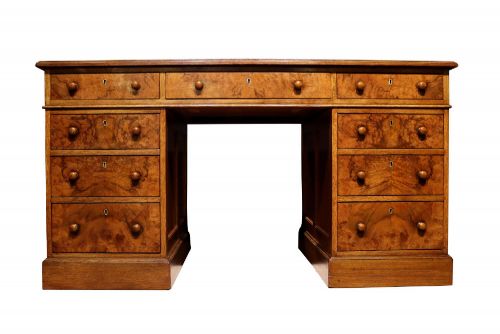
An edwardian carved oak pedestal desk combines architectural presence with functional workspace, typically featuring two banks of drawers supporting a central writing surface. Buyers searching for an edwardian carved oak pedestal desk most frequently encounter sturdy Edwardian iterations alongside late Victorian and Carolean Revival alternatives.
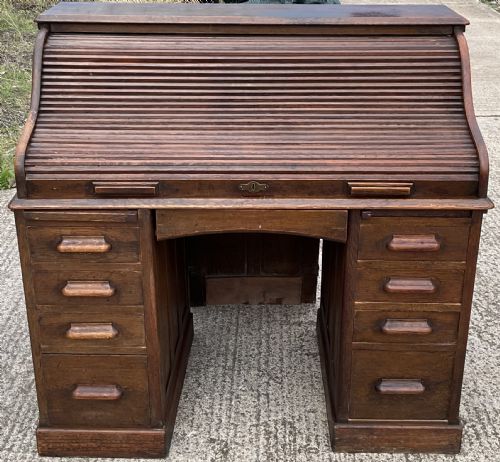
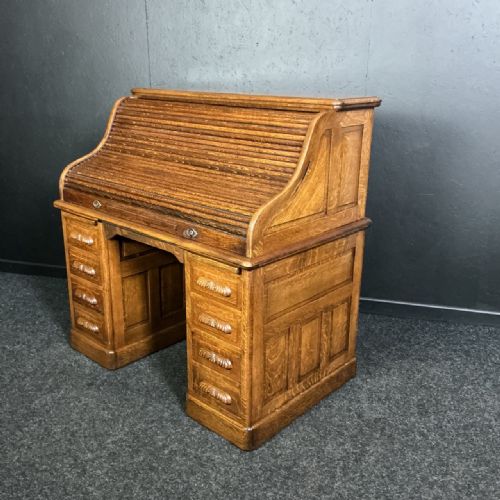
The form often includes specialised variants such as roll-top desks with internal pigeonholes, side tables, and partners desks designed for dual use. Formats range from standard nine-drawer configurations to massive S-shaped cylinder desks.
Originating predominantly from the late nineteenth and early twentieth centuries, these tables rely heavily on solid oak and figured timbers. They provide a commanding centrepiece for a traditional study or home office.
Materials and construction
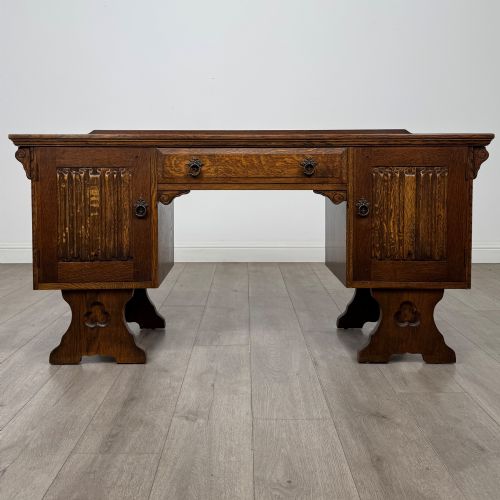
Makers utilised dense hardwoods like oak, ash, and burr walnut, frequently pairing them with inset leather writing surfaces and brass handles or pulls. Carved ornamentation draws heavily on Carolean Revival motifs, incorporating strapwork, gadrooning, and fielded panels into the solid oak frames.
Drawer construction typically involves hand-cut dovetails and solid timber linings designed to withstand heavy daily use. Roll-top variants incorporate slatted tambour doors that glide smoothly within recessed tracks to conceal the interior workspace.
Edwardian Carved Oak Pedestal Desk Retail Price Guide 2026
Typical asking prices for edwardian carved oak pedestal desk among the pieces listed under this phrase on Sellingantiques today, from the lower quarter to the upper quarter. They describe what is for sale here now, not the wider market.
Listings feature oak, ash, burr walnut, and brass across Edwardian, Victorian, and Carolean Revival styles.
Assessing quality and craftsmanship
The distinction between standard office furniture and superior examples lies in the selection of figured or burr oak veneers and the depth of hand-carved detailing. Crisp, undercut relief carving on the drawer fronts and pedestals signals a higher grade of workshop production compared to mechanical stamping.
Internal timber selection and drawer action also define the tier of the piece, with secondary softwoods appearing in utility models while superior examples maintain solid oak throughout. The integration of quality brass hardware and well-fitted tambour mechanisms elevates the standing of an individual desk.
Edwards and Roberts
The Edwardian Carved Oak Pedestal Desk Glossary
- Pedestal desk
- A freestanding desk comprising two supporting columns of drawers with a central connecting top section.
- Roll top desk
- A writing table featuring a flexible slatted wooden cylinder that pulls down to secure the desktop.
- Partners desk
- A large double-sided writing table designed to accommodate two people working opposite each other.
- Burr oak
- A specialised timber cut from tree growths, displaying complex swirling grain patterns highly prized for cabinet fronts.
- Carolean Revival
- A late nineteenth-century design movement emulating the ornate, carved styles of the seventeenth century.
Edwardian Carved Oak Pedestal Desk: Frequently Asked Questions
How do I identify an Edwardian desk?
Edwardian desks are typically characterised by lighter oak tones, clean proportions, and restrained carving influenced by earlier revival styles. They often feature simpler brass hardware compared to heavily ornamented Victorian predecessors.
Examination of the drawer linings and secondary timbers provides further chronological clues, as mass-produced machine milling became more prevalent by the early twentieth century.
What is a roll top desk?
A roll top desk utilises a slatted tambour shutter that slides vertically over tracks to cover the writing surface and pigeonholes. This mechanism allowed users to secure correspondence without emptying the desk.
These pieces require careful inspection of the wooden tambour strips and interior pigeonhole configuration to ensure smooth daily operation.
Are these desks suitable for modern computers?
Many of these large pedestal desks accommodate contemporary technology well due to their expansive surface areas and deep pedestals. Roll-top variants offer the additional benefit of closing away screens and peripherals when not in use.
Kneehole clearances should be measured carefully, as nineteenth-century chair openings are occasionally narrower than modern seating requires.
How do I care for an oak desk?
Solid oak surfaces benefit from occasional treatment with appropriate beeswax or furniture polish to nourish the grain and maintain a natural sheen. Direct sunlight and excessive dry heat should be avoided to prevent timber splitting.
Leather skivers require dedicated leather cream to keep the material supple and prevent cracking across the writing surface.