

Edwardian Brass Pendant Fitting
These edwardian brass pendant fitting pieces bring period illumination and metalwork into domestic spaces.
Edwardian Brass Pendant Fitting
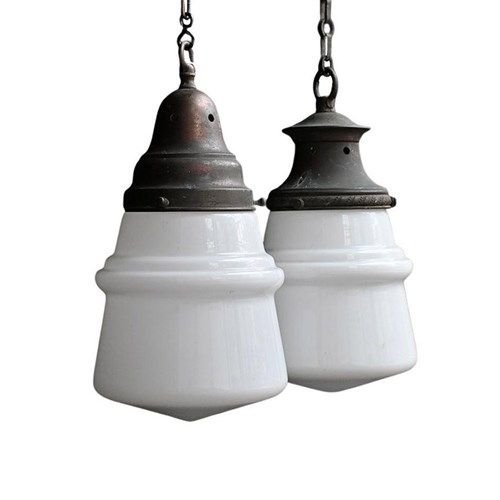
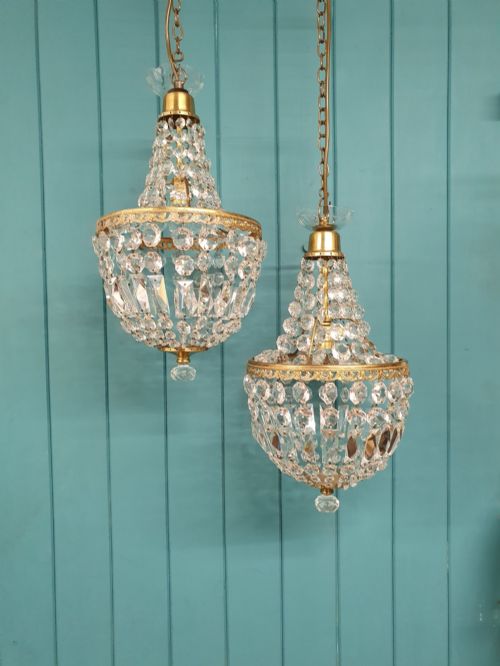
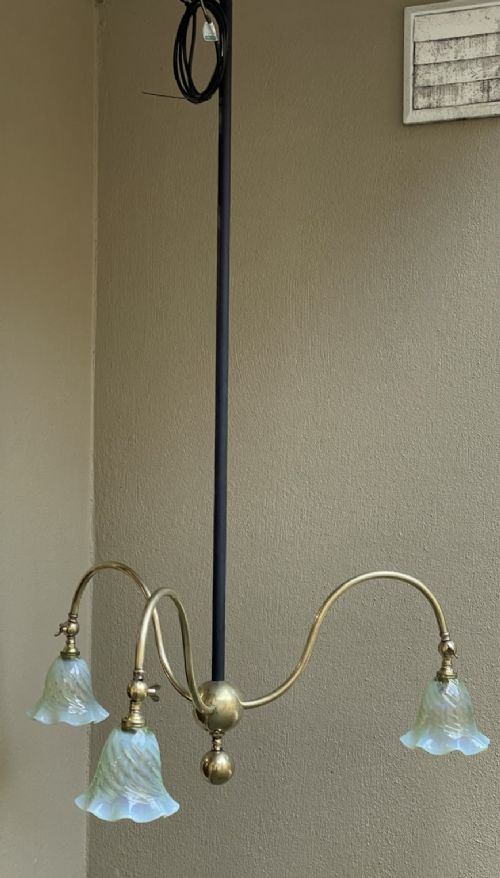
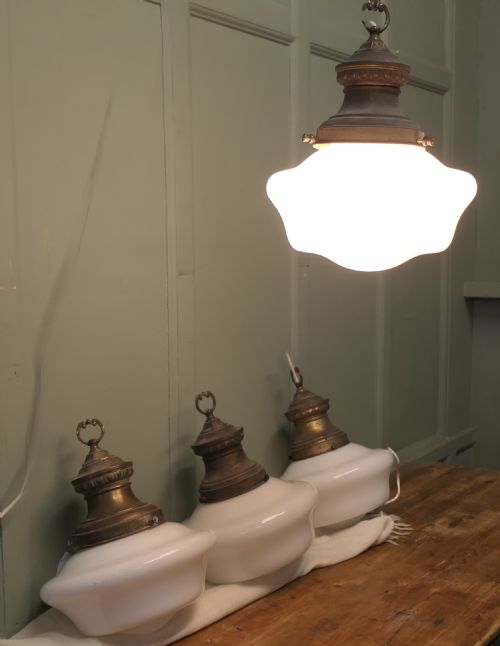
When you search for an edwardian brass pendant fitting, you encounter ceiling-hung lighting fixtures originating predominantly from the early twentieth century, the Edwardian era, and adjacent periods like the nineteenth century up to 1940. The forms span chandeliers, ceiling lights, pendant lights, hall lanterns, and plafonieres, often constructed with multiple branches or single hanging points.
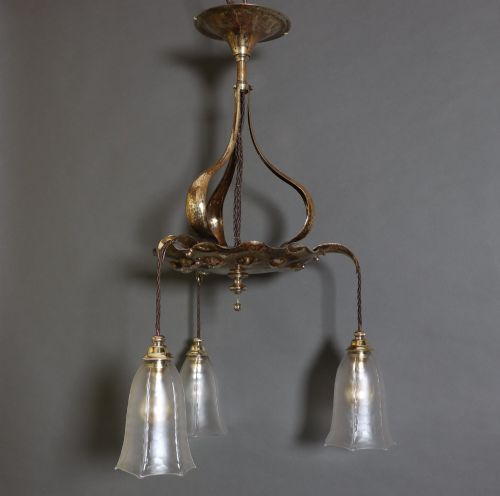
You are most likely to meet cast and fabricated brass structures paired with glass elements, manifesting in styles ranging from Arts and Crafts and Art Nouveau to French Neoclassical, Industrial, and Victorian revivals. Many examples incorporate cut glass crystals, beaded elements, or tinted shades to diffuse the illumination.
How they were made
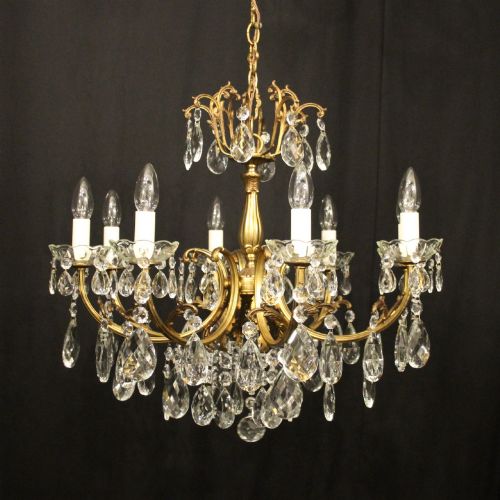
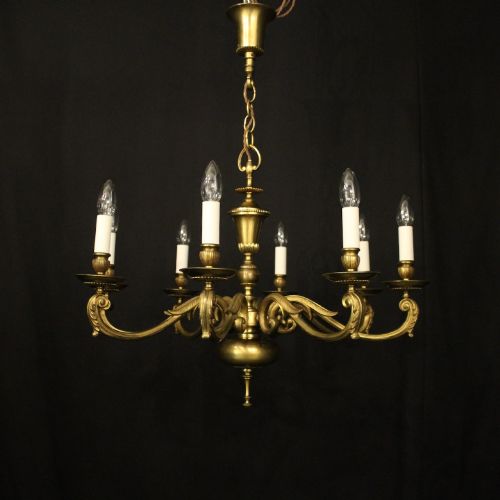
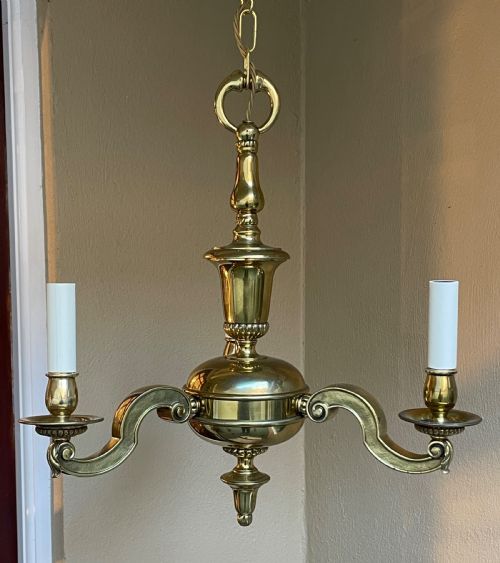
Makers utilised brass, bronze, copper, and gilt bronze as foundational metals for the frames, arms, and mounts, frequently shaping them through casting and metalworking techniques to form multi-arm chandeliers or basket frames. Nickel plating also appears on certain structural components.
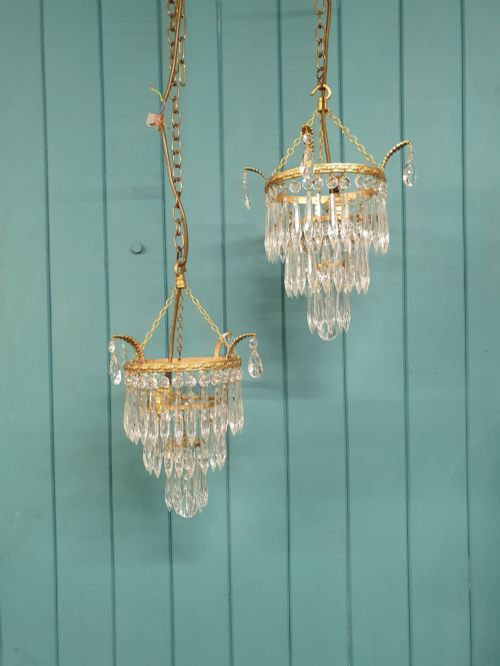
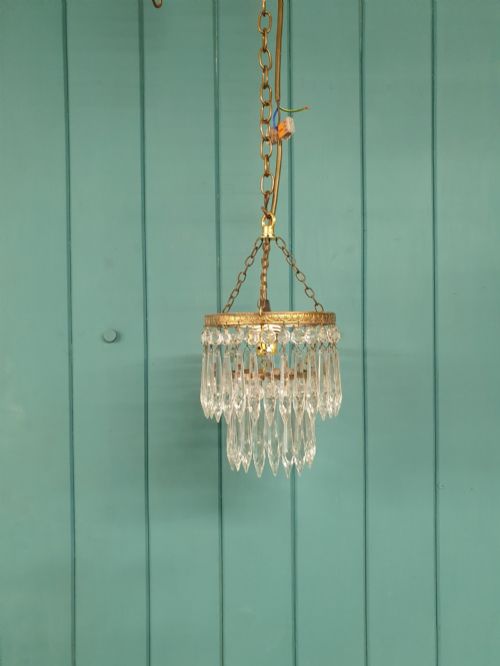
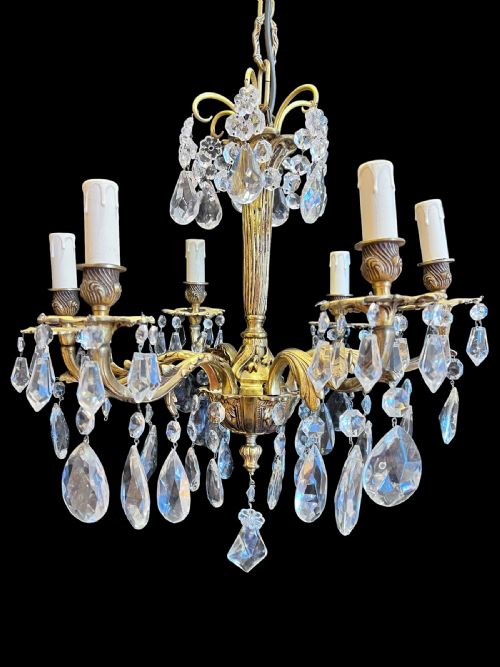
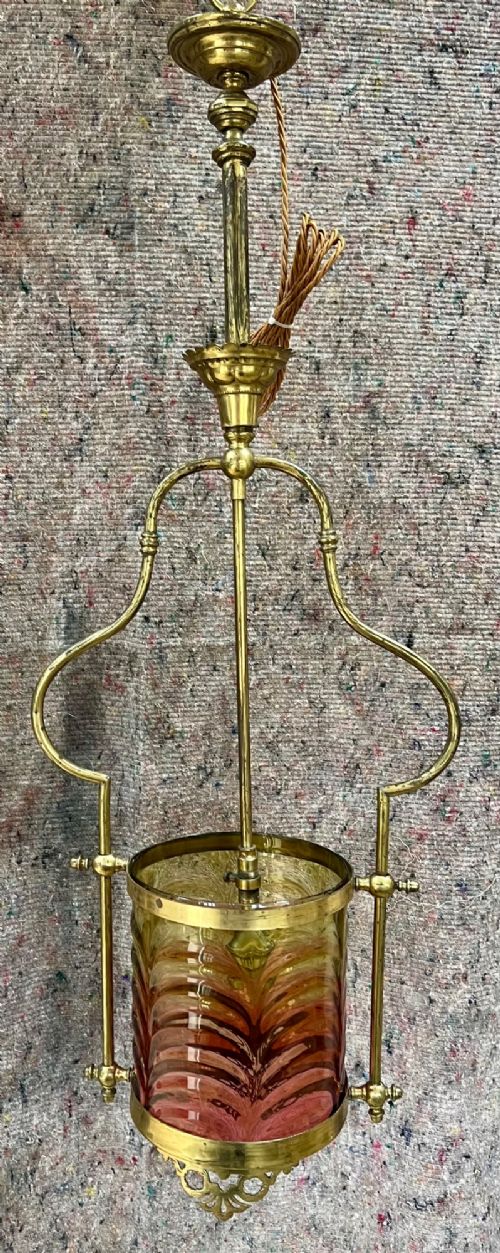
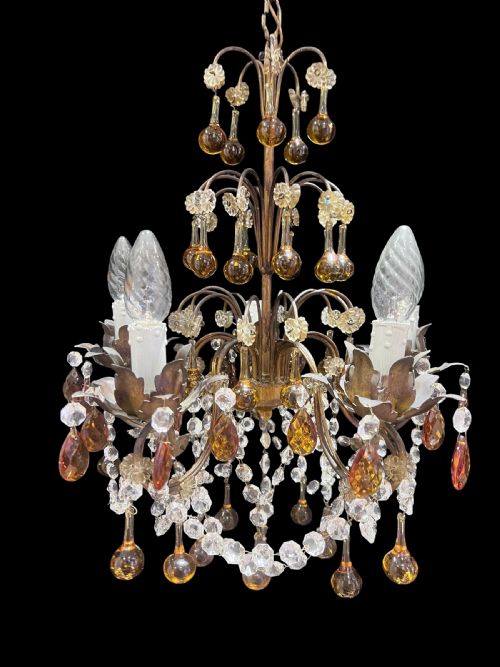
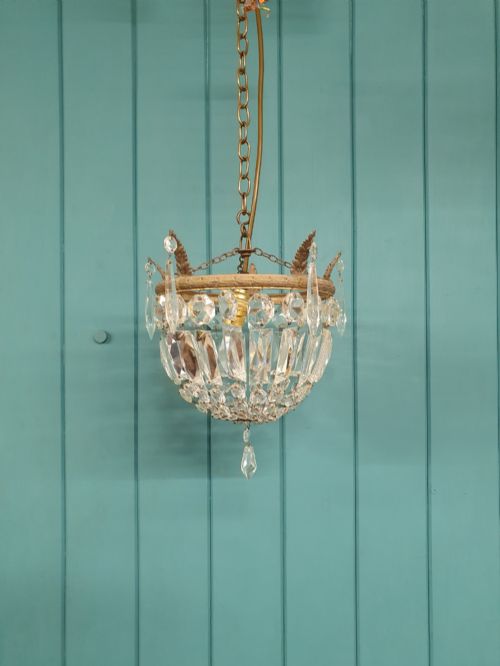
Glass and crystal form the secondary material group, encompassing cut glass, crystal, spiked or coffin prisms, beads, and domes that hang from the metal armatures. These components are secured with wire or pins, while some fixtures feature specific glass shades, including pink crimped glass.
Edwardian Brass Pendant Fitting Retail Price Guide 2026
Typical asking prices for edwardian brass pendant fitting among the pieces listed under this phrase on Sellingantiques today, from the lower quarter to the upper quarter. They describe what is for sale here now, not the wider market.
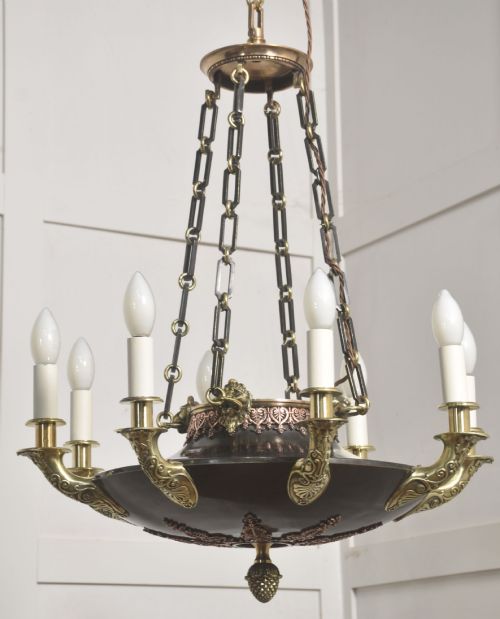
Lion masks peer out from cast brass arms on certain ceiling fixtures, watching the room from the chandelier frame.
What varies in quality
The sophistication of the metal casting and the complexity of the glass components determine the upper tier of these pieces, seen in heavy cast brass branches, detailed lion masks, and extensive cut glass crystal prisms. Simpler spun metal plates or basic industrial shades occupy a different tier of manufacture.
The integrity of the structural assembly and the richness of the metal finish, whether natural brass, gilded bronze, or silver-gilded bronze, separate standard production items from more ambitious architectural or decorative commissions.
G.E.C
The Edwardian Brass Pendant Fitting Glossary
- Pendant
- A light fixture suspended from the ceiling by a single cord, chain, or rod. It hangs downward to direct illumination over a specific area.
- Chandelier
- A branched ornamental light fixture designed to hold multiple bulbs or candles. It distributes light across a wider room.
- Prism
- A cut piece of glass or crystal hung from a chandelier to refract light. Prisms come in various shapes such as spikes, coffins, and drops.
- Bag Chandelier
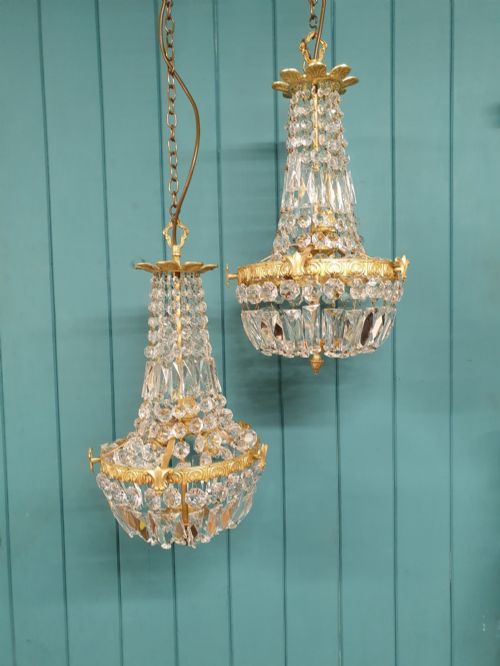
- A style of light fixture featuring a rounded or bag-shaped lower section composed of numerous glass beads and crystals. It creates a dense, sparkling cluster of illumination.
Edwardian Brass Pendant Fitting: Frequently Asked Questions
How do I hang a pendant light?
These fixtures suspend from ceilings using chains, rods, or cords attached to a central mounting point. Proper installation requires securing the weight safely to ceiling joists.
Wiring is then connected to the domestic electrical supply inside a ceiling rose or junction box.
What styles define Edwardian lighting?
Edwardian lighting often combines brass metalwork with cut glass crystals, drawing on earlier Victorian traditions while introducing cleaner early twentieth-century proportions. Styles range from simple brass chandeliers to elaborate crystal bag pendants.
Industrial and Arts and Crafts influences also appear alongside French-inspired neoclassical revival designs.
How do I clean crystal prisms?
Prisms and glass drops are removed carefully from the metal frame to be washed in warm soapy water. Rinsing them thoroughly prevents residue filming on the cut surfaces.
They are dried with a lint-free cloth before being reattached to the brass mounts.
Where were these lights used?
These ceiling fittings illuminated domestic rooms, hallways, and public buildings during the early twentieth century. Hall lanterns suited narrow entrance spaces, while multi-arm chandeliers lit principal reception rooms.
Smaller spike and bag chandeliers provided decorative illumination in parlours and chambers.