



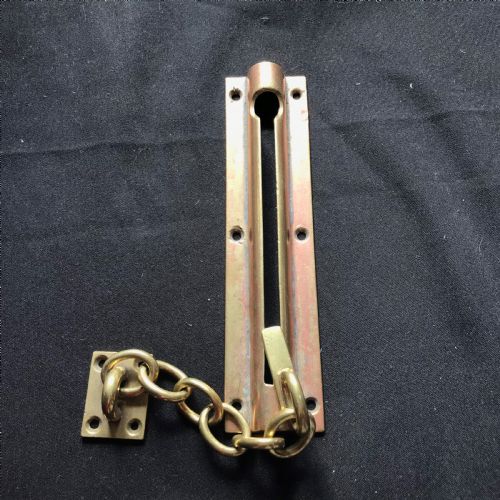


Edwardian Brass Hardware
Edwardian brass hardware brings sturdy period character to doors and furniture, offering a practical touch of early twentieth-century design.
Edwardian Brass Hardware
When you search for edwardian brass hardware, you encounter functional fittings designed for domestic and public spaces around the turn of the twentieth century. These items include door handles, finger plates, coat hooks, knockers, and fasteners that combine robust utility with decorative detailing.
The selections on this page span the Edwardian period alongside adjacent Victorian, Arts and Crafts, Art Nouveau, and 1920s styles. You will frequently find cast brass door furniture, heavy bronze knobs, and mounted plates intended for interior doors and storage chests.
Originating from an era of detailed interior joinery, these pieces reflect the architectural priorities of their time. They range from utilitarian shop door handles to decorative domestic doorstops and matching lock sets.
How edwardian brass hardware was made
The items are primarily manufactured through traditional metal casting techniques, producing substantial pieces of brass and bronze. Molten metal was poured into moulds to create intricate relief patterns seen in Art Nouveau scrolls and Arts and Crafts geometric forms.
Many fittings incorporate mixed media, combining cast brass or bronze components with wood, leather, lead crystal, or porcelain. Surface finishes were achieved through hand polishing or patination, ensuring the hardware developed a natural appearance over decades of use.
Edwardian Brass Hardware Retail Price Guide 2026
Typical asking prices for edwardian brass hardware among the pieces listed under this phrase on Sellingantiques today, from the lower quarter to the upper quarter. They describe what is for sale here now, not the wider market.
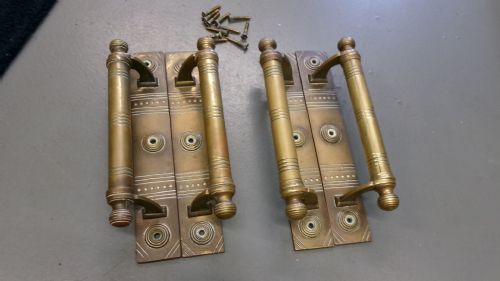
A solitary shop door handle stands ready for its next customer after a century of opening mercantile stores.
What varies in quality
Quality in edwardian brass hardware rests upon the thickness of the metal casting and the crispness of the decorative detail. Heavier pieces with deep relief work and intact original mechanisms demonstrate superior manufacturing standards compared to lighter, mass-produced alternatives.
The retention of original matching components, such as corresponding knobs, backplates, and screws, elevates the integrity of a set. Finer examples display careful hand-finishing on the reverse sides and clear maker signatures or stamps.
Jas Shoolbred
The Edwardian Brass Hardware Glossary
- Finger plate
- A protective metal panel fitted to a door around the handle to prevent fingerprints and wear on the wood. These often feature distinctive Arts and Crafts or Art Nouveau motifs.
- Door butler
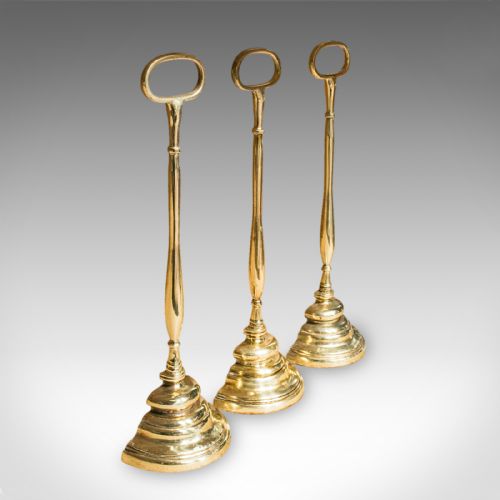
- A heavy weighted object or doorstop designed to keep doors open. In this selection, they appear as cast brass figures or utilitarian stops.
- Mortise lock
- A locking mechanism recessed into the edge of a door rather than mounted on the surface. They work alongside matching handles and spindles.
- Cast brass
- Molten brass poured into a mould to shape hardware items. This technique allows for complex ornamentation and durable construction.
- Backplate
- The flat metal plate attached behind a door handle or keyhole. It distributes pressure and provides a decorative border.
Edwardian Brass Hardware: Frequently Asked Questions
How do I clean antique brass hardware?
Wash the pieces gently with warm soapy water and a soft cloth to remove accumulated dirt without disturbing the aged surface. Avoid harsh chemical cleaners that strip away historical patination.
Dry the metal thoroughly with a soft towel after cleaning to prevent spotting. Leaving a minimal protective layer of wax can help preserve the finish.
Are these items suitable for modern doors?
Many Edwardian door handles and plates fit standard modern door preparations with minor adjustments to spindles or screw placements. Checking the backset and spindle thickness ensures correct alignment with existing latches.
Consult a local joiner if the mortise mechanism requires fitting into contemporary door frames. Original fixings should be handled with care during installation.
How do I date brass hardware?
Dating relies upon stylistic indicators such as flowing Art Nouveau lines, geometric Arts and Crafts forms, or heavier Victorian proportions. Fastener types, manufacturing marks, and accompanying patents also offer chronological clues.
Comparing the weight and casting quality against known period examples helps confirm the era of manufacture. Subtle shifts in design preferences mark the transition from Victorian excess to Edwardian restraint.
Can I use coat hooks on plaster walls?
Solid brass coat hooks require secure anchorage into wooden studs or appropriate wall plugs to support heavy garments. Given the substantial weight of cast metal hooks, proper wall fixings are essential for safety.
Ensure the screws match the countersunk holes in the backplate to prevent movement under load. Distributing weight evenly across a set of hooks protects the surrounding wall.