




Edwardian Bowfront Table
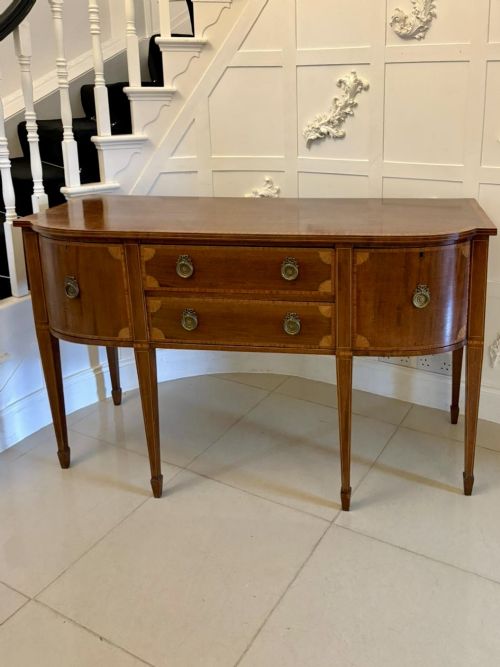
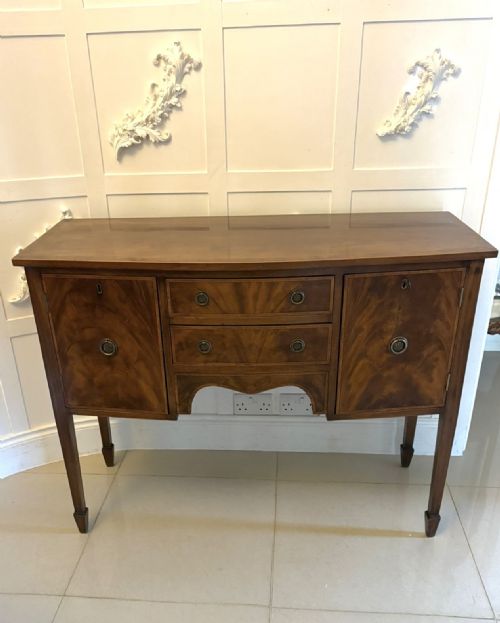
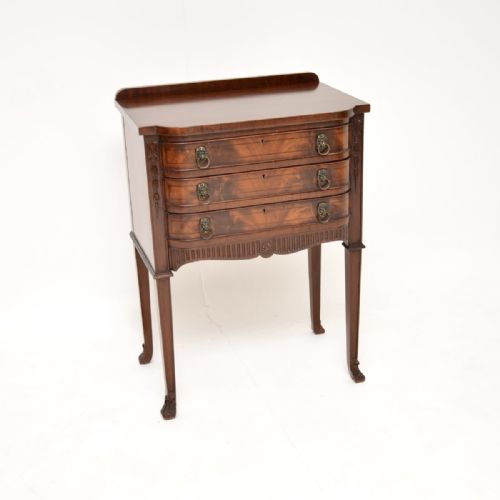
When you search for an Edwardian bowfront table, you are looking at graceful, curved timber furniture built to soften a room's corners.
Edwardian Bowfront Table
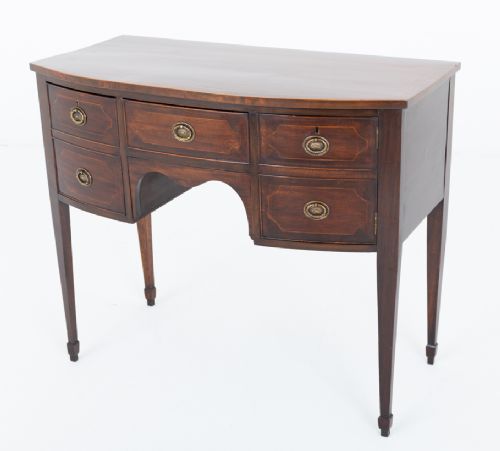
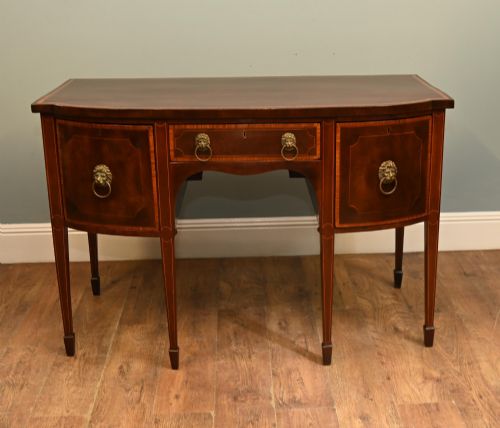
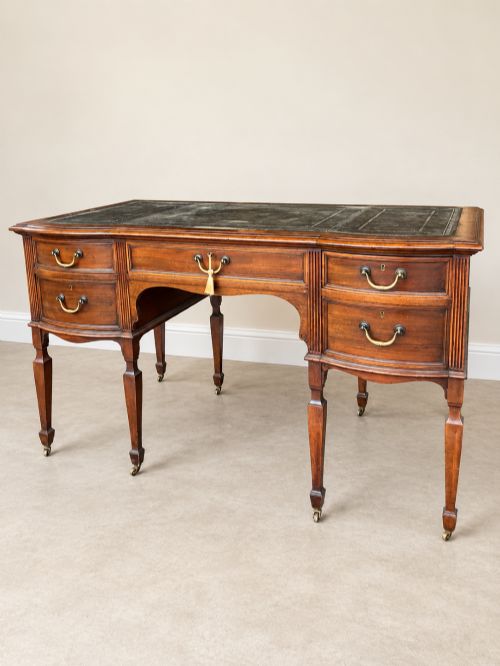
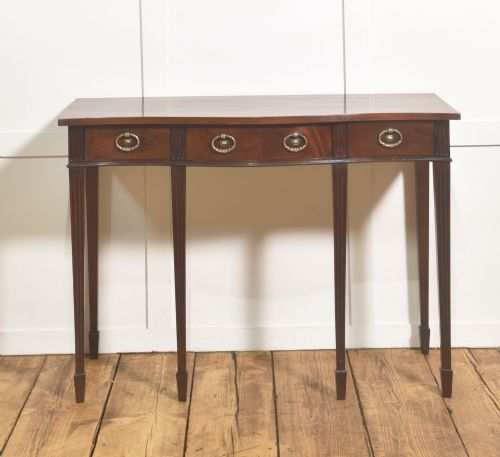
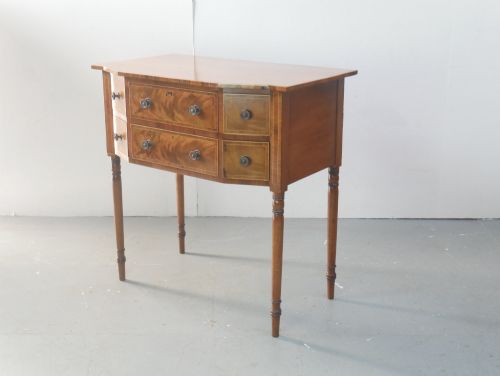
An edwardian bowfront table brings the characteristic curved front of the period into everyday domestic use, most commonly appearing in forms such as side tables, desks, and smaller serving pieces. These pieces reflect the tastes of the early twentieth century, drawing heavily on earlier design vocabulary while adapting to more compact interior spaces.
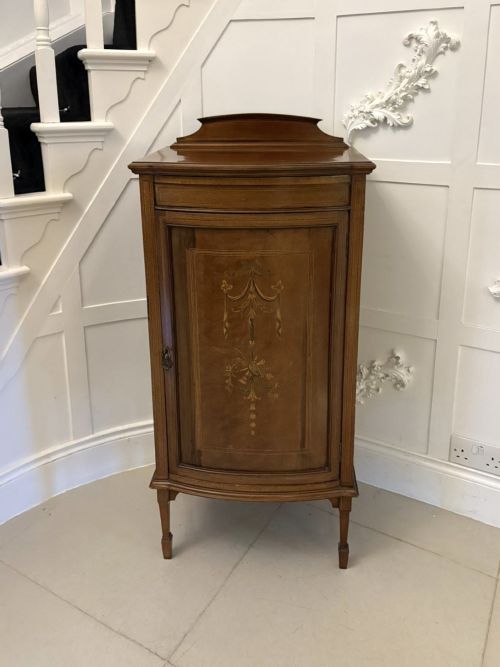
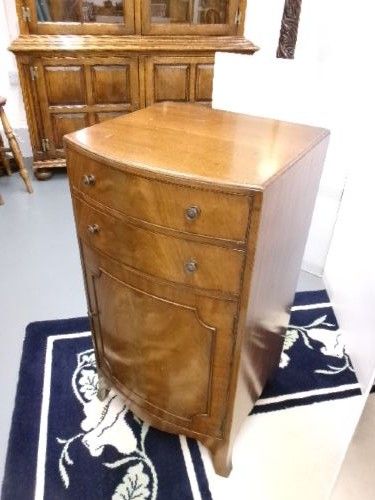
The material palette recorded in the listings centres firmly on mahogany, often enriched with contrasting satinwood or boxwood inlay and occasional brass fittings. Sideboards, side cabinets, and bedside tables dominate the selection, showing how makers translated the sweeping curve into varied functional items for the home.
How they were made
Makers constructed these pieces primarily using solid mahogany and flame mahogany veneers laid over a sturdy carcase, bending the timber to create the signature convex facade. Cabinetmakers applied intricate boxwood and satinwood inlay by hand, recessing fine stringing and decorative motifs directly into the wooden surface.
Details such as leather writing surfaces and cast brass hardware appear frequently among the pieces, demonstrating a reliance on traditional joinery methods. The integration of crossbanding and contrasting wood veneers required precise hand-cutting to achieve clean joints along the curved outlines.
Edwardian Bowfront Table Retail Price Guide 2026
Typical asking prices for edwardian bowfront table among the pieces listed under this phrase on Sellingantiques today, from the lower quarter to the upper quarter. They describe what is for sale here now, not the wider market.
Some bedside cabinets are narrow enough to make you wonder where anyone managed to fit a glass of water.
What varies in quality
The distinction between standard production and finer execution lies in the choice and application of timber. Pieces featuring carefully selected flame mahogany veneers and crisp, precisely laid satinwood inlay demonstrate a higher level of workshop skill than those with simpler, plain surfaces.
Proportion and restraint in ornament also divide the range. The most accomplished examples rely on balanced stringing and harmonious wood selection rather than heavy embellishment, maintaining clean structural lines along the curved front.
Gillows
The Edwardian Bowfront Table Glossary
- Bowfront
- A convex, curved front edge characteristic of certain tables and sideboards. This shape softens the profile of case furniture and tables.
- Crossbanding
- A strip of veneer laid perpendicularly to the grain of the surface it surrounds. It provides a neat, decorative border.
- Inlay
- A technique where contrasting materials are set into the surface of a piece to form a design. Boxwood and satinwood are common choices for this work.
- Flame mahogany
- Mahogany timber cut to reveal a distinctive flickering grain pattern. It was often utilised on prominent surfaces like drawer fronts and tabletops.
Edwardian Bowfront Table: Frequently Asked Questions
What is an edwardian bowfront table?
An edwardian bowfront table is a piece of furniture featuring a curved, convex front edge made during the early twentieth century. These items typically utilise mahogany and often incorporate decorative inlay.
They serve practical roles as side tables or writing desks while introducing period character to a room through their distinctive silhouette.
Where should I place an edwardian bowfront table?
These tables suit hallways, living rooms, or bedrooms where a curved front helps soften linear architectural lines. Their compact proportions allow them to fit well against walls without dominating the floor space.
Matching them with simple seating or placing them beneath a mirror creates a balanced focal point in a traditional interior.
How do I care for mahogany furniture?
Keep mahogany furniture away from direct sunlight and heat sources to prevent the wood and veneers from drying out. Dust regularly with a soft, dry cloth and apply a quality wax polish sparingly when the surface loses its lustre.
Avoid using harsh chemical sprays or placing damp items directly onto the timber or leather inserts.
How can I tell the period of a bowfront piece?
Dating relies on examining the construction methods, secondary woods, and decorative styles present in the piece. Edwardian examples often blend Sheraton revival influences with lighter proportions than their nineteenth-century predecessors.
Reviewing the specific combination of veneers, hardware, and inlay helps distinguish an original period piece from later reproductions.