

Edwardian Bowfront China Cabinet
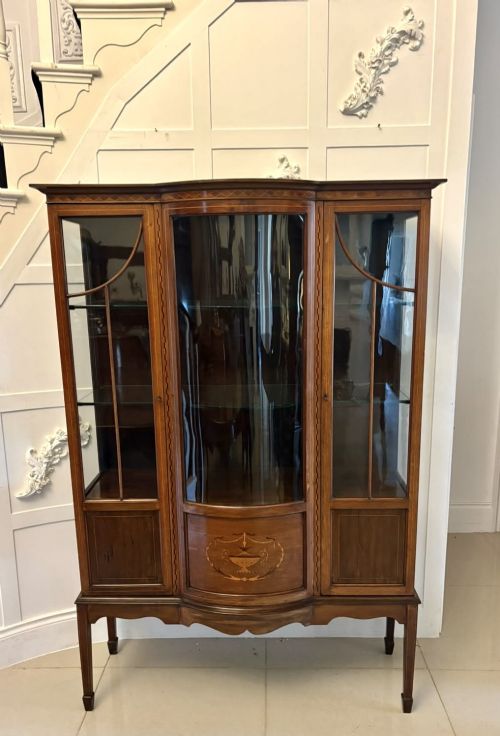
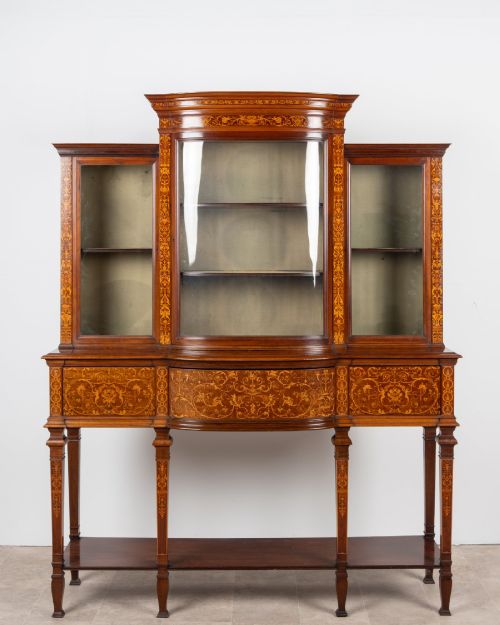
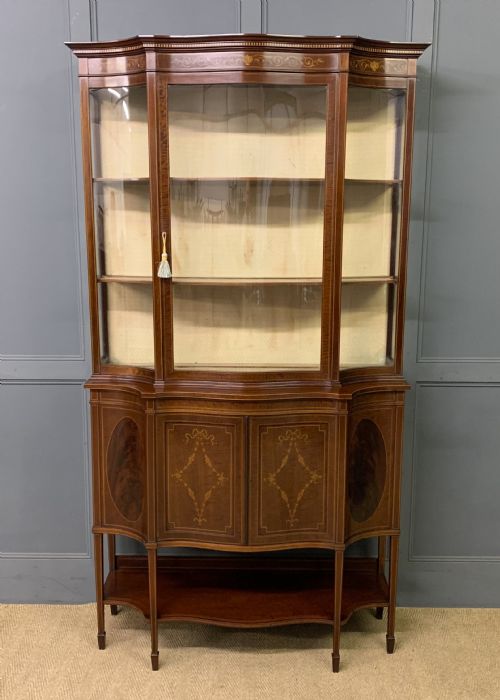
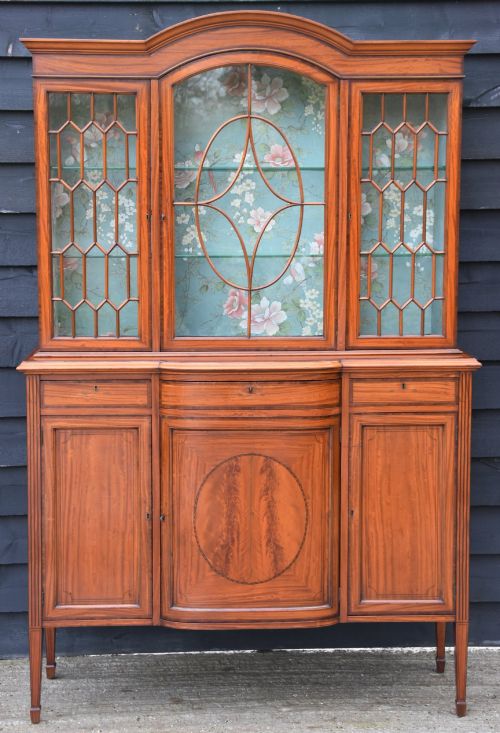
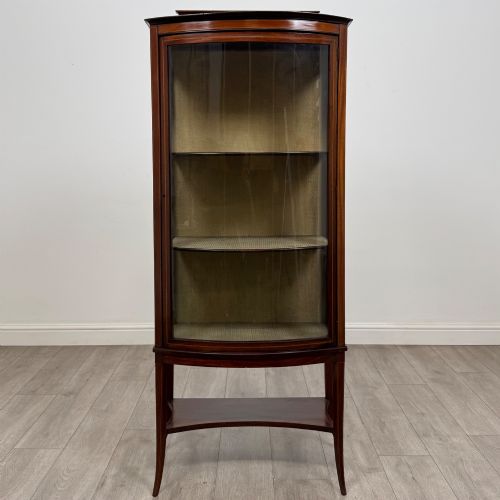
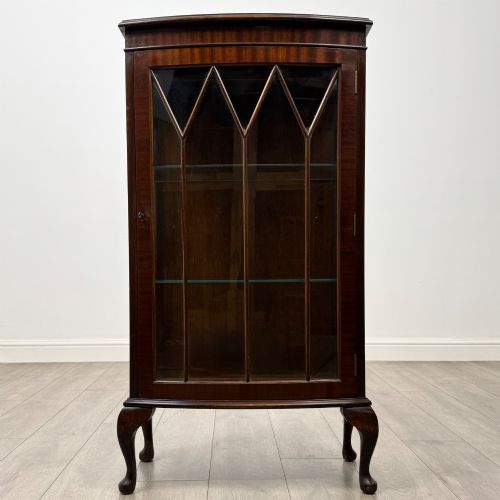
An edwardian bowfront china cabinet brings a curved glass silhouette and fine timber framing to the display of cherished porcelain.
Edwardian Bowfront China Cabinet
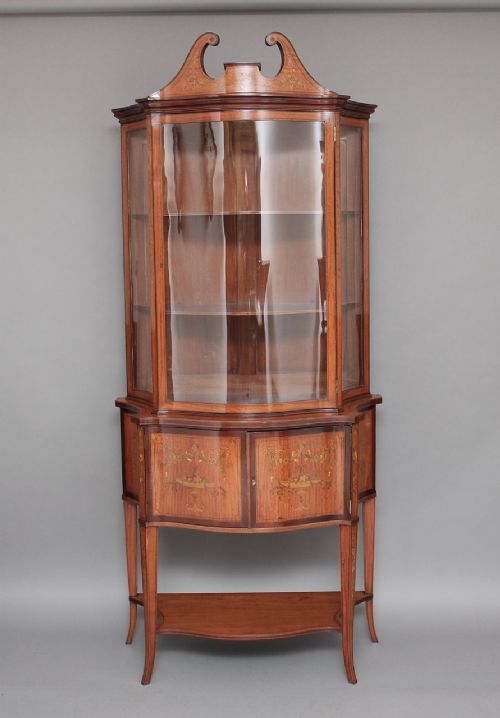
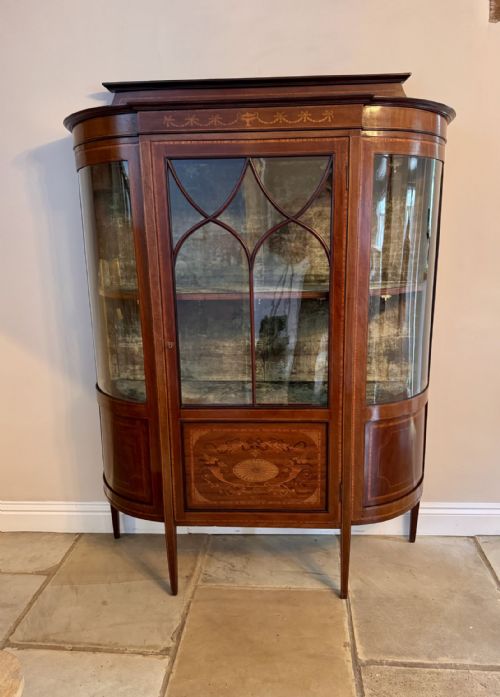
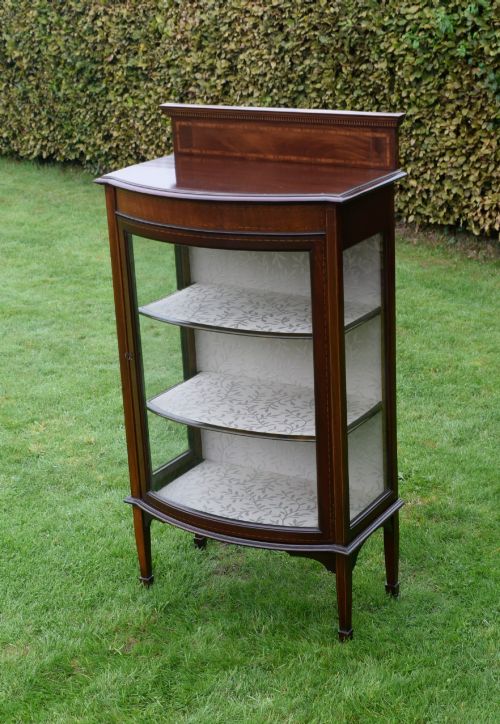
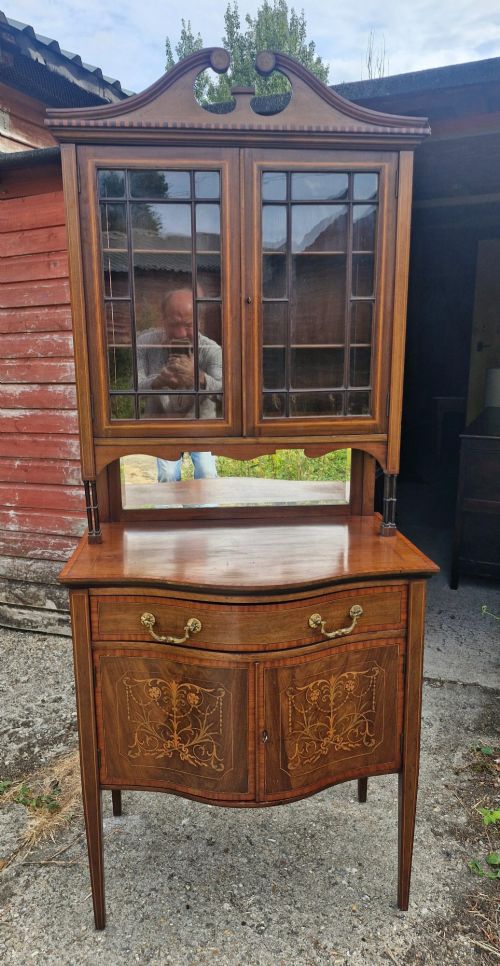
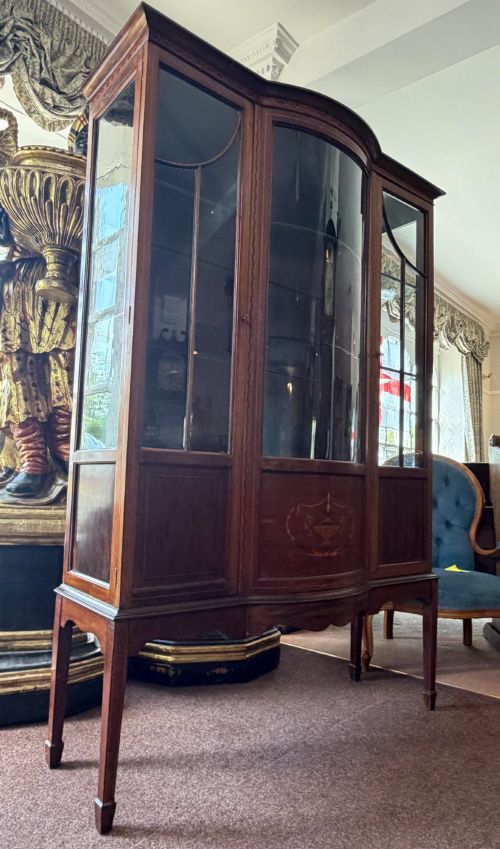
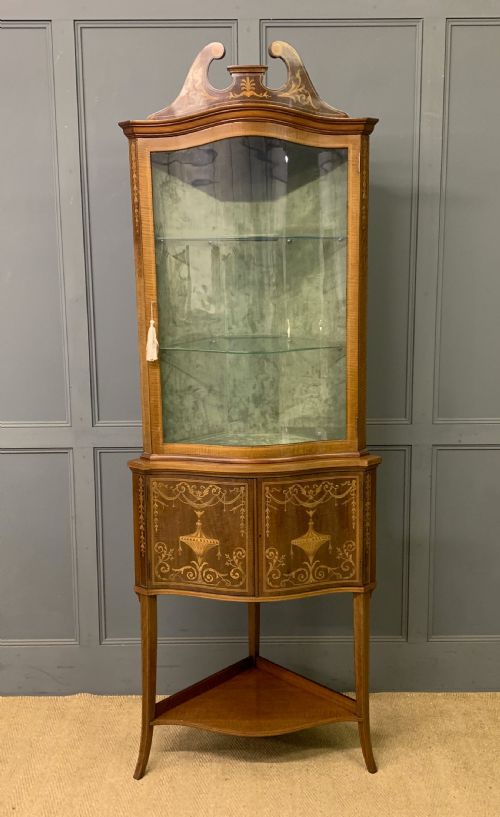
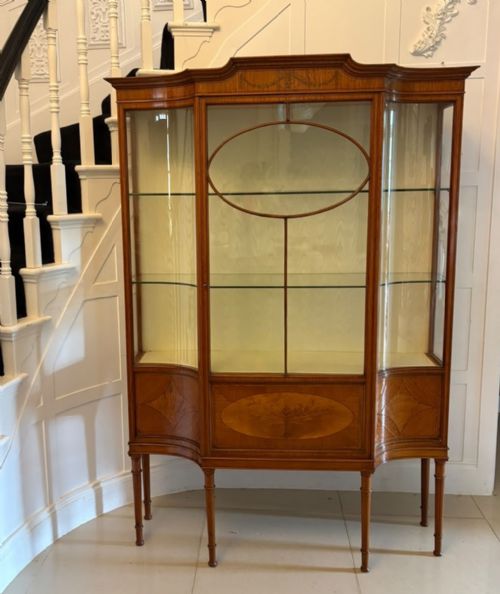
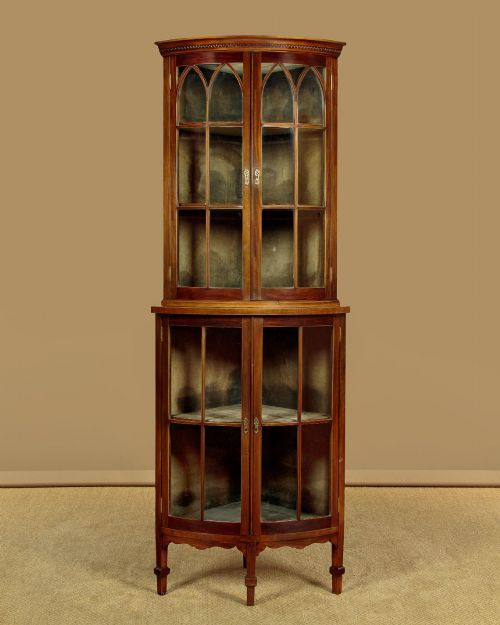
The edwardian bowfront china cabinet is primarily defined by its curved glazed door and timber construction, emerging largely during the Edwardian period alongside late Victorian and early twentieth century revivals. These pieces combine display capacity with refined silhouettes, often taking a two-part form or standing as freestanding corner cupboards.
Makers drew heavily on Georgian and Sheraton Revival styles, incorporating delicate proportions suited to domestic display. Surviving examples reflect both upright freestanding formats and demilune shapes designed to fit neatly into room angles.
Materials and Construction
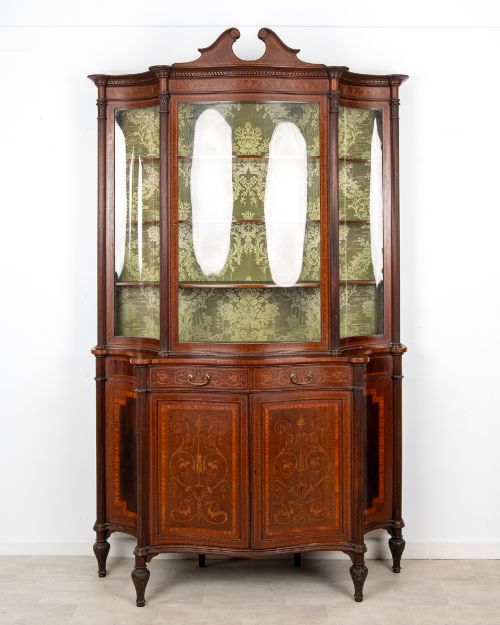
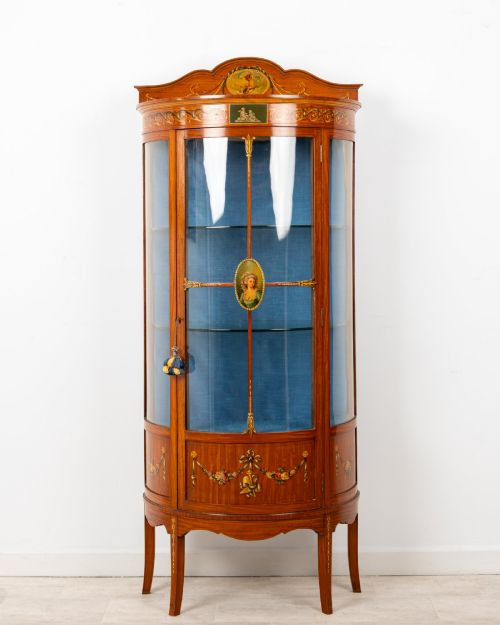
Cabinetmakers relied on mahogany as the primary structural timber, frequently enhanced with contrasting satinwood inlay and marquetry motifs. Glass panels formed the bowed doors, allowing light to enter from multiple angles while protecting the ceramics inside.
Additional detail was achieved through painted floral decoration, mother of pearl accents, and brass hardware. Interiors sometimes featured mirrored backs and fabric linings to complement the displayed wares.
Edwardian Bowfront China Cabinet Retail Price Guide 2026
Typical asking prices for edwardian bowfront china cabinet among the pieces listed under this phrase on Sellingantiques today, from the lower quarter to the upper quarter. They describe what is for sale here now, not the wider market.
Listings feature mahogany, satinwood inlay, glass, and brass spanning from the late nineteenth century into the nineteen thirties.
Craftsmanship and Detail
Quality rests in the precision of the curved glazing bars and the crispness of the satinwood inlay work. Finer examples display intricate marquetry and painted elements executed with careful attention to proportion.
Structural integrity of the bowed door hinges and the depth of the timber grain also separate standard production from superior pieces. The integration of mirrored elements and specialised hardware further distinguishes the upper tier of cabinets.
Edwards and Roberts
The Edwardian Bowfront China Cabinet Glossary
- Bowfront
- A convex curved cabinet front that projects outward. This shape softens room corners and magnifies the visual presence of displayed ceramics.
- Marquetry
- Decorative veneer work forming pictorial or geometric patterns. Craftsmen fitted different wood types into precise recesses.
- Satinwood Inlay
- Contrasting pale wood inserted into mahogany surfaces. It provides bright linear borders and geometric framing.
- Vitrine
- A glass-fronted display cabinet intended for precious objects. These pieces prioritise visibility through expansive side and front panels.
- Demilune
- A half-moon shape used for tables and cabinets. This profile allows pieces to sit flush against flat walls while maintaining a curved front.
Edwardian Bowfront China Cabinet: Frequently Asked Questions
What is an edwardian bowfront china cabinet?
An edwardian bowfront china cabinet is a glazed display piece featuring a convex curved front, typically constructed from mahogany with decorative inlay.
These cabinets were built to showcase ceramic collections and decorative porcelain safely within domestic interiors.
How do I date these cabinets?
Dating relies on stylistic clues such as Sheraton Revival motifs, Edwardian proportions, and material combinations like satinwood inlay on mahogany.
Construction methods and glass manufacturing traits also help narrow the production era to the late nineteenth or early twentieth century.
Where should I place a corner cabinet?
Corner cabinets are designed to utilise unused room angles, fitting snugly into junctions between two walls.
Their footprint makes them practical for smaller spaces where a flat-backed cabinet might dominate the room.
How should I clean the glass?
Clean the curved glass panels gently using a soft cloth and mild glass cleaner applied sparingly.
Avoid spraying liquid directly onto the wood framing or antique inlay to prevent moisture damage.