

Edwardian Bow Front
An Edwardian bow front brings a gentle convex curve to room corners and straight walls alike, offering practical storage disguised by graceful lines.
Edwardian Bow Front
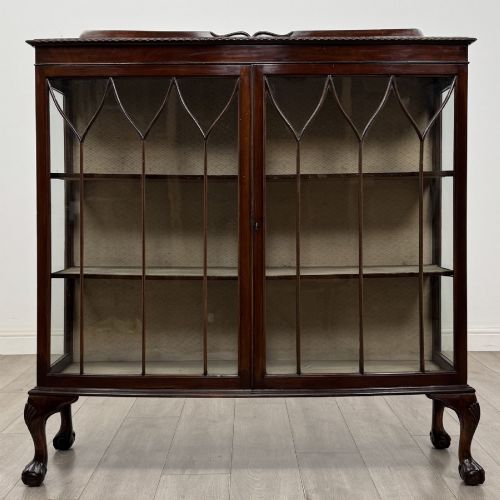
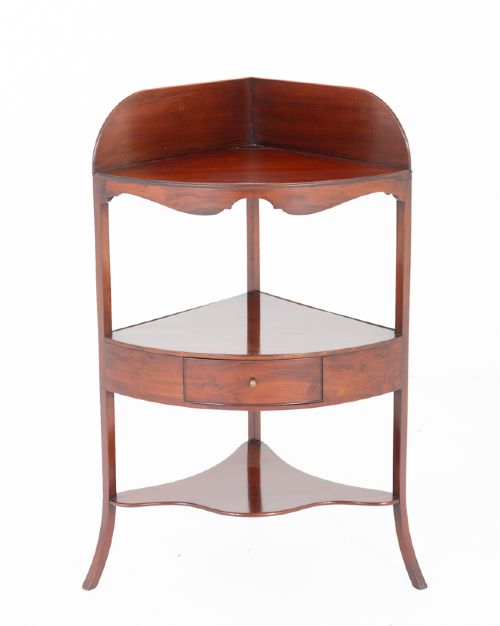
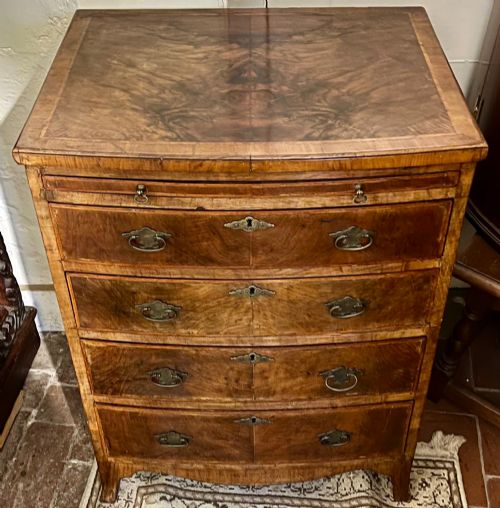
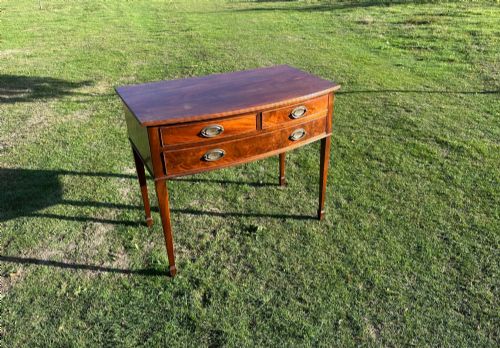
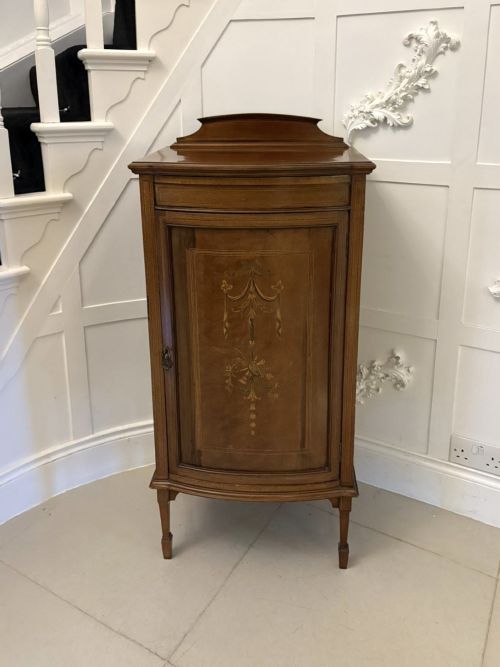
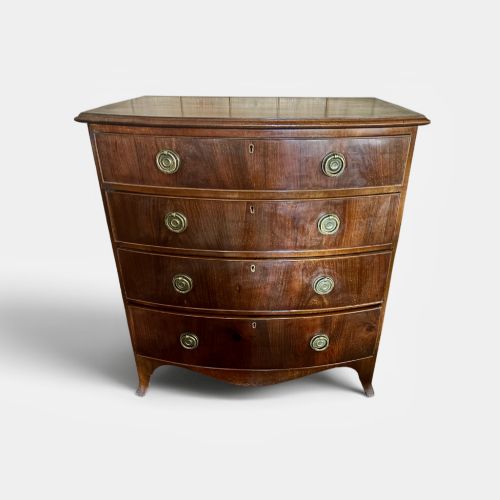
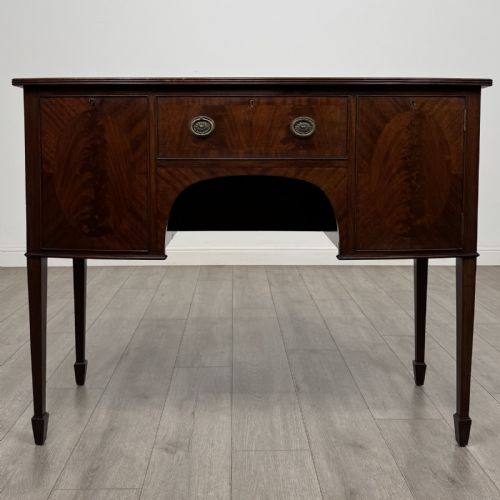
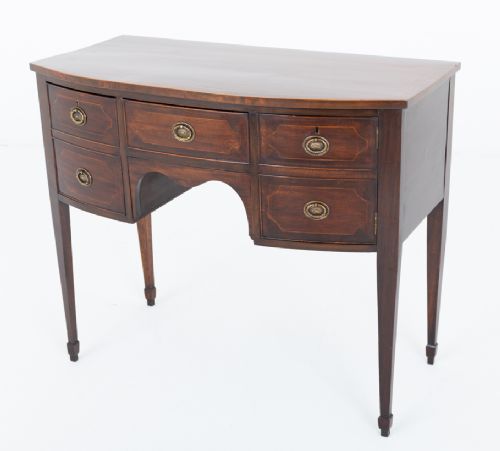
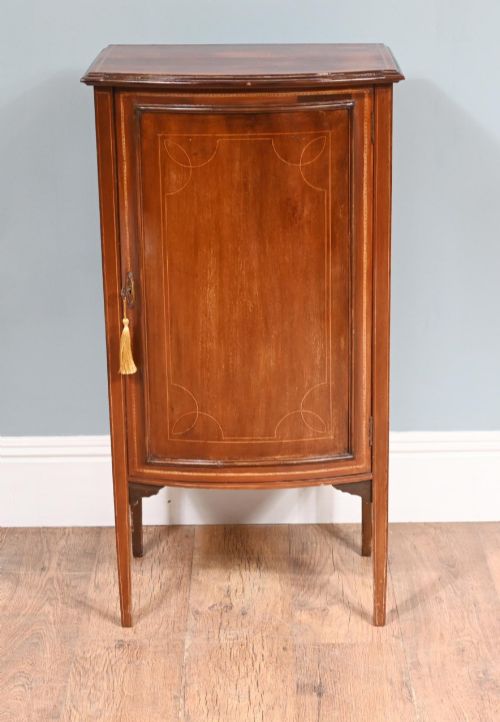
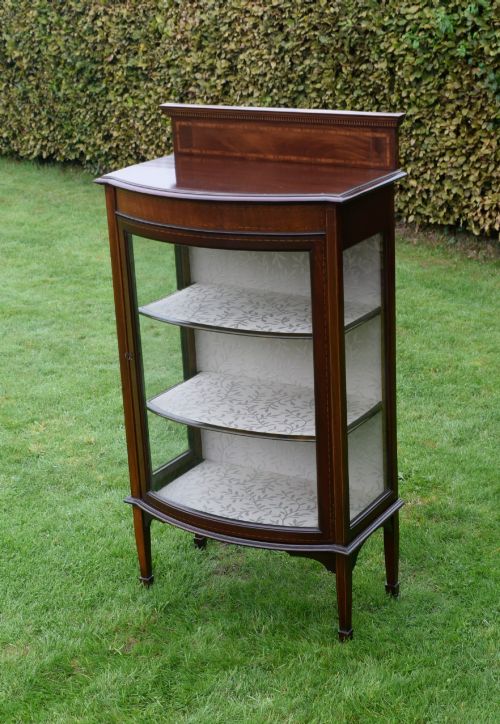
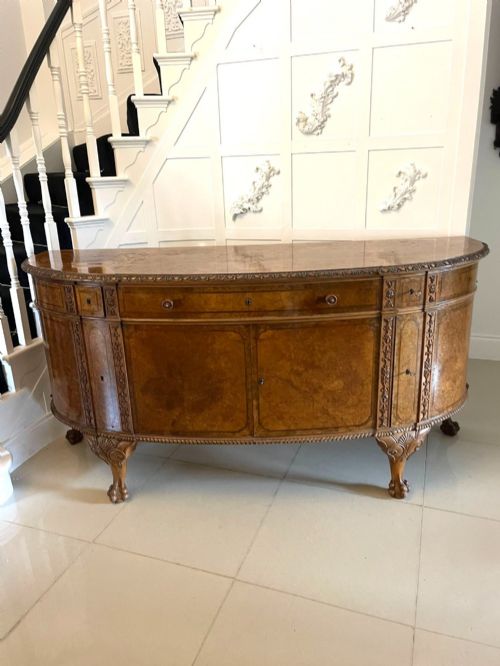
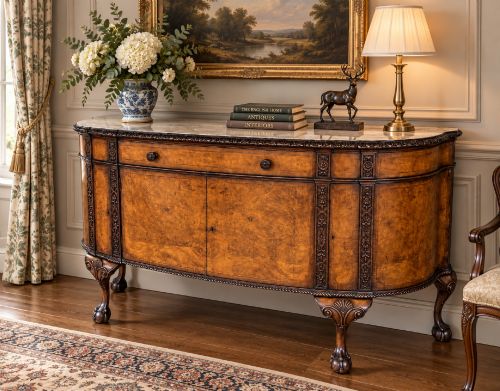
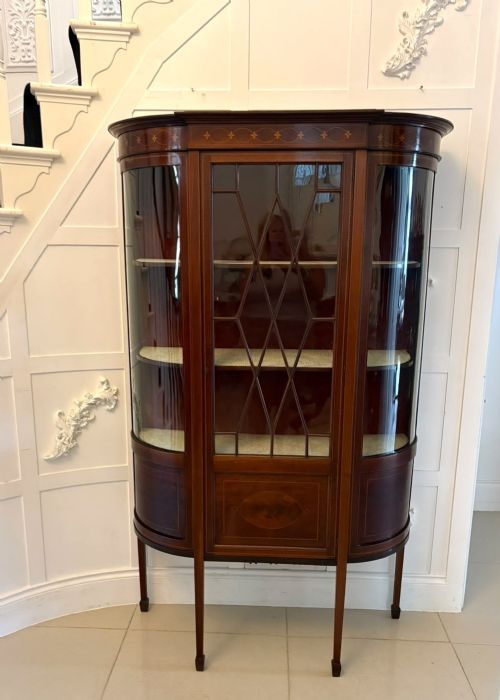
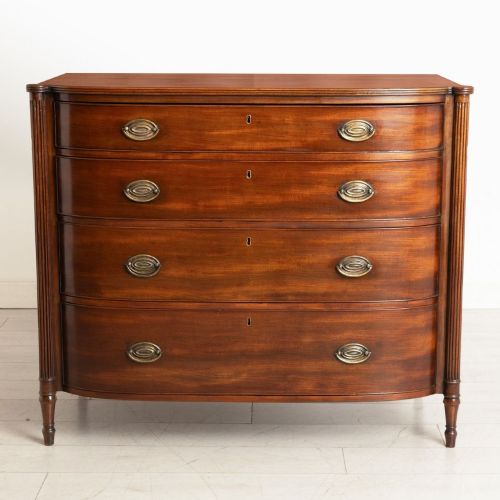
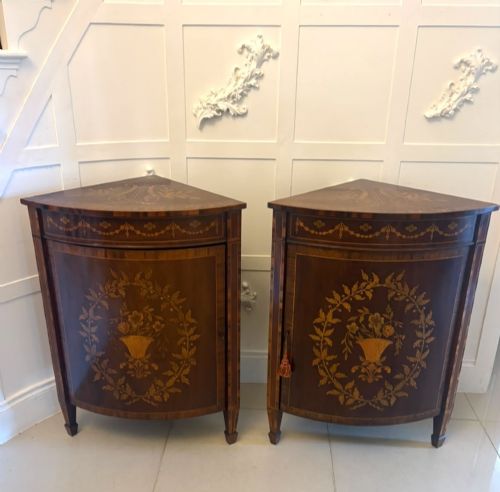
When you search for an edwardian bow front, you encounter a selection of case furniture defined by its distinctive curved facade. The forms appearing on this page range widely, spanning display cabinets and vitrines to substantial sideboards and chests of drawers.
The majority of pieces originate from the Edwardian era, alongside notable examples from the Victorian period, the nineteenth century, and the Regency style. Cabinets and chests dominate the selection, designed to sit flush against walls while softening the geometry of a room.
Makers of the period drew heavily on earlier Georgian and Sheraton Revival designs, applying delicate satinwood inlay and boxwood banding to traditional carcases. This revival spirit means Edwardian cabinetmakers often combined historical proportions with the lighter, more domestic scale required by twentieth-century homes.
Materials and construction
Construction relies heavily on solid mahogany and flame mahogany veneers, chosen for their rich grain and ability to hold a sharp curve. Cabinetmakers bent or shaped the wooden framework to form the sweeping bow front, securing the carcass with traditional joinery.
Surface enrichment often involves satinwood, burr walnut, and boxwood inlay, creating contrasting geometric borders or floral marquetry panels. Brass handles, glass panes, and occasionally painted details complete the construction, bringing textural variety to the polished timber.
Edwardian Bow Front Retail Price Guide 2026
Typical asking prices for edwardian bow front among the pieces listed under this phrase on Sellingantiques today, from the lower quarter to the upper quarter. They describe what is for sale here now, not the wider market.
Some delicate Edwardian vitrines were specifically built to house tiny porcelain teacups safely away from playful dachshunds.
Evaluating the pieces
Quality in these curved items rests upon the precision of the woodwork and the integrity of the veneers along the convex radius. Superior examples display seamless joins where the bowed doors or drawer fronts meet the surrounding frame, without warping or shrinkage in the timber.
The sophistication of the secondary woods and the crispness of the inlay distinguish finer workshops from standard production. Well-executed satinwood banding and carefully matched flame mahogany veneers elevate a piece, whereas hasty construction reveals itself in uneven drawer movement and simpler hardware.
Maple & Co.
The Edwardian Bow Front Glossary
- Bow front
- A convex, outward-curving facade common on chests of drawers, sideboards, and display cabinets. This curved profile softens the silhouette of heavy case furniture.
- Flame mahogany
- A highly figured timber grain resembling flickering flames, sliced from the point where branches join the main trunk. Cabinetmakers prized this veneer for principal drawer fronts and cabinet doors.
- Satinwood inlay
- Contrasting blonde wood used to create decorative borders, lines, and motifs on darker mahogany surfaces. It provides a bright visual accent typical of the Sheraton Revival style.
- Vitrine
- A glass-fronted display cabinet designed for the presentation of porcelain, glass, and curiosities. Edwardian versions frequently feature glazed side panels to maximise interior light.
- Marquetry
- Elaborate decorative patterns formed by fitting together thin veneers of different coloured woods. Artisans applied these pictorial or geometric designs directly to cabinet doors and tabletops.
Edwardian Bow Front: Frequently Asked Questions
What is an edwardian bow front?
It is a piece of case furniture, such as a chest of drawers or display cabinet, made during the Edwardian period with a convex curving front.
The curved design softens the appearance of the timber and provides deep central storage while maintaining a shallow profile at the edges.
How do I spot a reproduction?
Examine the interior drawer construction, the timber backing, and the wear patterns on the brass handles and feet. Original Edwardian pieces utilise period joinery techniques and show natural patina accumulated over a century.
Machine-cut joints, modern adhesives, and uniform factory distressing generally indicate a later imitation rather than a genuine antique.
Where should I place a bow front cabinet?
These pieces suit living rooms, dining rooms, and hallways where their curved profile can be appreciated without blocking narrow walkways. Sideboards and display cabinets work particularly well against flat walls where the convex shape creates visual depth.
Keep them away from direct sunlight and strong heat sources to protect the delicate mahogany veneers and antique polish from drying out.
How do I tell Edwardian from Regency?
Edwardian interpretations of the bow front, often created during the Sheraton Revival, feature lighter satinwood banding, delicate stringing, and bright polished mahogany. True Regency pieces from the early nineteenth century typically possess heavier proportions and darker, more austere flame mahogany veneers.
Examining the interior construction details and secondary woods helps confirm whether a piece belongs to the original Regency era or the Edwardian revival period.