


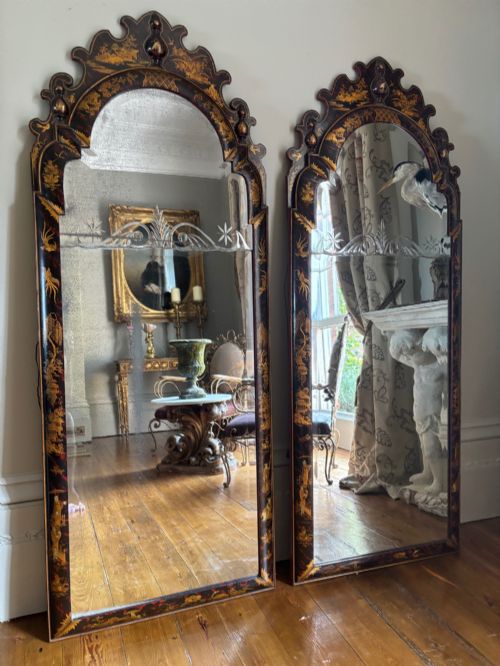


Edwardian Black Mirror
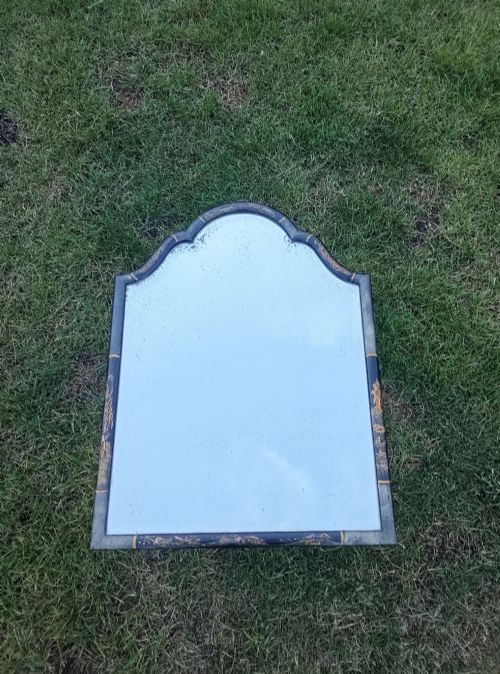
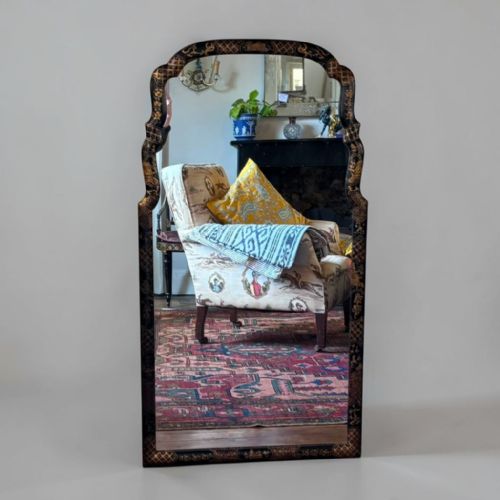
These edwardian black mirror pieces bring dark frames and painted scenes into a room, offering both function and striking visual depth.
Edwardian Black Mirror
An edwardian black mirror combines dark painted or lacquered wooden frames with decorative styles ranging from Chinoiserie to Victorian Neoclassical Revival and Queen Anne Revival. These objects serve as functional looking glasses while acting as prominent wall hangings, overmantels, table mirrors, and advertising pieces.
Most examples you meet on this page span the Edwardian period and the late nineteenth century, alongside early twentieth-century interpretations. The selection includes wall mirrors, oval overmantels, and specialised shop signs framed in dark wood or ebonised finishes.
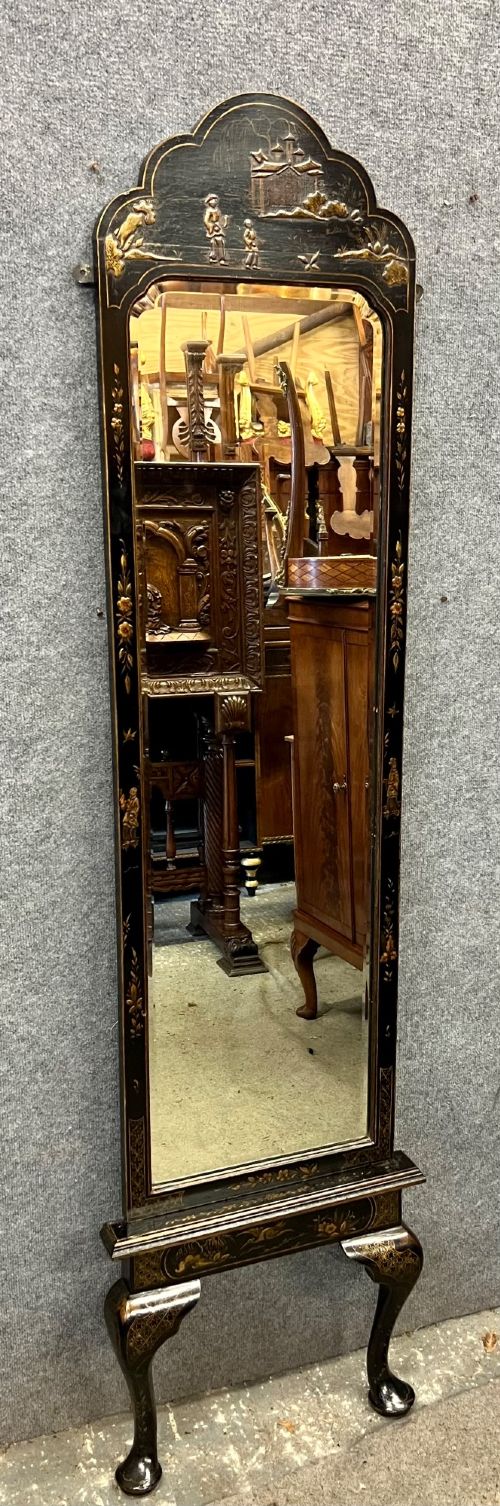
The forms vary from simple oval wall mirrors to large overmantles and detailed Chinoiserie frames adorned with gold leaf and painted motifs. Buyers seek these pieces to anchor a room with dark woodwork and period character.
Materials and Construction
Frames utilise wood treated with ebonising, black lacquer, or painted finishes to achieve a dark surface. Artisans applied gold leaf and gilt highlights to accentuate carved details and hand-painted Chinoiserie scenes.
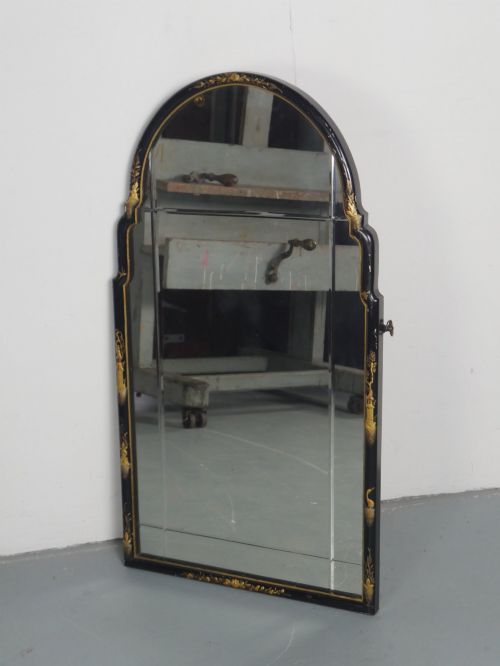
Mirror glass is set within these wooden structures, occasionally featuring etched and engraved surface designs on rectangular plates. Construction methods include bevelled glass edges and substantial timber overmantel frames built to hang above fireplaces.
Edwardian Black Mirror Retail Price Guide 2026
Typical asking prices for edwardian black mirror among the pieces listed under this phrase on Sellingantiques today, from the lower quarter to the upper quarter. They describe what is for sale here now, not the wider market.
Listings feature wood, glass, ebonised wood, gilt, lacquer, and gold leaf across styles such as Chinoiserie and Aesthetic Movement.
Assessing Craftsmanship and Detail
Quality rests in the depth of the finish, whether through the smoothness of black lacquer or the intricacy of hand-painted Chinoiserie and parcel-gilt detailing. Ornate overmantel designs and etched glass plates require skilled handwork that separates standard production from finer examples.
The choice of materials dictates the character of the piece, from simple ebonised wood to layered lacquer enriched with gold leaf. Well-preserved painted motifs and crisp engravings maintain their visual impact more effectively than worn or plain surfaces.
The Edwardian Black Mirror Glossary
- Ebonised Wood
- Timber stained or painted to imitate ebony, commonly used in nineteenth-century and Edwardian frames.
- Chinoiserie
- European interpretations of Chinese and East Asian artistic traditions, frequently expressed through painted motifs on lacquered backgrounds.
- Overmantel Mirror
- A large mirror designed specifically to be hung on the wall directly above a fireplace mantelpiece.
- Parcel-Gilt
- A surface decoration technique where only specific portions of an object are gilded with gold leaf, leaving the dark wood visible elsewhere.
- Aesthetic Movement
- A late nineteenth-century design movement emphasising visual beauty and decorative arts over narrative content.
Edwardian Black Mirror: Frequently Asked Questions
Where should I hang an overmantel mirror?
An overmantel mirror belongs directly above a fireplace mantel, where its substantial frame can anchor the surrounding wall space.
Position it at a height that reflects the room rather than the ceiling, allowing the dark wood and glass to draw light into the space.
How do I care for ebonised wood frames?
Dust ebonised and lacquered frames gently with a soft, dry cloth to prevent accumulation without disturbing the delicate surface finish.
Avoid liquid cleaners and direct sunlight, both of which can degrade black lacquer and gold leaf over time.
What distinguishes Chinoiserie mirrors?
Chinoiserie mirrors feature hand-painted scenes inspired by East Asian motifs, typically rendered in gold or colours against a black lacquered background.
These decorative elements turn a standard wall mirror into a pictorial artwork within a room.
Are advertising mirrors period pieces?
Advertising mirrors from the early twentieth century served practical functions in shops while promoting commercial brands using glass and wood frames.
They combine retail history with decorative glass techniques typical of the period.