





Edwardian Bijouterie Case
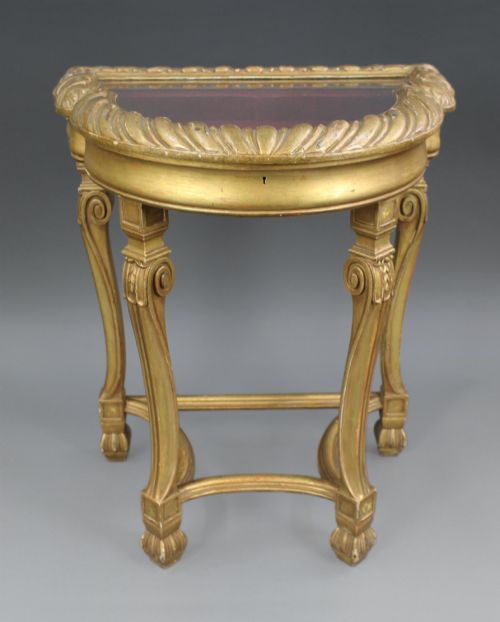
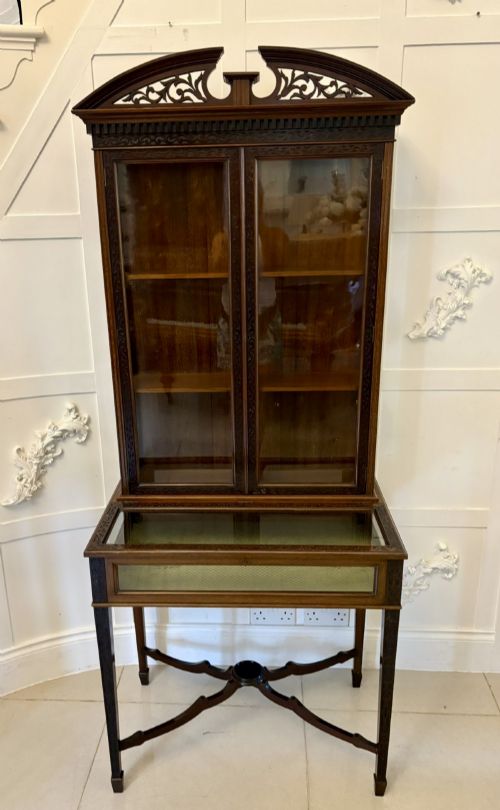
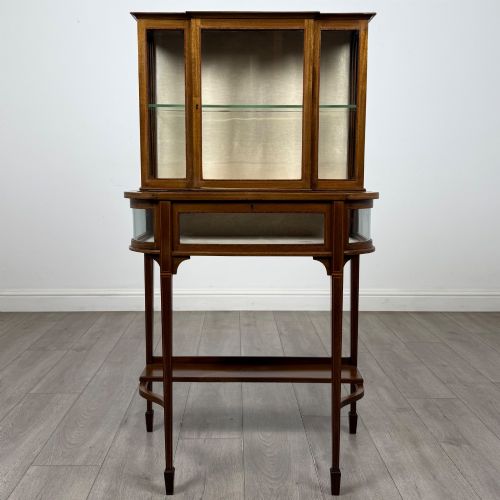
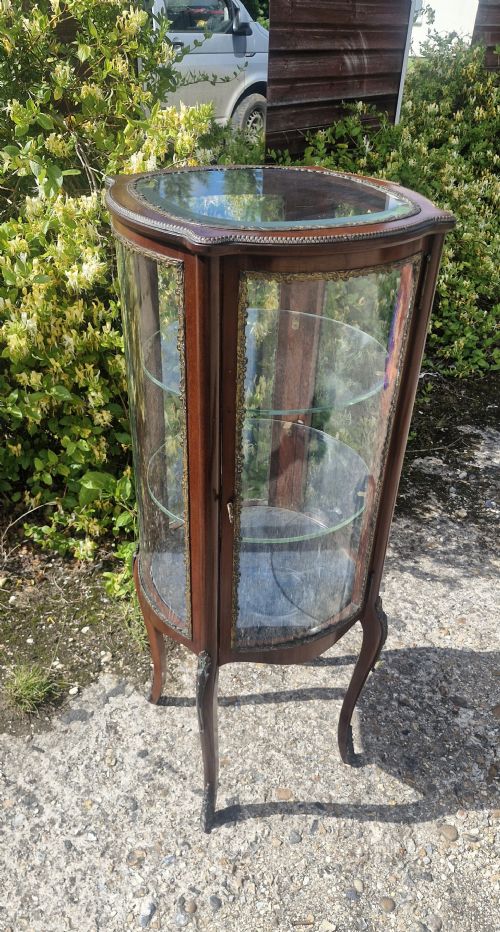
These edwardian bijouterie case pieces are glass-topped display tables and cabinets designed to showcase small treasures.
Edwardian Bijouterie Case
An edwardian bijouterie case takes the form of a display table, display cabinet, or vitrine designed specifically to hold jewellery and small collectibles. The pieces found here span the Edwardian and Victorian periods, reaching back into the late nineteenth century.
Mahogany forms the primary timber for these display cases, often enhanced with satinwood, boxwood, and marquetry inlay or spade feet. Makers also drew upon French Rococo Revival and Louis styles, producing serpentine and kidney-shaped forms mounted in gilt metal.
The most common version met on this page is the Edwardian mahogany inlaid display table, fitted with glass panels and a lined interior to exhibit personal ornaments. Buyers encounter both tabletop display boxes and freestanding vitrines supported on slender legs.
Materials and Construction
Cabinetmakers utilised solid mahogany and satinwood veneers, frequently employing crossbanding and delicate boxwood stringing to define the surfaces. Tables and cabinets incorporate glazed lids and panels, allowing light to enter the interior from multiple angles.
Metal mounts in brass and gilt metal secure the glass edges and ornament the legs, while internal compartments receive fabric and velvet linings. Structural shapes such as serpentine curves and kidney outlines demand precise joinery and careful shaping of the timber.
Edwardian Bijouterie Case Retail Price Guide 2026
Typical asking prices for edwardian bijouterie case among the pieces listed under this phrase on Sellingantiques today, from the lower quarter to the upper quarter. They describe what is for sale here now, not the wider market.
Listings feature Edwardian and Victorian periods, alongside Louis XV and XVI revival styles and Arts and Crafts influences.
Factors of Quality
The fineness of the marquetry inlay and the choice of crossbanding timber separate standard production from superior pieces. Crisp carving on the mahogany framework and heavier brass or gilt metal mounts indicate a higher standard of workshop output.
Proportion and silhouette dictate the visual success of the piece, particularly on serpentine and kidney-shaped examples where the curve of the glass must match the timber frame precisely.
The Edwardian Bijouterie Case Glossary
- Bijouterie table
- A specialised display table featuring a glazed top and velvet-lined interior used for holding jewellery and trinkets. These pieces typically stand on slender legs and date from the Victorian and Edwardian eras.
- Crossbanding
- A decorative border of veneer laid around the edges of a tabletop or cabinet door so that the grain runs perpendicular to the main panel. This technique frames the primary timber, such as mahogany or satinwood.
- Marquetry
- The art of forming decorative patterns using thin pieces of wood veneer applied to a carcase structure. Craftsmen utilise varied timber tones to create floral or geometric designs across the surface.
- Serpentine
- A curved shape consisting of a convex centre flanked by two concave curves, creating a fluid line. This profile appears frequently on the tabletops and drawer fronts of better display cases.
- Vitrine
- A glass-fronted or glass-topped cabinet designed for the display of curiosities and ornaments. The form ranges from low tables to tall freestanding display cabinets.
Edwardian Bijouterie Case: Frequently Asked Questions
What goes inside an edwardian bijouterie case?
These glass-topped tables and cabinets were traditionally used to display small personal items such as rings, brooches, pocket watches, and miniature portraits. The velvet or fabric lining protects delicate items from sliding about when the lid is opened.
Modern owners continue to use them for exhibiting collections of small antiques, medals, or contemporary jewellery while keeping dust away.
How do I clean the velvet interior lining?
Original fabric and velvet linings require gentle care, typically limited to careful surface dusting with a soft brush or low-suction vacuum attachment. Moisture can damage the underlying wood or cause old adhesives to fail.
If a replacement lining is necessary, choose traditional materials like cotton velvet that match the period aesthetic of the display case.
Are these cases sturdy enough for everyday use?
Edwardian display tables and cabinets are built with slender legs and refined joints intended for domestic display rather than heavy weight. Placing them away from busy walkways prevents accidental knocks to the glass panels.
The glass lids operate on delicate hinges and stays, which function best when opened slowly and supported gently.
How do I distinguish Edwardian from Victorian examples?
Victorian display pieces, often dating from the 1880s, tend to feature heavier carved mahogany and darker timber finishes. Edwardian pieces from the early 1900s generally display lighter satinwood inlay, delicate spade feet, and slender proportions.
Stylistic influences also provide clues, as French revival shapes appear across both eras alongside Arts and Crafts simplicity.