

Edwardian Art Nouveau Pendant
When you search for an edwardian art nouveau pendant, you enter a world of sinuous lines and natural motifs crafted at the turn of the twentieth century.
Edwardian Art Nouveau Pendant
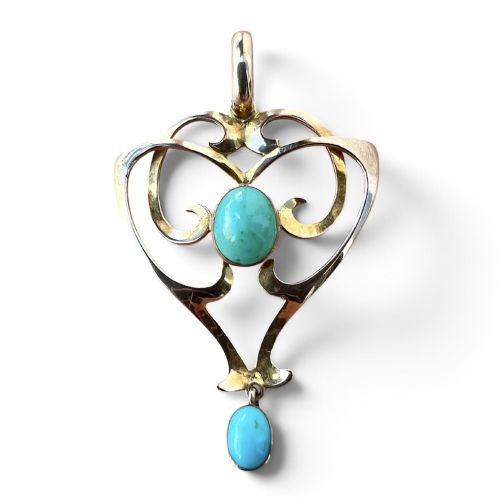
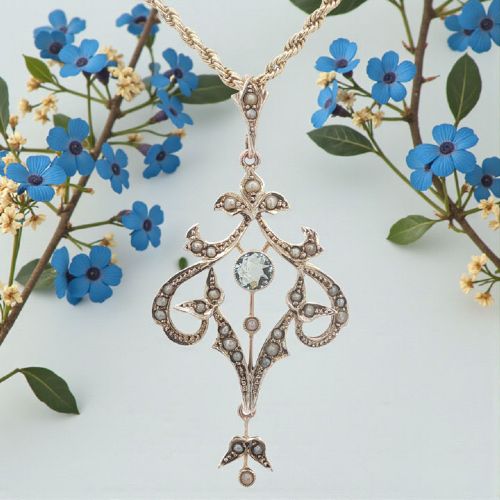
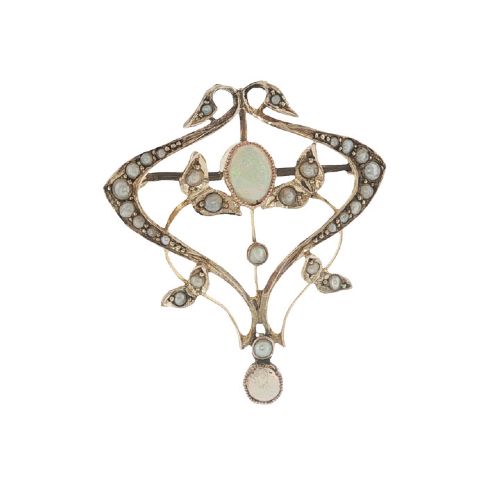
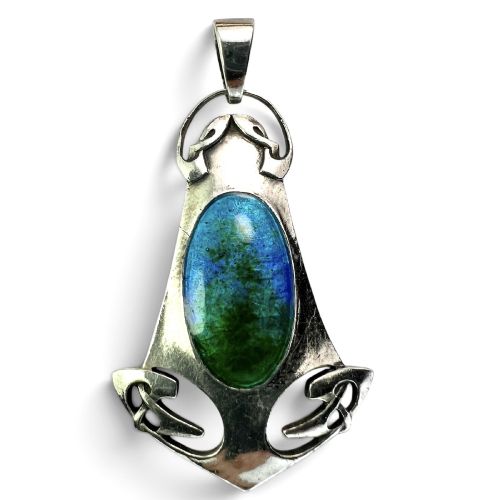
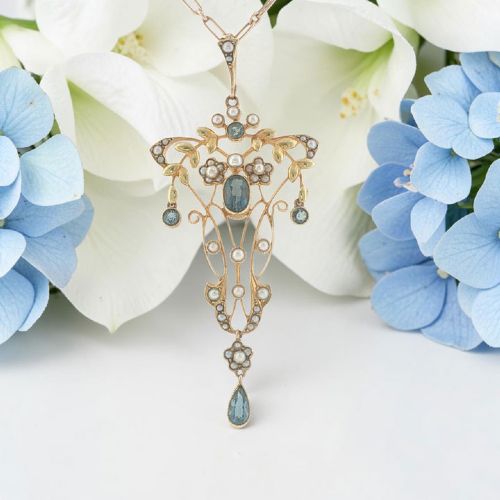
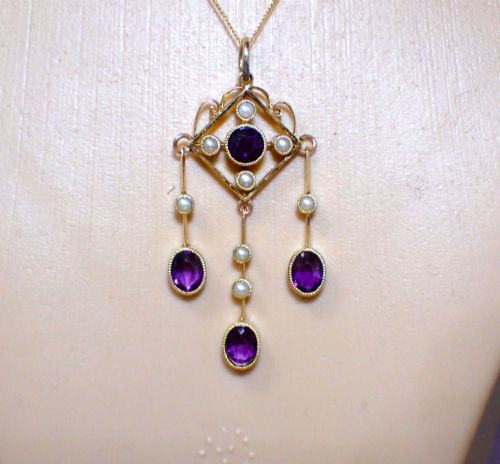
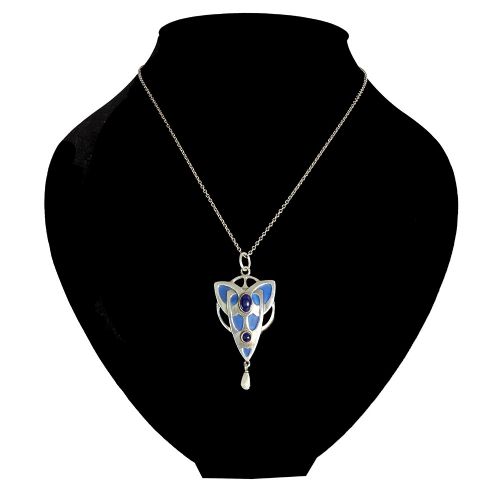
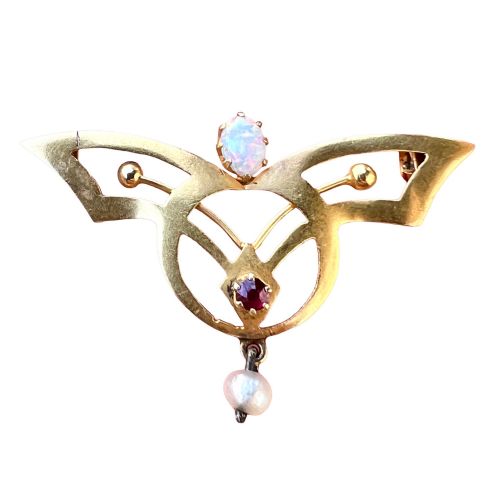
An edwardian art nouveau pendant represents a specific intersection of late-nineteenth-century organic design and early-twentieth-century elegance. These ornaments typically showcase flowing, asymmetrical plant stems, insect wings, and floral silhouettes that reject rigid Victorian geometry.
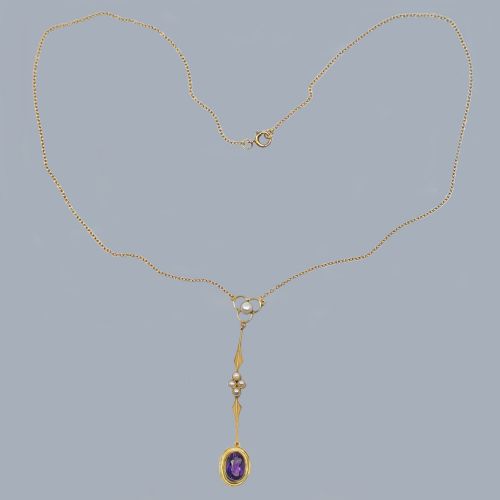
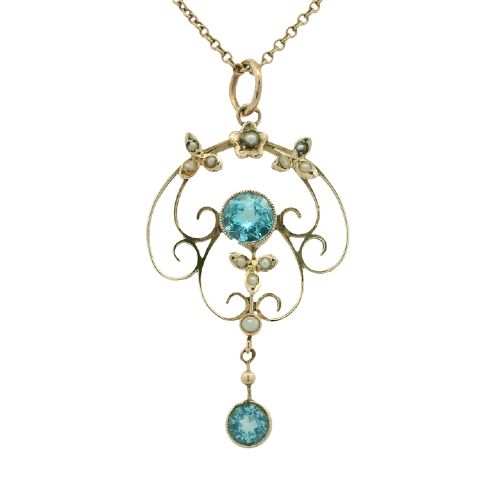
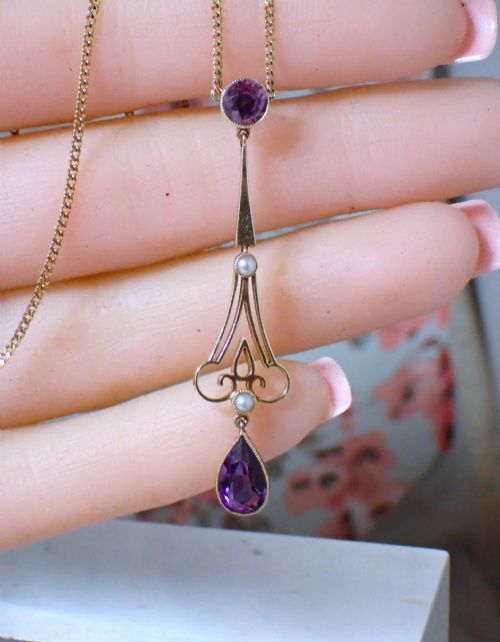
The versions most commonly met on this page combine yellow gold with pale green peridots, amethysts, and delicate seed pearls. They hang from fine chains, often incorporating a central swinging drop known as a lavalier.
How they were made
Goldsmiths of this period utilised nine-carat and fifteen-carat yellow gold, shaping metal through delicate wirework, stamping, and casting. Enamel work, particularly translucent plique-à-jour which resembles stained glass without a backing, brings vibrant colour to wings and petals.
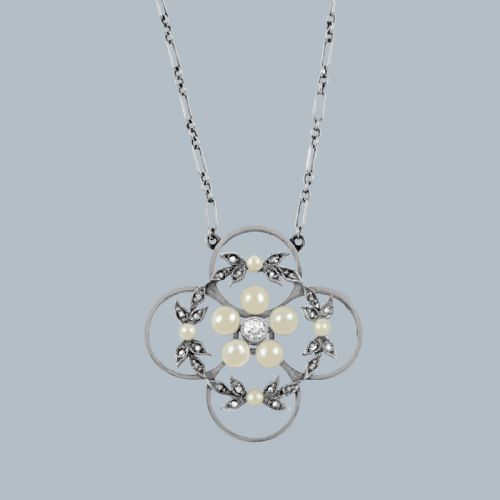
Gemstones such as aquamarines, garnets, and opals are bezel-set or claw-set amidst scrolling tendrils. Seed pearls are painstakingly drilled and pegged onto tiny gold stalks to create floral clusters and hanging accents.
Some lucky charms incorporate tiny paste clovers designed to bring fortune to the Edwardian wearer.
What varies in quality
The distinction between standard commercial output and superior workshop production lies in the fluidity of the metalwork and the selection of stones. Master artisans ensure that the whiplash curves of the gold look organic rather than mechanical, with hand-chased details that catch the light.
Purity of gold, such as fifteen-carat rather than nine-carat, alongside the matched clarity of peridots or diamonds, separates mass-produced items from pieces bearing the hallmarks of notable designers.
Deakin & Francis·Murrle Bennett·Archibald Knox·Liberty And Co·G.E.C·F And C Osler
The Edwardian Art Nouveau Pendant Glossary
- Plique-a-jour
- An enamelling technique where enamel is applied to open cells without a backing metal, allowing light to shine through the transparent colour much like miniature church windows.
- Seed pearl
- A very small, naturally occurring or early cultured pearl, often half-drilled and mounted on tiny pins to form dense clusters of luminous white beads.
- Lavalier
- A pendant featuring a primary decorative drop suspended lower than the main necklace chain, popular during the Edwardian era for its gentle swaying motion.
- Whiplash curve
- The characteristic asymmetric, undulating line defining the Art Nouveau style, inspired by the natural growth patterns of vines, lily stems, and flower tendrils.
Edwardian Art Nouveau Pendant: Frequently Asked Questions
How do I distinguish an Edwardian piece from Victorian jewellery?
Edwardian designs generally favour lighter frames, platinum, and pastel gemstones arranged in airy, curvilinear Art Nouveau patterns. Victorian pieces tend to be heavier, employing denser gold work and darker stones.
Looking closely at the settings reveals this transition from heavy revivalist styles to flowing naturalism around nineteen hundred.
Can these necklaces be worn every day?
These fragile jewels require mindful handling due to their delicate gold wirework and seed pearls. They suit occasional wear rather than rough daily tasks.
Keeping them away from moisture and harsh chemicals preserves the enamel and the organic components safely.
Why are peridots so common in these designs?
The distinct lime-green hue of peridot matched the earthy, nature-inspired palette favoured by designers of the Arts and Crafts and Art Nouveau movements. Jewellers paired them with pearls to create contrast.
This specific combination defined the aesthetic of the decade around nineteen hundred.