

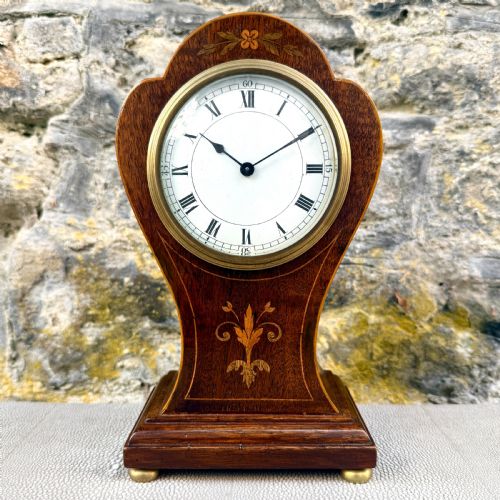
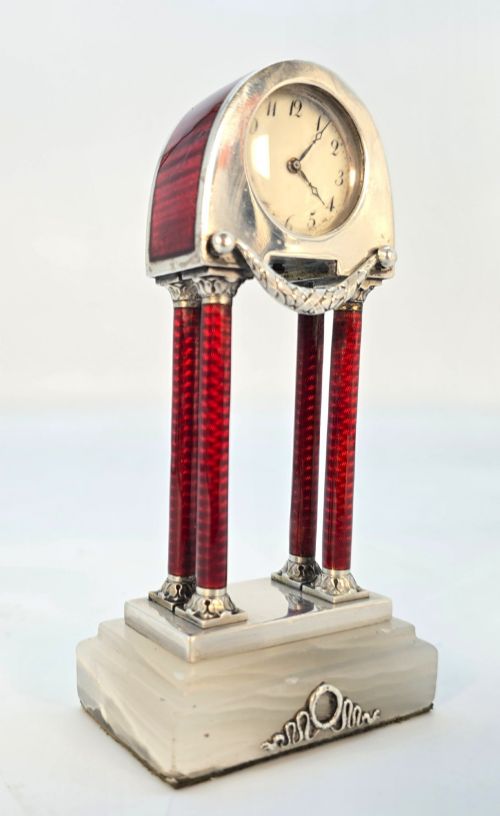


Edwardian Art Nouveau Clock
An edwardian art nouveau clock brings fluid organic lines into domestic rooms, combining period styling with mechanical utility.
Edwardian Art Nouveau Clock
When you search for an edwardian art nouveau clock, you are looking at timepieces that bridge the turn of the twentieth century with sweeping stylized motifs. These pieces take several domestic forms, appearing most frequently as mantel clocks and smaller desk or boudoir timepieces.
The objects on this page span the Edwardian era and the year 1900, drawing on both British and continental workshops. They combine the decorative curves of the Art Nouveau movement with the structured cabinetry typical of the period.
Mantel clocks dominate the selection, often housed in architectural wooden cases or metal-clad bodies. Alongside these, smaller desk clocks and boudoir timepieces offer more intimate examples of the style.
How they were made
Cases combine timbers such as mahogany, oak, satinwood, and wood with metal and glass elements. Woods are frequently polished, inlaid, or worked into architectural portico and bracket shapes.
Metalwork forms a crucial part of the construction, utilising brass, silver, and pewter alongside enamel details. Silver fronts and clad bodies provide reflective surfaces that contrast with the darker timber cases.
Dials and bezels incorporate glass and vitreous enamel, sometimes featuring floral motifs or masonic details. These decorative accents merge the mechanical function of the clock with contemporary artistic crafts.
Edwardian Art Nouveau Clock Retail Price Guide 2026
Typical asking prices for edwardian art nouveau clock among the pieces listed under this phrase on Sellingantiques today, from the lower quarter to the upper quarter. They describe what is for sale here now, not the wider market.
Even time itself needed a decorative frame, proving that Edwardians preferred their ticking hours wrapped in flowing leaves and polished silver.
What varies in quality
Quality rests upon the execution of the materials and the integration of the decorative style into the case. Finer examples display careful timber inlay, precise silverwork, and harmonious enamel panels rather than superficial surface ornamentation.
The distinction between standard domestic pieces and top-tier examples lies in the distinction of the maker and the handling of the medium. Specialised workshops employ refined metalworking and disciplined carving that elevate the object beyond simple utility.
Georg Adam Scheid·David Veasey·Liberty & Co
The Edwardian Art Nouveau Clock Glossary
- Mantel clock
- A clock designed to sit on a shelf or mantelpiece above a fireplace. These are typically freestanding and proportioned for domestic display.
- Portico clock
- A timepiece featuring a distinct architectural frame supported by columns or pillars. This classical form is occasionally reinterpreted in later decorative styles.
- Bracket clock
- A portable table clock historically designed to sit upon a wall bracket. By this period, the term often describes larger table or mantel timepieces with architectural cases.
- Boudoir timepiece
- A small clock intended for a private room or desk. These examples prioritize portable dimensions and delicate decorative finishes.
- Vitreous enamel
- Glass fused to a metal substrate through high-temperature firing. This technique produces durable, glossy coloured surfaces on dials and decorative plaques.
Edwardian Art Nouveau Clock: Frequently Asked Questions
Where should I place a mantel clock?
Mantel clocks sit comfortably upon wooden surfaces, sideboards, and fireplace mantels where their decorative cases can be viewed easily.
Ensure the surface is stable and level to maintain the correct operation of the internal movement.
How do I identify an Edwardian clock?
Edwardian timepieces date from the reign of King Edward VII, spanning the first decade of the twentieth century. They often feature distinct stylistic traits that reflect the transition from Victorian heavy ornament towards lighter, organic designs.
Look for characteristic material combinations like inlaid mahogany, silver fronts, and fluid decorative motifs associated with the era.
What is the difference between a mantel and a desk clock?
Mantel clocks are generally larger architectural objects intended as permanent fixtures in principal rooms. They rely on substantial wooden or metal cases.
Desk clocks and boudoir timepieces are smaller, more intimate objects originally designed for portable use on writing surfaces or dressing tables.
How do I care for silver-clad clock cases?
Silver surfaces require gentle cleaning with a soft cloth to remove dust and prevent tarnishing. Avoid abrasive polishes that can damage delicate chased or embossed details.
Keep wooden and metal components away from direct sunlight and damp environments to preserve the integrity of the materials.