

Edwardian Armchair with Castors
These edwardian armchair with castors selections bring comfortable seating and smooth mobility together for daily use in any room.
Edwardian Armchair with Castors
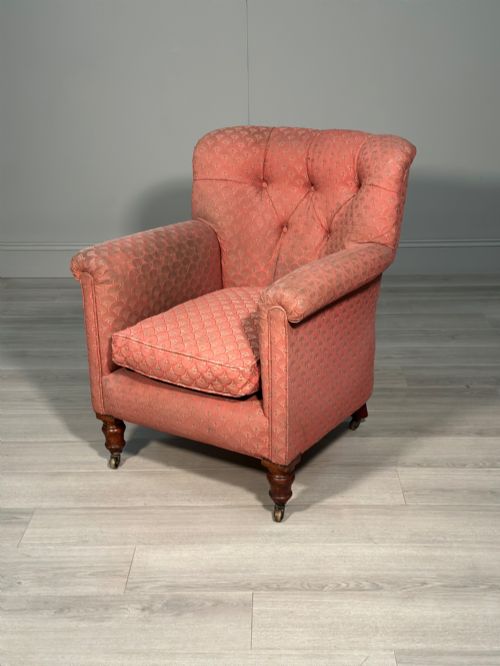
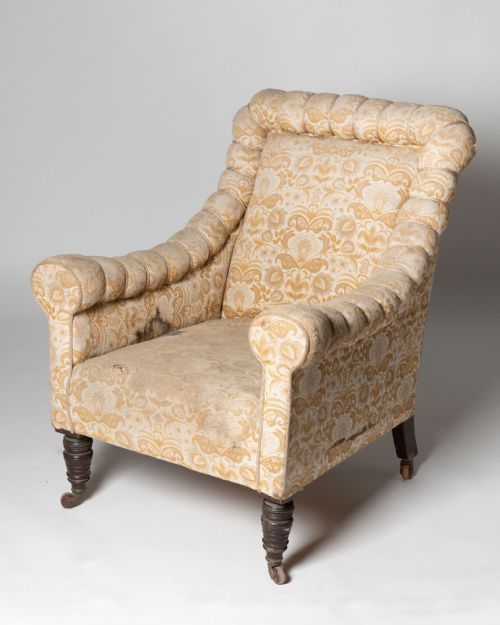
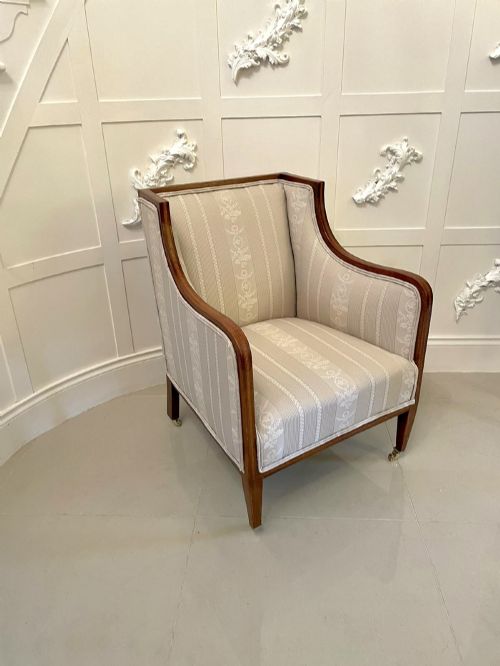
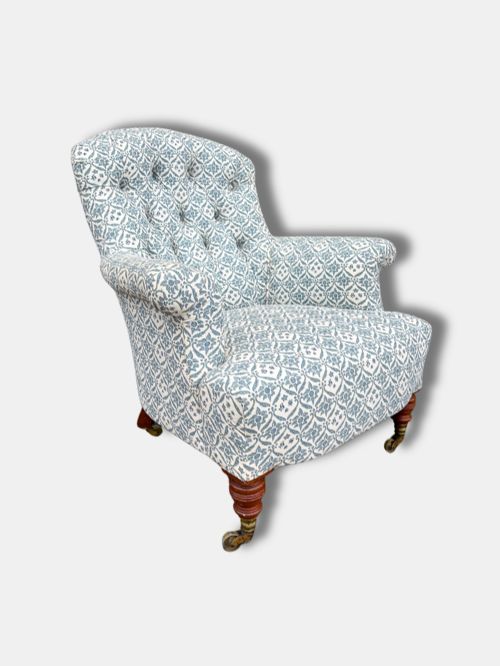
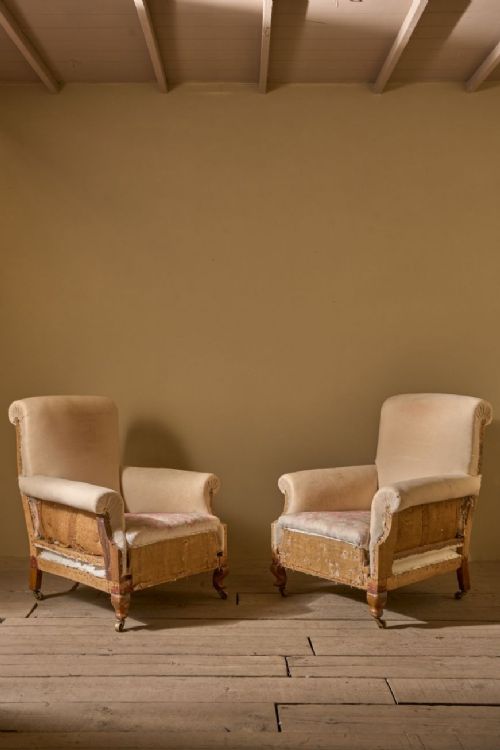
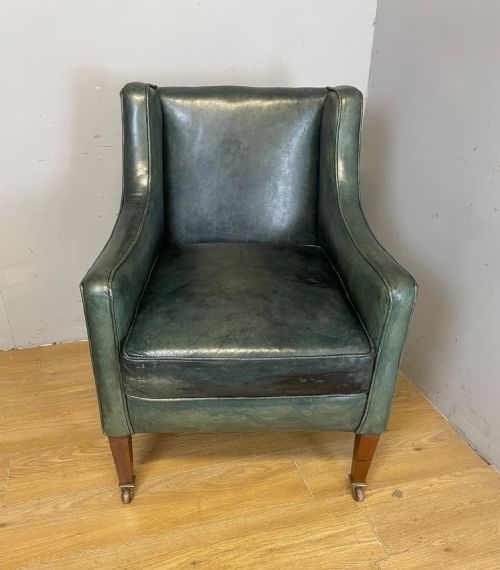
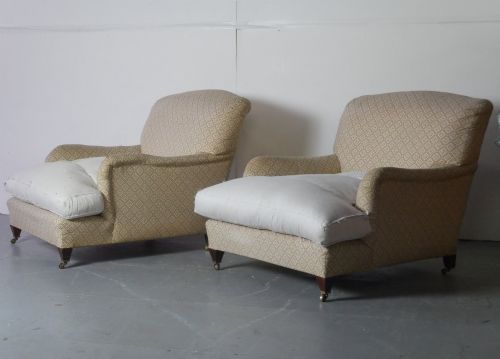
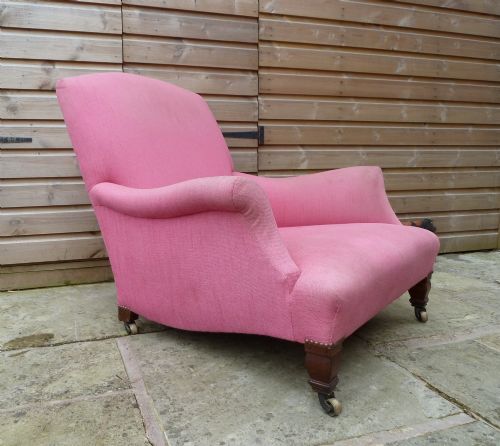
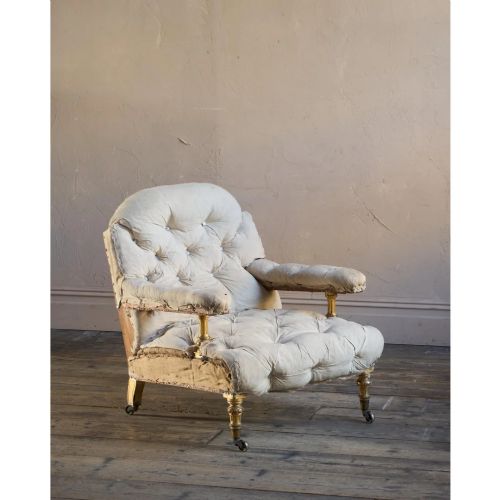
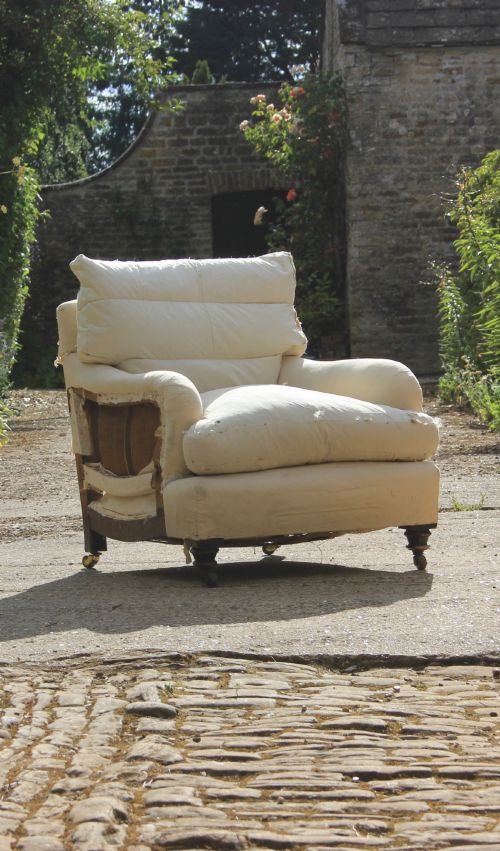
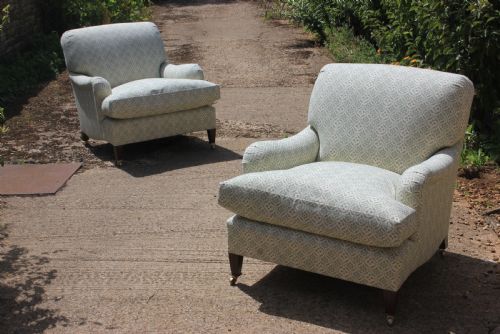
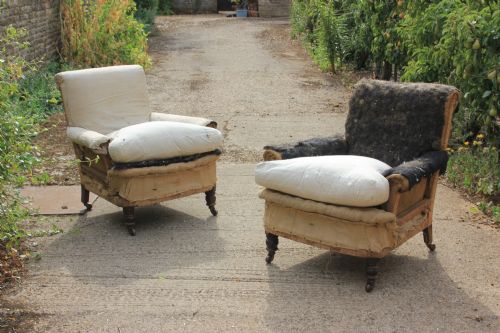
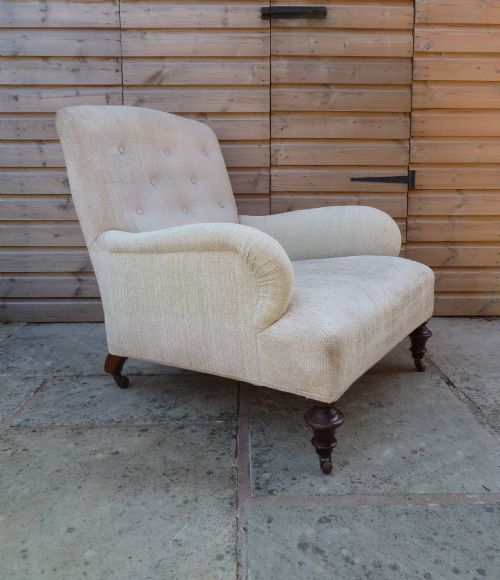
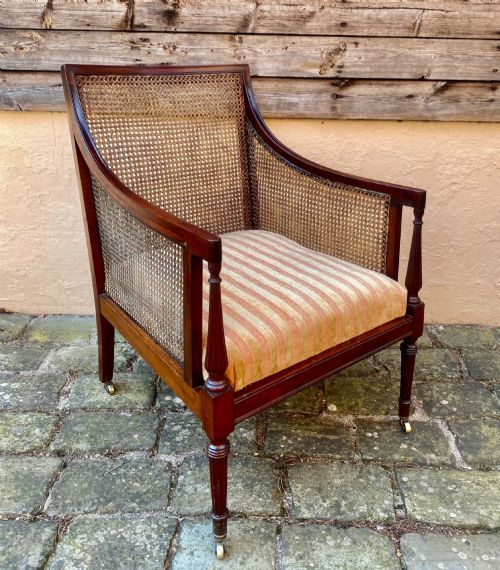
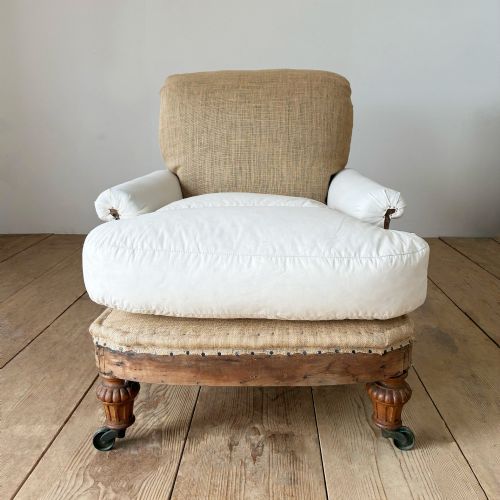
An edwardian armchair with castors delivers upright support and easy relocation across carpet or floorboards via small wheel attachments on the feet. The listings on this page span the Edwardian period, 19th Century, 1900, 1920, and Regency periods.
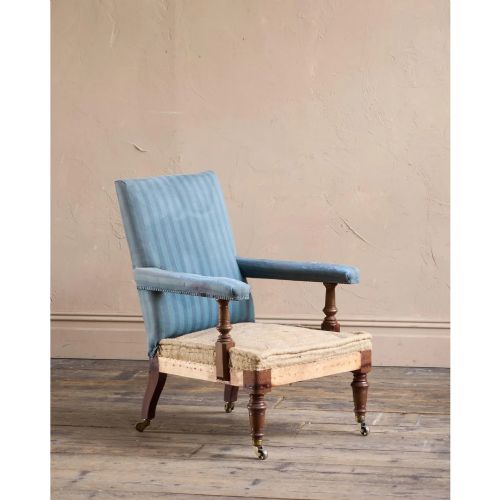
Forms include traditional fireside chairs, library armchairs, desk chairs, slipper chairs, and club chairs with buttoned backs or open arms. Makers such as Howard & sons, Kendrick & Jefferson, and Maple & Co appear alongside pieces covered in William Morris fabric.
Most examples found here date from the Edwardian era or the early twentieth century, combining classic wooden frames with practical mobility. Buyers find various upholstery finishes ranging from plain linen and hessian to deep leather and patterned fabric.
How they were made
Frames rely on solid timbers like mahogany and oak, shaped into tapered legs, tub backs, or open arm supports. Skilled cabinet makers joined these structural elements to bear weight while concealing the mechanical fixings for the wheels.
Metal castors, typically fashioned from brass, were secured to the base of each leg to allow effortless repositioning. Upholstered sections employ traditional stuffing methods beneath top layers of leather, linen, hessian, and fabric, often featuring deep buttoning for resilience.
Edwardian Armchair with Castors Retail Price Guide 2026
Typical asking prices for edwardian armchair with castors among the pieces listed under this phrase on Sellingantiques today, from the lower quarter to the upper quarter. They describe what is for sale here now, not the wider market.
Listings feature mahogany, oak, brass, leather, and fabric across Edwardian, Regency, and 19th Century periods.
What varies in quality
The distinction between standard workshop production and premier cabinet making lies in the precision of the frame joinery and timber selection. Superior mahogany and oak frames retain structural integrity over decades of daily sitting.
Original brass castors that glide smoothly without binding distinguish better examples from replacement hardware. The grade of the covering material, whether supple leather or robust fabric, dictates the tactile character of the piece.
Howard & sons·Kendrick & Jefferson·Maple & Co
The Edwardian Armchair with Castors Glossary
- Castor
- A small wheel mounted on a swivel assembly at the base of a furniture leg to permit rolling movement. They are commonly turned from brass in these periods.
- Tub back
- A chair design where the backrest curves continuously around into low arms in the shape of a hollowed tub. This enclosing form provides snug support.
- Hessian
- A coarse woven fabric typically utilised as an internal upholstery foundation layer beneath top coverings. It holds traditional stuffing securely within the seat and back.
- Slipper chair
- A low-seated bedroom chair traditionally built without arms to allow easier dressing. They sit close to the floor for comfort.
- Button back
- An upholstery technique where depressions are formed in the padding by stitches pulled tight and secured with buttons. This creates a diamond pattern across the leather or fabric.
Edwardian Armchair with Castors: Frequently Asked Questions
What is an edwardian armchair with castors?
An edwardian armchair with castors is a seated piece built with small wheels on the legs for easy movement across floors. These chairs combine upholstered comfort with sturdy wooden frames from the early twentieth century and earlier.
They appear in various styles including club chairs, library chairs, and fireside seating. The wheels permit smooth repositioning without lifting the timber frame.
How do I identify an Edwardian chair?
Edwardian chairs typically display lighter proportions than heavy Victorian furniture, often utilising mahogany frames with subtle inlay or tapered legs. They reflect a transition towards simpler domestic comfort around the start of the twentieth century.
Upholstery styles from this era range from buttoned leather to patterned fabric. Examining the timber and construction methods helps confirm the period.
Were these chairs used at desks?
Certain models function as desk or office chairs, featuring open arms and swivel mobility or castors to assist workspace movement. Mahogany and oak desk chairs provide the upright posture required for writing.
Library and desk variants balance rigid support with the convenience of rolling across floorboards. This made them practical for studies and offices.
How should I care for leather upholstery?
Leather upholstery benefits from regular dusting with a dry cloth and occasional treatment with appropriate conditioning balm to prevent drying. Keeping the material away from direct heat sources maintains its suppleness.
Avoid harsh chemical cleaners that can strip the natural finish. Gentle maintenance preserves the character of vintage leather over years of daily use.