



Ebony Wood Elephants
Ebony wood elephants are dense, carved figural sculptures and functional items that bring rich colonial-era craftsmanship and striking dark timber into a room.
Ebony Wood Elephants
When you search for ebony wood elephants, you are looking at carved figural sculptures, practical bookends, and occasional furniture pieces produced across various periods. These objects reflect international trade routes and colonial workmanship from the nineteenth century into the twentieth century.
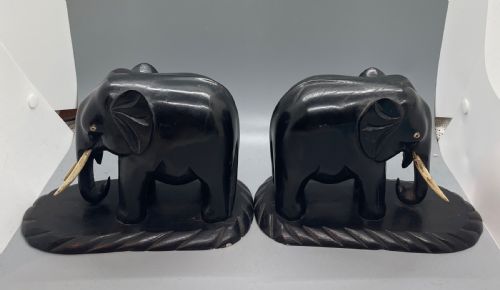
The version you are most likely to meet on this page is the pair of bookends, alongside standalone decorative sculptures and occasional tripod tables featuring inlaid surfaces. They draw the eye through deep, dark timber tones and detailed carving.
The pieces span Victorian, Edwardian, and Art Deco eras, showing how regional techniques adapted to British domestic tastes over decades. Origins stretch across Indian, Ceylonese, and Anglo-Indian workshops where dense hardwoods were readily available.
How they were made
Many items incorporated contrasting elements, utilising bone, bone inlay, and ebony inlay set into the primary hardwood surface. Tripod tables and sculptural bases combined structural carpentry with intricate surface decoration.
Ebony Wood Elephants Retail Price Guide 2026
Typical asking prices for ebony wood elephants among the pieces listed under this phrase on Sellingantiques today, from the lower quarter to the upper quarter. They describe what is for sale here now, not the wider market.
Trunks up, trunks down, and heads turned at odd angles - every single carved elephant insists on having its own distinct personality.
What varies in quality
Quality rests in the precision of the carving and the depth of the timber's natural grain. Stronger pieces show expressive modelling in the anatomy of the animal and clean execution of inlaid details.
The choice of secondary materials, such as genuine bone inlay versus simpler surface work, separates standard production from finer decorative items. Stability in construction and the preservation of the original polished finish complete the distinction.
The Ebony Wood Elephants Glossary
- Ebony
- A dense, heavy black or dark brown heartwood prized for its fine texture and ability to take a smooth polish. It forms the primary material for the majority of these sculptures and bookends.
- Anglo-Indian
- A descriptive term for items made in India during the British period, combining local cabinet-making traditions with European furniture forms. These pieces often feature regional timbers and decorative motifs.
- Coromandel wood
- A valuable tropical hardwood featuring rich brown colouring with dark stripes. It provides a striking alternative to plain ebony in decorative objects.
- Hoshiarpur
- A town in Punjab known for intricate woodwork and inlay techniques. Items from this region typically display detailed bone or wire patterns set into teak or shisham.
- Specimen wood
- Furniture or objects assembled from multiple contrasting timber varieties. This technique highlights the natural colour variations of different exotic woods.
Ebony Wood Elephants: Frequently Asked Questions
How were these elephants used?
Many examples function as sturdy bookends designed to support heavy volumes on library shelves and desks. Others serve purely as decorative sculptures placed on mantelpieces or display surfaces.
Smaller occasional tables incorporate elephant motifs into their structural supports or carved tripod bases. They functioned as decorative accent furniture in nineteenth-century and early twentieth-century homes.
How do I date an ebony elephant?
Dating relies on stylistic clues, such as the geometric lines of Art Deco pieces compared to the naturalistic carving of Victorian or Raj period works. Materials also offer guidance, with certain inlay styles pointing to specific regional workshops.
Construction methods, wear patterns, and the type of secondary wood used help narrow down the period. Comparing known regional manufacturing traits provides further chronological context.
How do I care for ebony wood?
Ebony requires stable indoor humidity to prevent the dense wood from drying out and splitting over time. Keep pieces away from direct heat sources and strong sunlight.
Dust gently with a soft, dry cloth rather than using wet cleaners or modern polishes. Natural oils in the timber generally maintain its dark, polished appearance without heavy intervention.