

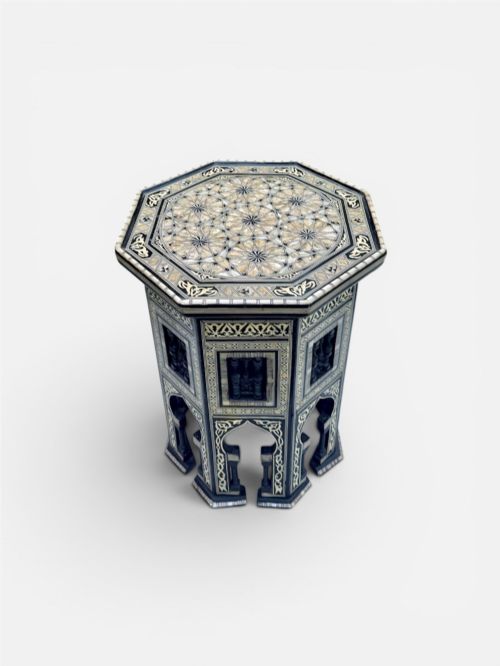


Ebony and Bone Table
An ebony and bone table brings striking geometric contrast to a room through dense dark wood combined with pale inlaid decoration.
Ebony and Bone Table
When you search for an ebony and bone table, you enter a diverse group of decorative furnishings spanning several centuries and geographic origins. These pieces range from small occasional items to larger console forms and octagonal shapes.
You are most likely to meet 19th-century examples on this page, particularly octagonal side tables linked to Anglo-Indian craftsmanship or Italian Renaissance revival styles. Regional workshops produced these distinct surfaces using dark timbers accented by pale geometric patterns.
Alongside tables, the selection includes related forms like cabinets, boxes, and small caskets that employ the same striking material combination. Each piece displays the distinct decorative vernacular of its period, whether Italian or Middle Eastern.
Materials and construction
Maker's workshops built these structures using hardwoods such as walnut, rosewood, teak, and ebony, providing a dark and stable ground for decoration. Craftsmen then applied detailed bone inlay by hand, recessing the pale sections precisely into the timber surface.
Many examples incorporate complex geometric banding, floral motifs, or architectural elements like the Taj Mahal influence seen on specific tripod pieces. Additional materials such as mother-of-pearl occasionally join the bone and ebony to enhance the surface pattern.
Ebony and Bone Table Retail Price Guide 2026
Typical asking prices for ebony and bone table among the pieces listed under this phrase on Sellingantiques today, from the lower quarter to the upper quarter. They describe what is for sale here now, not the wider market.
Some tables double as architectural tributes, featuring miniature inlaid domes and arches straight out of a Victorian travel scrapbook.
Judging quality and execution
Quality rests upon the precision of the inlay work and the tightness of the joinery where the bone meets the dark wood. Superior examples maintain flush surfaces with minimal gaps, whereas coarser work reveals uneven spacing and hurried placement.
The complexity of the carved detailing also separates standard production from finer craftsmanship, particularly in the turned legs and intricate borders. Timbers chosen for the body, from dense ebony to figured walnut and teak, dictate the overall weight and visual depth.
The Ebony and Bone Table Glossary
- Inlay
- A technique where pieces of material are set into a recessed surface to form a decorative design. This method creates the flat patterned surfaces characteristic of these pieces.
- Octagonal
- Having eight sides and eight angles. This geometric shape frequently defines the tops of Middle Eastern and Anglo-Indian tables.
- Etagere
- A piece of furniture consisting of a set of open shelves for displaying small objects. These tiered tables often incorporate inlaid details on their upper surfaces.
- Renaissance Revival
- A nineteenth-century architectural and decorative style that drew inspiration from fifteenth and sixteenth-century Italian forms. Pieces from this movement often feature heavy walnut and precise bone work.
- Tripod Table
- A small table supported by three legs. Many examples utilise this stable three-legged format for portability and display.
Ebony and Bone Table: Frequently Asked Questions
What is an ebony and bone table?
An ebony and bone table is a decorative furnishing built from dark woods and inlaid with pale bone sections. These pieces range from octagonal occasional tables to Renaissance revival designs.
Craftsmen across different regions utilised this contrasting material palette to create striking geometric and floral surface patterns. The category encompasses various periods, most notably the nineteenth century.
Where were these tables made?
These tables originated from diverse regions including Italy, India, and the Middle East. Each area brought distinct woodworking traditions and decorative motifs to the finished objects.
For instance, Anglo-Indian pieces often display intricate Hoshiarpur craftsmanship with dense floral or architectural carving, while Italian examples lean toward Renaissance revival styles.
How do I care for inlaid wood?
Care for inlaid wood by keeping pieces away from direct heat sources and sudden temperature fluctuations. Stable indoor environments prevent the wood from expanding and loosening the bone sections.
Dust the surface gently with a dry cloth and avoid harsh chemical polishes that can seep into the fine joints between the wood and the bone.
How do I date an inlaid table?
Dating an inlaid table involves examining the secondary timbers, construction methods, and stylistic cues of the period. Nineteenth-century pieces often reflect revival movements or colonial trade connections.
Earlier examples from the sixteenth century display different joinery techniques and distinct regional artistic vocabularies compared to later nineteenth or twentieth-century interpretations.