

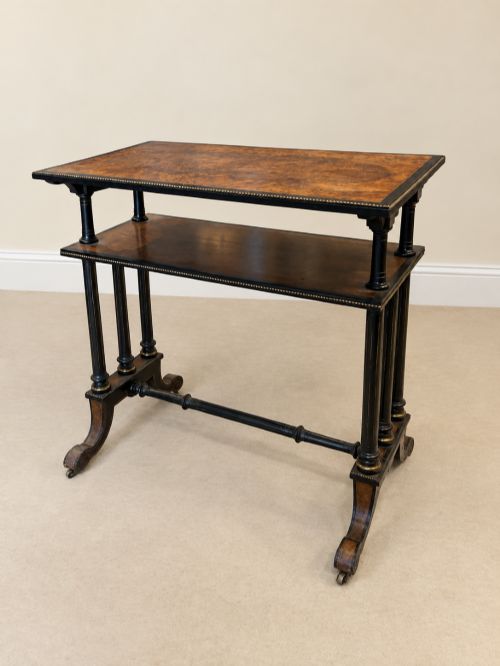
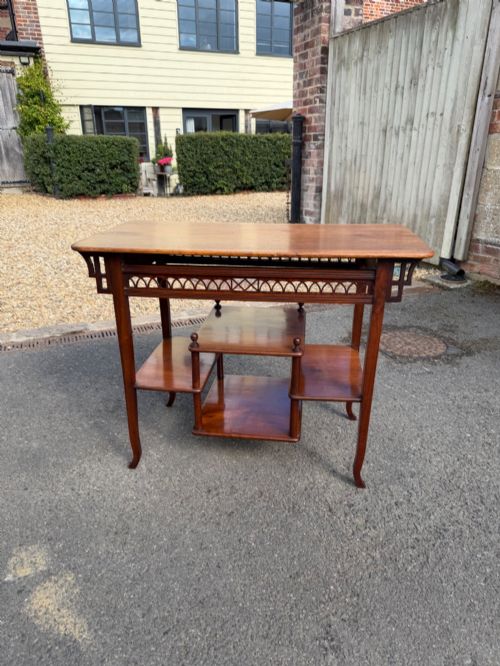
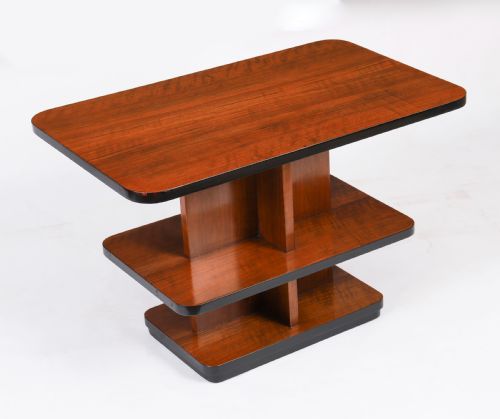


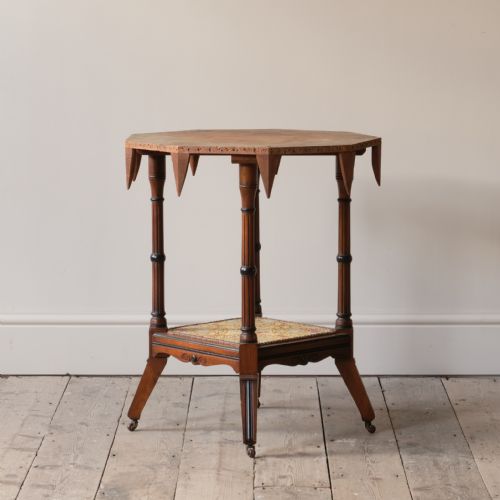

Ebonised Walnut Tier Table
An ebonised walnut tier table brings stacked surfaces and dark, polished timber together, offering practical display space with distinctive architectural presence.
Ebonised Walnut Tier Table
An ebonised walnut tier table provides multiple levels of surface area, appearing in forms such as occasional tables, etageres, and whatsits across this selection. These multi-level stands range from Victorian and Edwardian examples to Art Deco designs, utilising stepped platforms for display and utility.
The pieces on this page span the nineteenth century into the 1930s, encompassing Aesthetic Movement, French Napoleon III, and Louis XV styles. Buyers encounter square, oval, and circular multi-tier formats that merge walnut timber with darkened finishes.
Originating largely from British and French workshops, these tiered tables function flexibly as side tables, coffee tables, and display stands. The combination of stacked tiers and ebonised frames creates a strong vertical silhouette suited to compact and expansive rooms alike.
What varies in quality
The standard of an ebonised walnut tier table rests upon the precision of its marquetry, the richness of the walnut grain, and the execution of the ebonised finish. Finer examples display carefully selected burr walnut or figured walnut veneers paired with crisp brass or ormolu mounts.
Construction integrity distinguishes the finer tier tables, particularly in the stability of the upright supports and the flush alignment of the shelves. Superior pieces demonstrate refined proportions and harmonious integration of contrasting timber species across multiple tiers.
Ebonised Walnut Tier Table Retail Price Guide 2026
Typical asking prices for ebonised walnut tier table among the pieces listed under this phrase on Sellingantiques today, from the lower quarter to the upper quarter. They describe what is for sale here now, not the wider market.
The listings span from 1860 Victorian stands through Aesthetic Movement pieces to 1930s Art Deco coffee tables.
H Ogden of Manchester
The Ebonised Walnut Tier Table Glossary
- Ebonised wood
- Timber treated with a dark stain or finish to imitate ebony. This technique was widely utilised in nineteenth-century cabinetmaking to create striking contrast against lighter woods.
- Étagère
- A piece of furniture consisting of a set of open shelves for displaying small objects. Originating in France, these multi-tiered stands gained popularity during the Victorian and Edwardian eras.
- Marquetry
- Decorative veneer work forming patterns or pictures on a wooden surface. Craftsmen applied thin slices of various woods to the core structure.
- Ormolu
- Gilded bronze ornamentation mounted onto furniture. This decorative technique appears frequently on French pieces from the nineteenth and early twentieth centuries.
- Aesthetic Movement
- A late nineteenth-century design movement that emphasised visual and material quality over narrative content. Pieces in this style often incorporate ebonised surfaces and minimalist lines.
Ebonised Walnut Tier Table: Frequently Asked Questions
What is a tier table used for?
A tier table provides multiple stacked surfaces for displaying decorative objects, holding books, or serving refreshments in a sitting room.
The vertical arrangement allows owners to maximise display capacity without occupying additional floor space.
How do I identify an Aesthetic Movement table?
Aesthetic Movement tables typically feature ebonised wood, clean structural lines, and occasional Anglo-Japanese design influences dating from the late nineteenth century.
They reject heavy Victorian ornamentation in favour of stark colour contrasts and simpler geometric forms.
Are these tables sturdy enough for daily use?
Most multi-tier tables are constructed with sturdy vertical supports and solid wood frames designed to bear moderate everyday weight on each level.
Care should be taken when placing heavy items on upper shelves to maintain overall balance.
How do I care for ebonised wood and walnut?
Ebonised wood and walnut surfaces require dusting with a soft, dry cloth and protection from direct sunlight and excessive moisture.
Applying a quality furniture wax periodically helps preserve the depth of the dark finish and the grain of the walnut.