


Ebonised Tiered Display
These ebonised tiered display pieces combine stacked surfaces with darkened wood, offering structured multi-level display space for collections.
Ebonised Tiered Display
An ebonised tiered display typically takes the form of an etagere, whatnot, or multi-level shelving unit designed to hold ornaments and display items across several stages. These pieces emerge predominantly from the nineteenth century, spanning Victorian, Aesthetic Movement, and French styles.
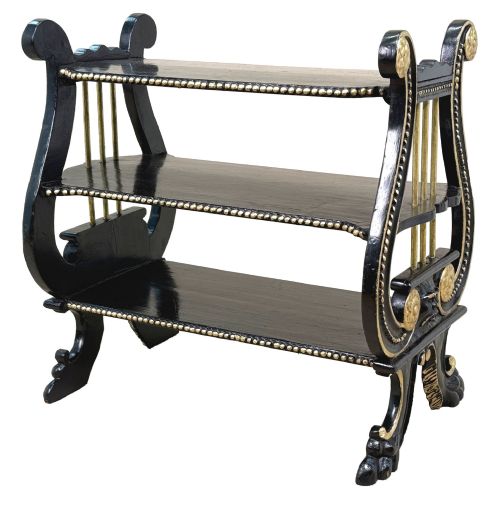
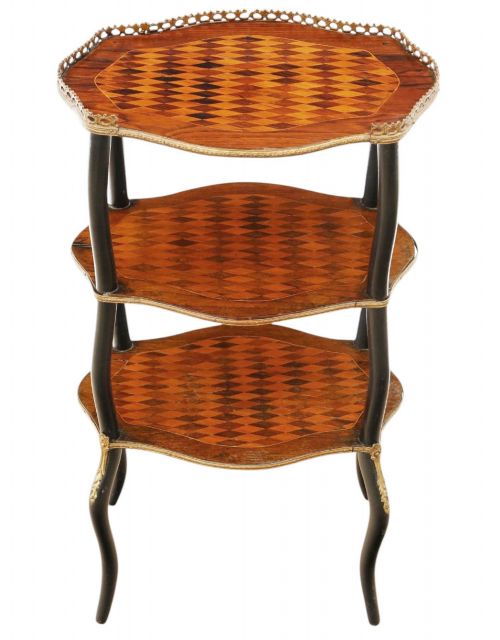
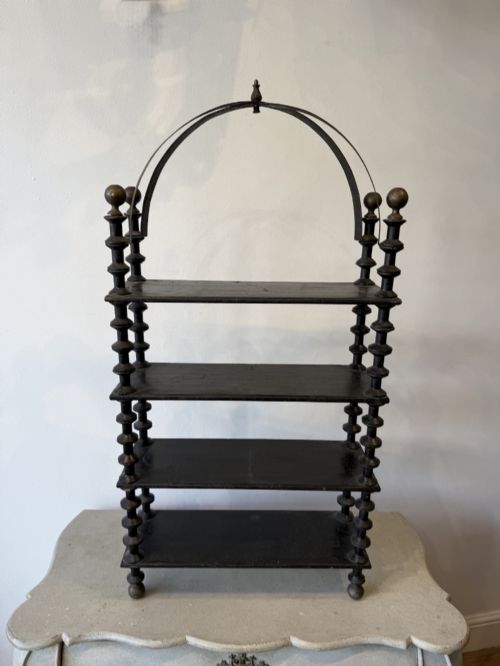
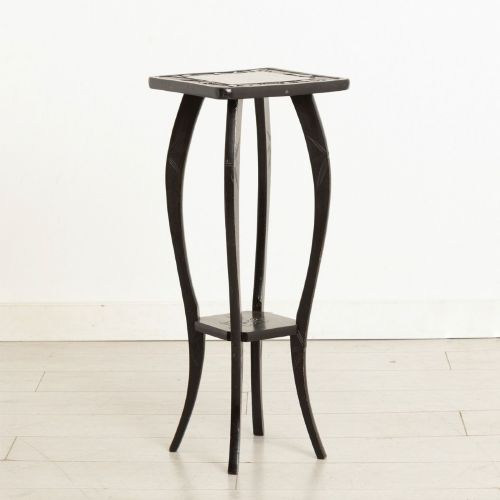
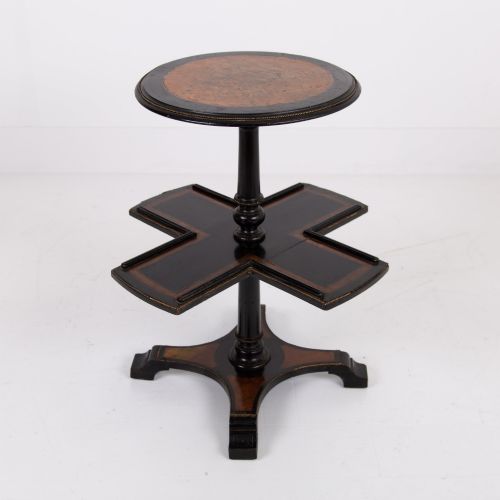
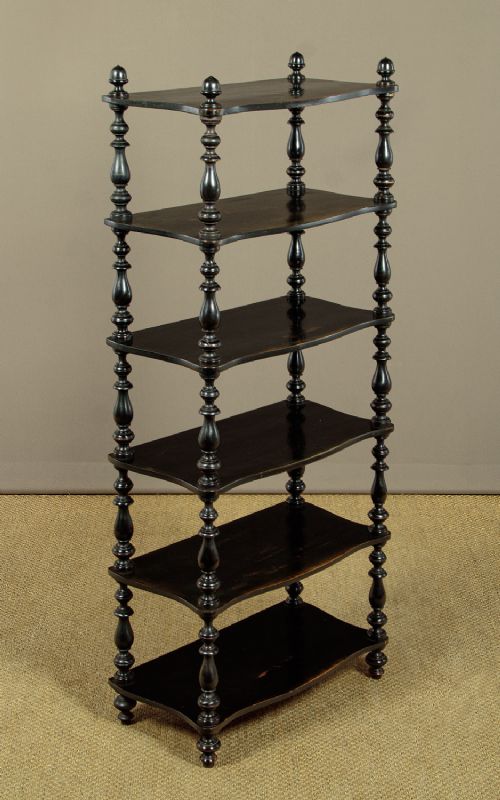
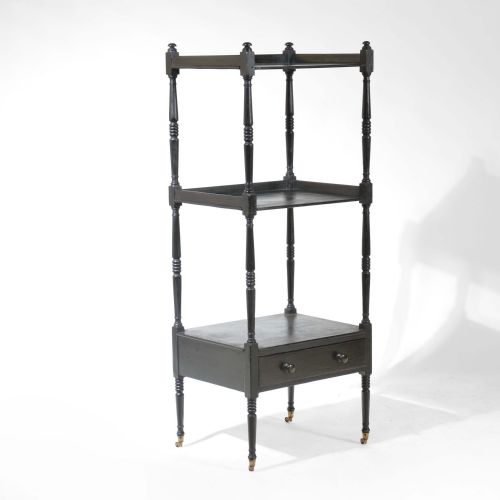
The most common formats on this page feature multiple graduating shelves supported by turned or bobbin legs, often accented with inlay, brass mounts, or parcel gilding. Forms range from corner units and wall-hanging shelves to freestanding side tables and multi-tiered stands.
Makers and workshops of the period utilised these layered designs to maximise display space in parlours and drawing rooms, creating vertical focal points. Buyers will encounter various configurations, from simple three-tier stands to complex six-tier dumb waiters and cabinets.
Materials and construction methods
Construction relies heavily on fruitwoods or base timbers treated with a dark ebonising finish to imitate costly ebony, frequently paired with contrasting veneers such as amboyna, burr walnut, and marquetry parquetry. Cabinetmakers applied polish and gilding to enhance the reflective quality of the dark surfaces.
Structural elements incorporate turned wooden supports, delicate bobbin turnings, and brass or ormolu mounts to secure the tiers. Inlaid details, porcelain plaques, and hand-carved motifs are integrated into the primary framework to provide decorative contrast against the ebonised ground.
Listings feature ebonised wood paired with amboyna veneer, burr walnut, and brass across Victorian and Aesthetic Movement periods.
Quality variations in ebonised tiering
The standard of an ebonised tiered display depends upon the precision of its joinery, the crispness of any turned or carved details, and the integrity of the ebonised finish. Superior examples employ choice secondary timbers and precise marquetry inlay rather than surface painted decoration.
Subtleties such as original brass fittings, intact parcel gilding, and the balanced proportion of graduating shelves elevate a piece. Finer items demonstrate careful matching of exotic veneers like amboyna and burr walnut on the display surfaces.
Liberty of London·Bertram and Son
The Ebonised Tiered Display Glossary
- Etagere
- A set of open shelves for displaying small ornaments or books. Originating in France, these multi-tiered stands became popular in Victorian drawing rooms.
- Whatnot
- A piece of furniture consisting of several open shelves above one another, used for displaying ornaments. They appear frequently in nineteenth-century British and French interiors.
- Ebonised
- Wood finished to resemble ebony by staining or painting the surface black. This technique was widely utilised during the Victorian and Aesthetic periods.
- Amboyna veneer
- A decorative wood slicing taken from the Pterocarpus indicus tree, prized for its mottled, golden-brown grain. It provides a striking contrast on ebonised tiered furniture.
- Parcel gilded
- Partially gilded with gold leaf or paint, usually highlighting carved elements, mouldings, or turned details. This treatment lifts the dark appearance of ebonised pieces.
Ebonised Tiered Display: Frequently Asked Questions
What is an ebonised tiered display used for?
These pieces were designed primarily for displaying decorative objects, porcelain, and small ornaments in nineteenth-century reception rooms. The multiple tiers allowed homeowners to exhibit collections vertically without cluttering table surfaces.
Today, they serve the same function in domestic interiors, holding books, plants, and ceramics while adding architectural interest to a corner or wall.
How do I date an ebonised whatnot?
Dating relies on stylistic markers, construction techniques, and timber choices recorded across the Victorian, Aesthetic Movement, and later nineteenth-century periods. Heavier carvings and distinct revival styles often point to specific decades between eighteen-fifty and nineteen-hundred.
Examining the secondary woods and finishing methods helps distinguish mid-nineteenth-century craftsmanship from later reproductions or turn-of-the-century interpretations.
Where should I place a tiered etagere?
Freestanding etageres and side tables suit drawing rooms, living spaces, and hallways where their multi-level shelving can be viewed from multiple angles. Corner units and wall-hanging shelves make effective use of neglected vertical wall space.
Because the ebonised finish and decorative veneers are sensitive to extreme light and moisture, placing them away from direct sunlight and radiators preserves the wood.
What is the difference between an etagere and a whatnot?
While both terms describe multi-tiered open shelving units, etagere often implies a French influence with ornate ormolu mounts and marquetry. Whatnot tends to describe British multi-shelf stands used for general display.
In practice, makers and dealers used both terms interchangeably during the nineteenth century depending on the regional style and form of the piece.