


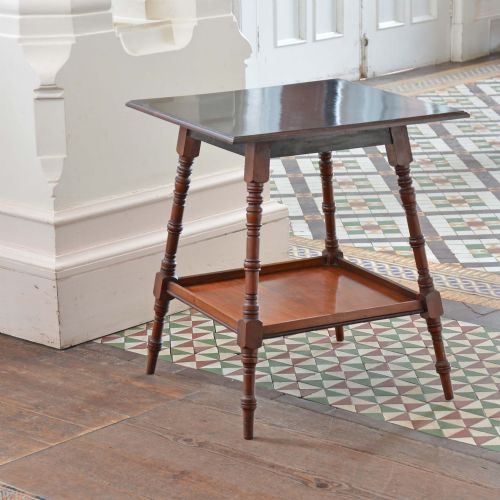


Ebonised Tier Side Table
An ebonised tier side table brings dark elegance to a room, offering multiple levels for display across styles from the Aesthetic Movement to Art Deco.
Ebonised Tier Side Table
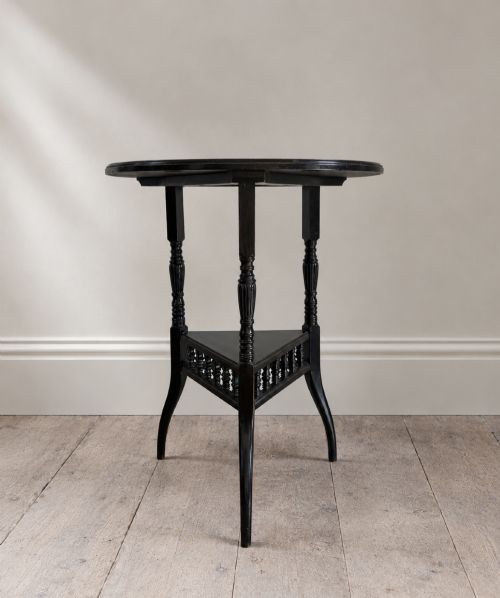
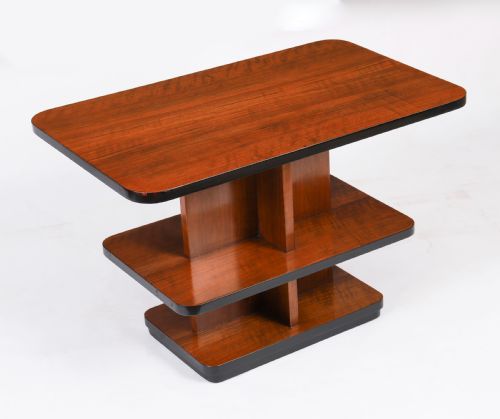
When you search for an ebonised tier side table, you encounter multi-level furnishings designed to hold objects on stacked surfaces while introducing dark, painted or stained finishes to an interior. These items emerge frequently from the nineteenth century, including Victorian and Aesthetic Movement periods, alongside later twentieth-century Art Deco examples.
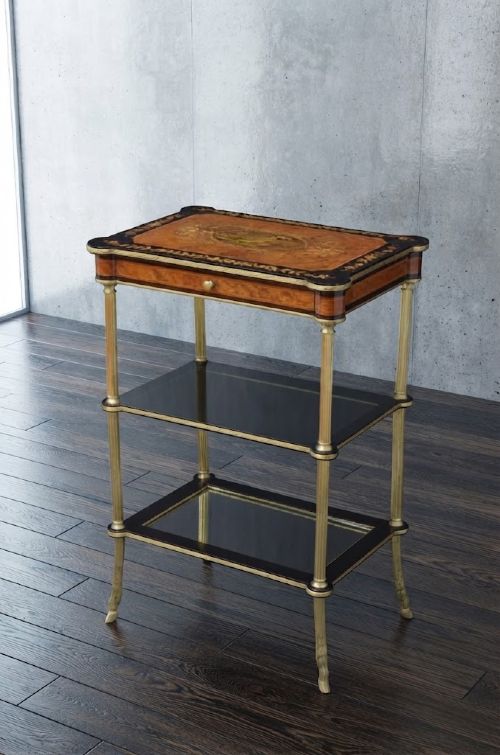
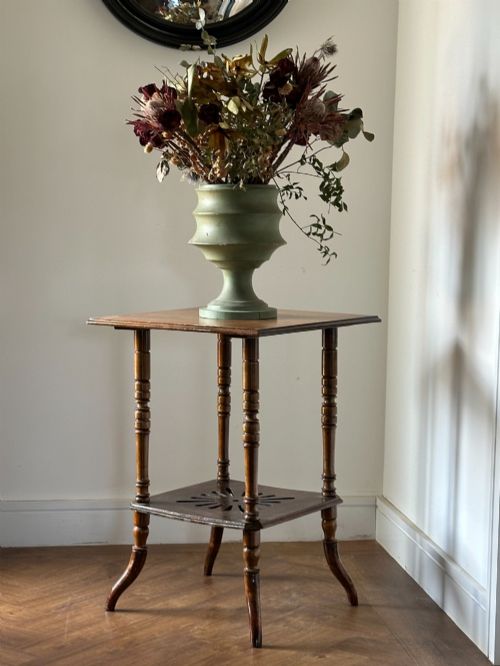
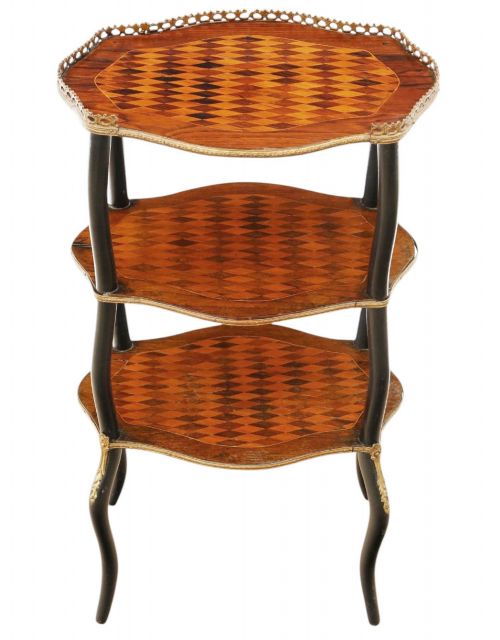
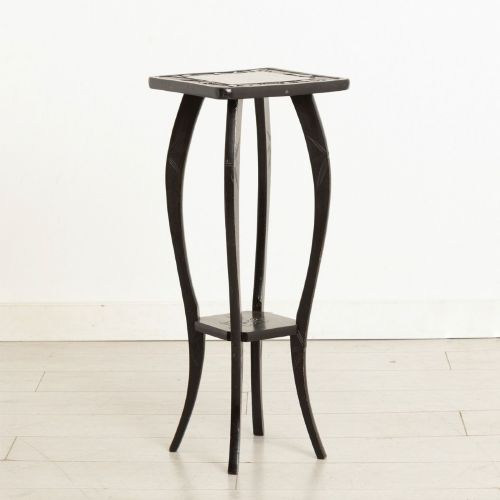
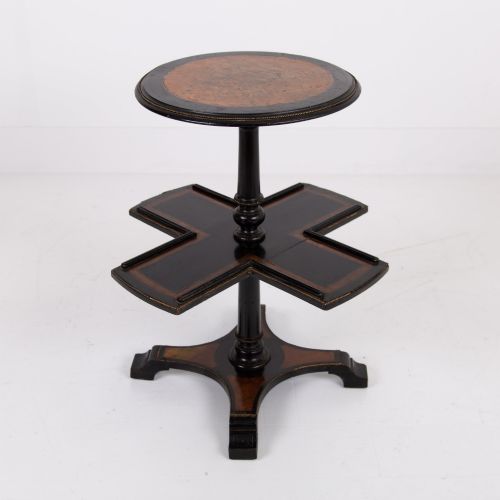
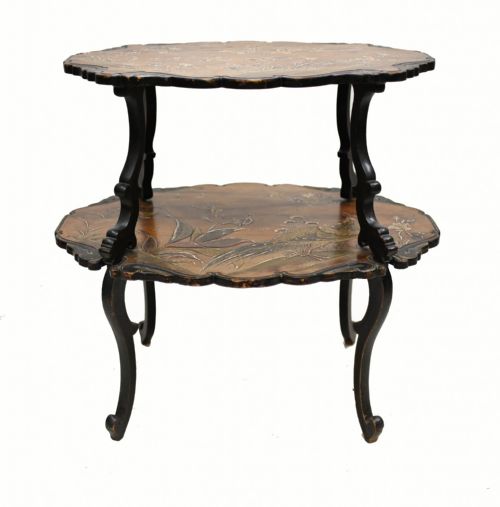
The forms vary widely across the selection, ranging from simple rectangular two-tier tables and round tables in the manner of E.W. Godwin to taller étagères, plant stands, and occasional tables with mirrored or inlaid tiers. Many reflect French Napoleon III taste, Anglo-Japanese design principles, or English cabinet-making traditions from the 1870s to the 1930s.
How they were made
Makers built these tables using ebonised wood or hardwood as a base, frequently combining the dark finish with contrasting timber veneers such as amboyna, walnut, burr walnut, and mahogany. Selected pieces incorporate japanning, hand-painted details, or parcel gilt highlights to catch the light against the sombre dark surfaces.
Structural embellishments often include cast brass sabots, ormolu mounts, inlaid parquetry, marquetry, and mirrored glass inserts within the tiers. Craftspeople also utilised bamboo, woven reed, and marble tops, anchoring multi-level designs with turned supports or slender uprights.
Some tables feature tiny mirrored tiers specifically designed to bounce candlelight upward onto delicate porcelain collections.
What varies in quality
The distinction between standard production and the finest work lies in the precision of the joinery and the selection of secondary timbers and veneers. Superior examples display crisp turnings, tight marquetry or parquetry inlay, and carefully applied ebonisation that penetrates deeply rather than simply masking inferior grain.
Quality also shows in the integration of decorative hardware, such as solid brass sabots, fine ormolu mounts, and heavy mirrored glass or marble inserts that remain stable within their frames. The architectural balance of the tiers determines whether a multi-level table appears refined or heavy.
Liberty of London·Bertram and Son·Cottier and Company·H Ogden of Manchester
The Ebonised Tier Side Table Glossary
- Ebonised
- Wood treated to resemble expensive ebony through staining, painting, or chemical darkening. This finish gained immense popularity during the Victorian and Aesthetic Movement periods.
- Étagère
- A piece of furniture consisting of open shelves or tiers for displaying small objects or ornaments. These originated in France and became central to nineteenth-century drawing rooms.
- Aesthetic Movement
- A late nineteenth-century design style emphasising art for art's sake, often drawing inspiration from Japanese art and featuring simple ebonised forms. E.W. Godwin was a leading proponent of this aesthetic.
- Marquetry
- Decorative veneer work where pieces of wood, metal, or shell are fitted together to form pictorial or geometric patterns. It frequently enhances the top tiers of French and Victorian tables.
- Ormolu
- Gilded bronze mounts applied to furniture edges and legs for decorative effect. It appears regularly on nineteenth-century French revival and Napoleon III tier tables.
Ebonised Tier Side Table: Frequently Asked Questions
What is an ebonised tier side table used for?
These tables served primarily as display surfaces for ornaments, ceramics, and small lamps in nineteenth and twentieth-century drawing rooms. The multiple tiers allowed owners to exhibit collections without cluttering the main surface.
Today, they function well beside seating areas or in hallways where vertical display space is needed without a large footprint.
How do I distinguish Aesthetic Movement tables from Victorian ones?
Aesthetic Movement examples, often associated with designers like E.W. Godwin, typically feature simpler geometric lines, structural honesty, and strong Japanese influences. Standard Victorian pieces might incorporate heavier turning, richer burr veneers, and more ornate mounts.
Both styles frequently utilise ebonised finishes, but the overall architectural silhouette usually points toward the specific design philosophy.
Are these tables sturdy enough for daily use?
Most multi-tier tables were built to support decorative objects rather than heavy loads, though sturdy hardwood and walnut examples handle normal placement of books and cups. The slender uprights and multiple joints mean they require careful placement away from heavy foot traffic.
Checking the tightness of the tier supports ensures the structure remains stable during everyday placement.
How do I care for ebonised wood surfaces?
Ebonised wood benefits from dusting with a soft, dry cloth and occasional treatment with appropriate furniture waxes or polishes designed for dark finishes. Avoiding direct sunlight and excessive moisture preserves the depth of the dark stain and prevents veneer lifting.
Gentle maintenance keeps the original surface sheen intact without building up heavy residues.