



Ebonised Shelf Clock
An ebonised shelf clock brings dark, striking presence to a mantelpiece, combining deep timber cases with precise mechanical movements.
Ebonised Shelf Clock
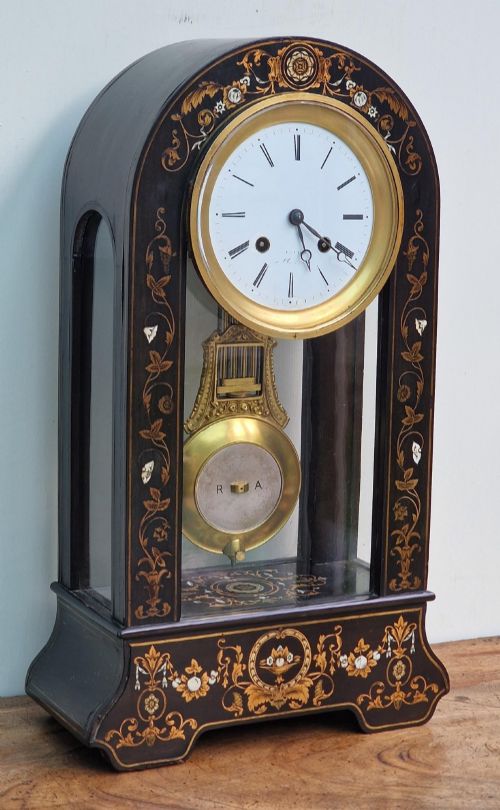
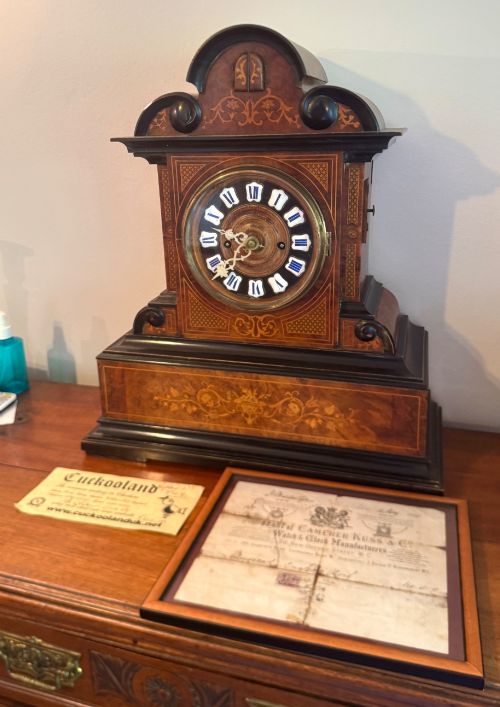
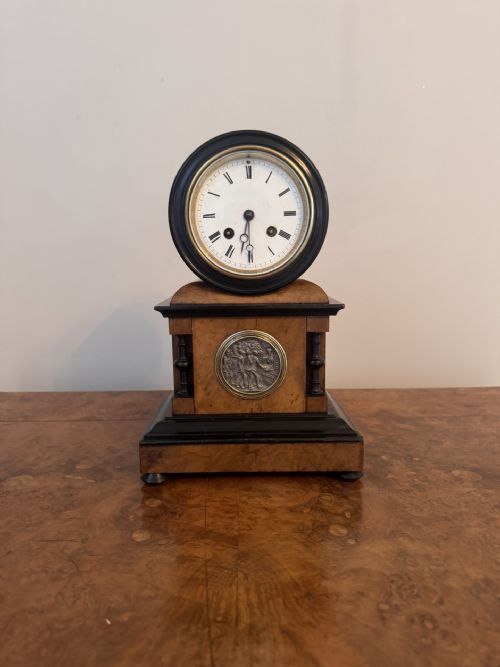
An ebonised shelf clock is a timekeeping piece housed in a dark, treated wooden case designed to rest upon a mantel or bracket. These items emerge primarily from the Victorian and nineteenth-century periods, alongside Regency and Georgian examples.
The selections on this page span several stylistic influences, including Aesthetic Movement designs, French revivals, and classical forms. Mantel clocks dominate the offerings, appearing alongside bracket clocks and wall brackets.
Materials and construction
Cases utilise ebonised wood, often paired with burr walnut, stained wood, or foundational walnut timbers. Artisans enhanced these dark finishes with contrasting mounts and details in brass, ormolu, and glass.
Dials frequently feature enamel faces to ensure clear legibility against the heavy timber surrounds. Marquetry inlay and porcelain elements appear on select pieces, demonstrating intricate decorative techniques.
Ebonised Shelf Clock Retail Price Guide 2026
Typical asking prices for ebonised shelf clock among the pieces listed under this phrase on Sellingantiques today, from the lower quarter to the upper quarter. They describe what is for sale here now, not the wider market.
Listings feature items spanning the Georgian, Regency, and Victorian eras, utilising ebonised wood alongside walnut, brass, and ormolu.
Assessing craftsmanship
The refinement of the ebonised finish and the crispness of any marquetry or gilt detailing dictate visual standing. Superior examples display careful integration of brass and ormolu mounts without clumsy joints.
Maker attribution and movement complexity elevate a piece significantly. Clocks bearing signatures from established makers demonstrate higher standards of mechanical execution and cabinetry.
John Bull of Bedford·Thomas A Paris·Desbois and Wheeler·D Robertson of Perth·Wm Gilbert·Henri Dasson
The Ebonised Shelf Clock Glossary
- Ebonised wood
- Timber treated with a finish that mimics genuine ebony, producing a dense black surface. This technique was popular in nineteenth-century cabinet making to achieve a formal look.
- Ormolu
- Gilded bronze used for decorative mounts and accents on clock cases. The technique involves applying a mercury and gold amalgam to cast bronze.
- Marquetry
- Inlaid wood pieces arranged in decorative patterns on a veneer. Craftsmen use contrasting timbers to create pictorial or geometric designs.
- Bracket clock
- A portable clock traditionally designed to sit on a wall bracket or a furniture shelf. Many include handles for carrying between rooms.
Ebonised Shelf Clock: Frequently Asked Questions
How do I care for an ebonised shelf clock?
Keep the clock away from direct sunlight and fluctuating heat sources to protect the dark wood finish and internal gears. Dust the case gently with a dry, soft cloth and have the mechanical movement serviced regularly by a professional horologist.
Ensure the clock rests on a stable, level surface to keep the pendulum swinging evenly. Avoid using chemical polishes that can damage the ebonised surface.
What is the difference between a mantel clock and a bracket clock?
Mantel clocks are generally built to stand directly on a flat surface such as a fireplace mantel. Bracket clocks historically sat upon a matching wall-mounted bracket, though many now rest on tabletops.
Bracket clocks often feature architectural proportions and carrying handles, reflecting their origins as portable timepieces.
How do I identify a nineteenth-century ebonised clock?
Examine the construction methods, materials, and dial design for period characteristics. Nineteenth-century examples often combine ebonised wood with brass or gilt accents aligned with Victorian or Aesthetic Movement tastes.
Maker signatures on the dial or movement and the style of the wood finishing help confirm the era of production.