


Ebonised Regency Armchairs
Ebonised regency armchairs are striking seats built for formal interiors, bringing dramatic dark finishes and classic classical lines to any room.
Ebonised Regency Armchairs
Ebonised regency armchairs combine the dark, dramatic look of imitation ebony with the crisp lines of the early nineteenth century. When you search for ebonised regency armchairs, you meet seating designed for libraries, drawing rooms and formal dining spaces.
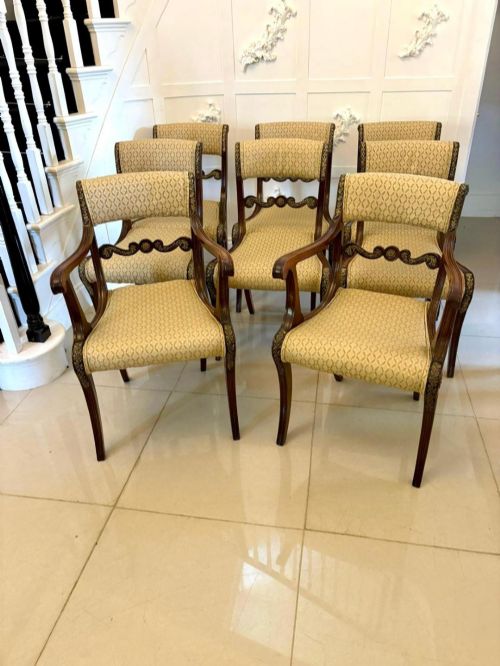
The pieces on this page span the Regency period itself as well as later revivals from the twentieth century. You encounter library armchairs, bergères, elbow chairs and sets of dining chairs showing influences from Anglo-Indian colonial design to faux bamboo.
Most examples rely on painted or stained wood surfaces that mimic exotic hardwoods. Alongside genuine early nineteenth-century work, you find later interpretations built in the Regency style.
How they were made
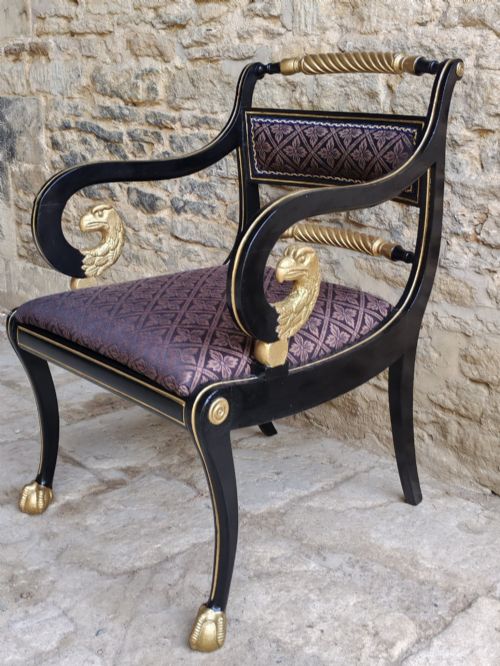
Cabinetmakers built these frames using woods such as mahogany or softer timbers finished with dark paint or polish to simulate ebony. Artisans frequently added parcel gilt highlights, brass mounts or delicate painted decorations to accentuate the dark surfaces.
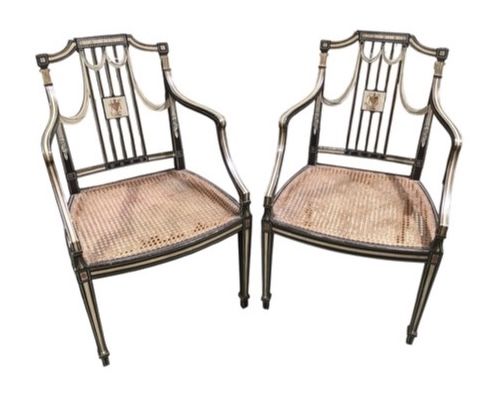
Seating portions often incorporated woven cane work for lightness and flexibility, whilst other examples utilised upholstered pads covered in fabric. Turned members, bobbin turnings or simulated bamboo shaping required skilled lathe work and joinery.
Listings feature items spanning the Regency period, the nineteenth century, and the nineteen-twenties.
What varies in quality
The refinement of the carving and the crispness of the ebonised finish dictate the visual strength of the piece. Superior examples display balanced proportions in the arms and legs, whether executed during the Regency period or in a later revival.
The integration of decorative elements such as gilt highlights or brass details separates standard production from exhibition quality work. Material choices, from solid ebony or mahogany frames to fine caning and paintwork, determine the enduring presence of the chair.
Gillows
The Ebonised Regency Armchairs Glossary
- Ebonised
- Wood treated with stain, paint or polish to imitate the dark, dense appearance of true ebony. This finish became particularly fashionable during the Regency period.
- Bergère
- An enclosed upholstered armchair with solid sides, often featuring cane panels. These seats appeared frequently in polite drawing rooms.
- Parcel Gilt
- Partially gilded woodwork where gold leaf highlights specific carved details against a contrasting background. It creates a striking contrast with black ebonised surfaces.
- Caning
- Woven rattan material used for seat panels and backs. It provides a resilient, lightweight surface that complements wooden frames.
- Faux Bamboo
- Wood turned and carved to resemble natural bamboo stalks. This ornamental technique reflected a broader taste for exotic global styles.
Ebonised Regency Armchairs: Frequently Asked Questions
Are these armchairs comfortable for daily use?
Many of these chairs were designed for formal sitting rather than lounging, though library bergères offered more substantial support for reading.
Adding appropriate squab cushions can improve comfort while maintaining the correct historical appearance of the seat.
How do I spot a true Regency piece?
Authentic period examples generally display timber construction methods, wear patterns and material choices consistent with the early nineteenth century.
Comparing structural details against documented pieces helps distinguish original Regency work from later twentieth-century revivals.
Where should I place an ebonised armchair?
The dark finish works well as a visual anchor in a bright room or as a complement to traditional library shelving.
Because the surfaces draw the eye, these chairs function effectively as standalone statement pieces in hallways or drawing rooms.
What is the difference between Regency and Regency style?
Regency pieces date from the actual Regency era and the years immediately surrounding it, carrying the authentic construction of that time.
Regency style pieces usually date from later periods, such as the twentieth century, borrowing the classical vocabulary of the original era.