

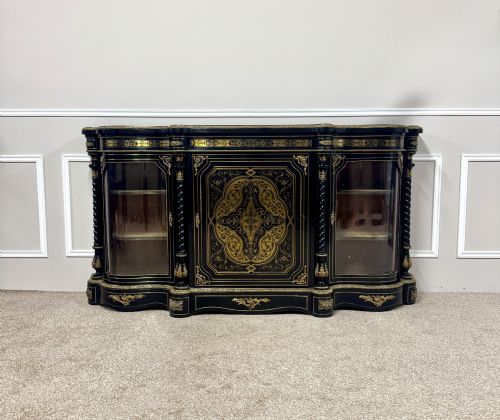
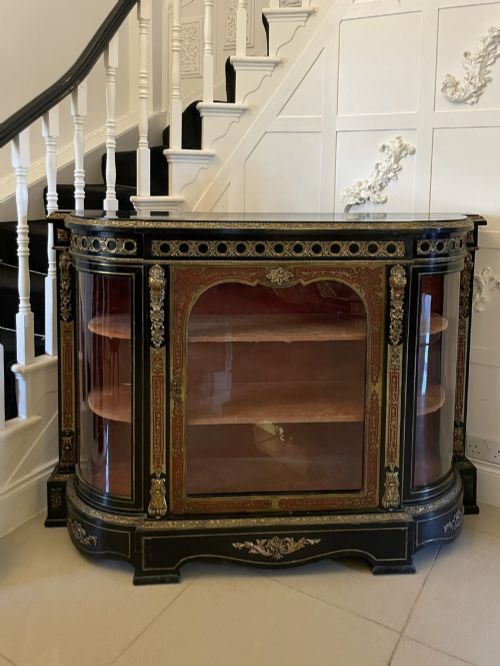
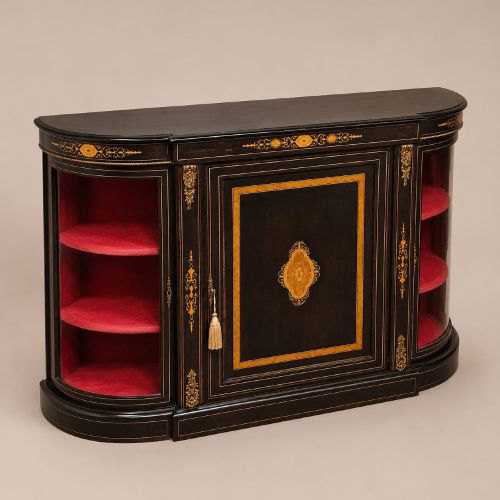
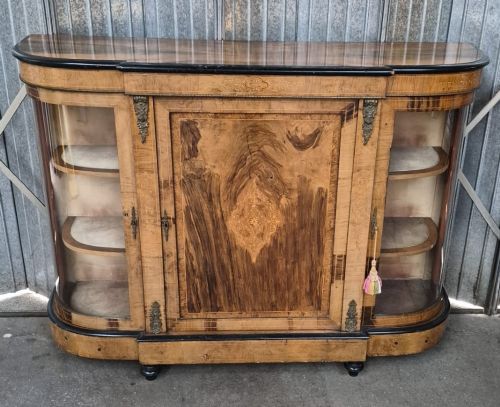


Ebonised Glass Display Sideboard
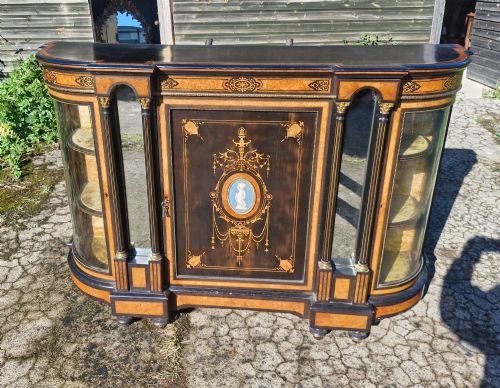
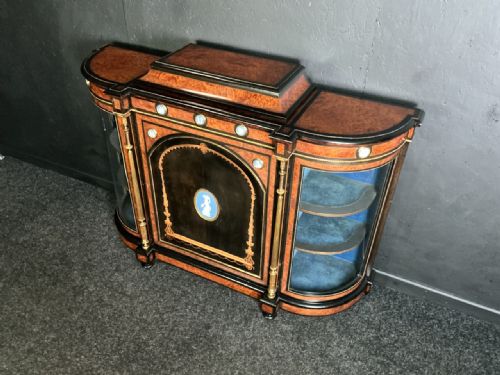
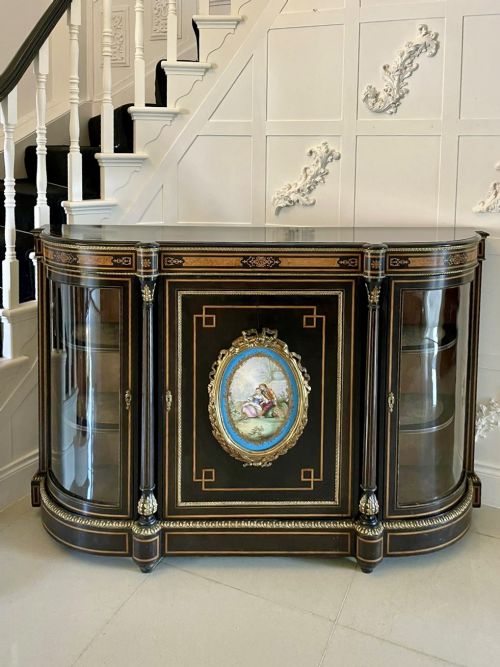
These ebonised glass display sideboard examples bring together dark wood and glazing to showcase collections with nineteenth-century presence.
Ebonised Glass Display Sideboard
An ebonised glass display sideboard serves as a focal point for formal rooms, combining cabinet space with glazed display areas. The form draws heavily on Victorian, Napoleon III, and Aesthetic Movement design principles from the mid to late nineteenth century.
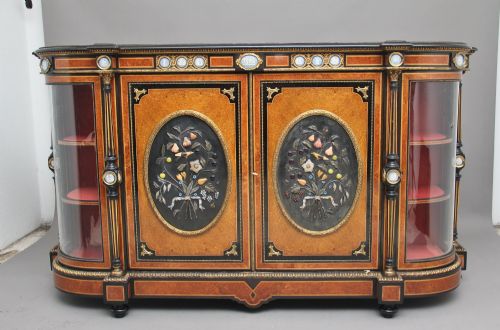
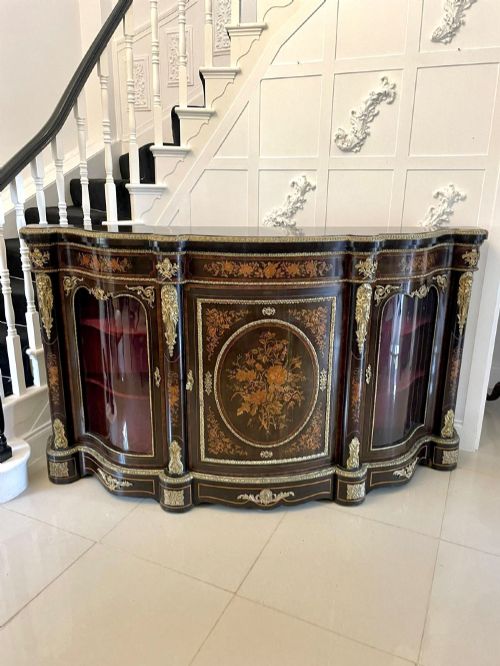
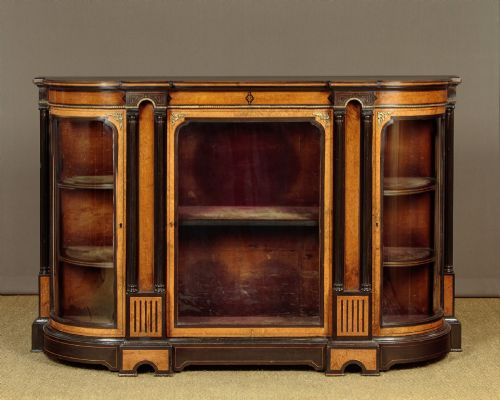
Most pieces encountered in this selection take the form of credenzas, side cabinets, and breakfront bookcases. These configurations provide central glass doors flanked by shelved cupboards, or feature serpentine and bow-front silhouettes designed to project elegance.
Origins span British workshops and continental makers, particularly French establishments producing Boullework or ormolu-mounted pieces. Buyers select these items to anchor a room while displaying porcelain, glass, or small objects behind protective glazing.
How they were made
Carpenters built the carcases using foundational timbers such as walnut or yew, then applied ebonised finishes to mimic costly ebony. Surfaces often incorporate amboyna, burr walnut, and marquetry veneers arranged in floral or geometric patterns.
Metal mounts in ormolu and gilt bronze frame doors and corners, while brass inlay traces intricate lines across the timber. Pietra dura panels and porcelain plaques occasionally insert directly into the front elevation for added colour and texture.
Ebonised Glass Display Sideboard Retail Price Guide 2026
Typical asking prices for ebonised glass display sideboard among the pieces listed under this phrase on Sellingantiques today, from the lower quarter to the upper quarter. They describe what is for sale here now, not the wider market.
Listings feature items from the Victorian period, including dates across the eighteen-fifties, sixties, seventies, and eighties.
What varies in quality
The refinement of the marquetry and the crispness of the cast ormolu mounts dictate the upper tier of execution. Pieces with complex serpentine shaping, mirror backs, and detailed Pietra dura work represent more demanding workshop output.
Timber selection also establishes the grade of an item, with rich burr walnut and amboyna grains commanding attention. The integration of glazed doors with original glass and well-fitted internal velvet lining completes the standard of construction.
Gillow
The Ebonised Glass Display Sideboard Glossary
- Ebonised
- Wood treated to imitate ebony through staining or painting. This finish gained popularity during the Victorian and Napoleon III periods to create sharp visual contrast with brass and gilt mounts.
- Credenza
- A low dining or drawing-room cabinet designed for display and storage. Nineteenth-century examples frequently feature glazed central doors and curved side compartments.
- Ormolu
- Gilt bronze mounts applied to furniture edges and panels. These decorative elements add metallic warmth and sculptural detail to dark cabinet surfaces.
- Marquetry
- Inlaid wood veneers forming pictorial or decorative patterns. Artisans used contrasting timbers to create floral designs across cabinet doors.
- Boulle
- An inlay technique combining tortoiseshell and brass. Named after a French cabinetmaker, this method produces shimmering surface patterns.
Ebonised Glass Display Sideboard: Frequently Asked Questions
What is an ebonised glass display sideboard?
An ebonised glass display sideboard is a nineteenth-century storage piece featuring dark-stained wood and glass-fronted compartments. These items function as credenzas or side cabinets intended for displaying decorative objects.
Craftsmen during the Victorian and Napoleon III eras built these cabinets to anchor formal rooms. They combine closed storage with glazed display space to protect collections while keeping them visible.
How do I date an ebonised credenza?
Dating relies on stylistic markers such as Aesthetic Movement geometry, French revival ormolu mounts, and Victorian floral marquetry. Most pieces date between eighteen-fifty and eighteen-eighty.
Examining the secondary timbers, interior linings, and construction methods helps confirm the manufacturing decade. The presence of specific veneers like burr walnut or amboyna also points to mid-nineteenth-century preferences.
Where should I place a side cabinet?
These cabinets suit dining rooms, drawing rooms, or wide hallways where low profiles preserve wall space above. They provide a stable surface for lamps or ornaments while housing collections behind glass.
Positioning the piece away from direct sunlight protects vulnerable timber veneers and interior velvet linings. Adequate clearance is necessary for doors that swing outward or curve along serpentine fronts.
What styles are available?
Available styles include Victorian, French Napoleon III, and Aesthetic Movement designs. Each style brings distinct decorative vocabulary, from heavy floral marquetry to refined brass inlay.
Some pieces incorporate Pietra dura panels or gilt bronze mounts reflecting continental tastes. Others follow British cabinet-making traditions using burr walnut and ebonised timber.