


Earthenware Serving Bowl
These earthenware serving bowl pieces bring honest utility and historic character to the table.
Earthenware Serving Bowl
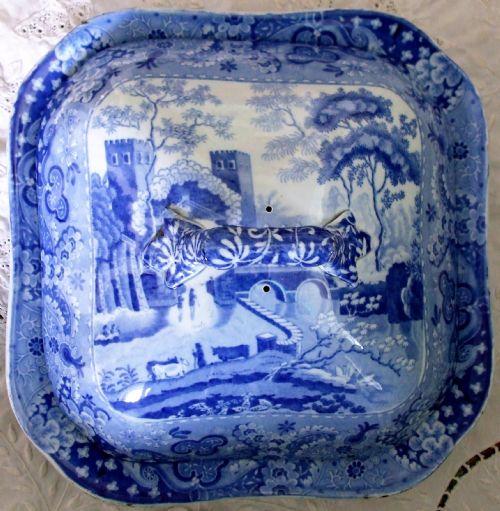
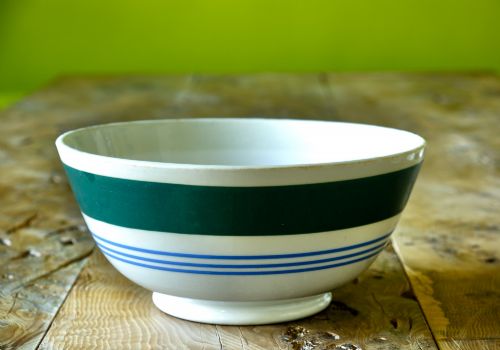
When you search for an earthenware serving bowl, you encounter a robust tradition of utilitarian and decorative ceramics spanning the 18th century, Georgian era, and the 19th century. These pieces encompass deep bowls, lidded tureens, fruit comports, and large chargers designed for table service.
The varieties on this page lean heavily toward transfer-printed blue and white earthenware, tin-glazed faience, and spongeware forms. You will find items originating from English potteries, Scottish works, and continental European workshops.
Many survivors carry specific historical patterns or commemorative designs, moving them from simple kitchen utensils to decorative table centrepieces. Their forms reflect the practical dining needs of past generations alongside shifting aesthetic tastes.
How they were made
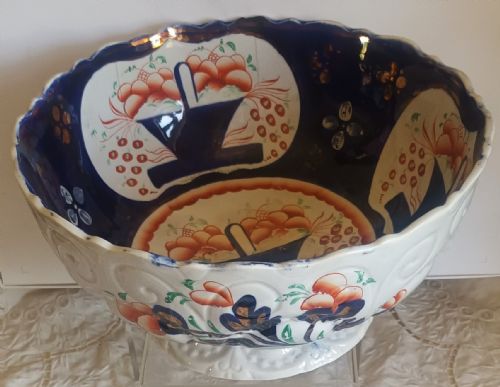
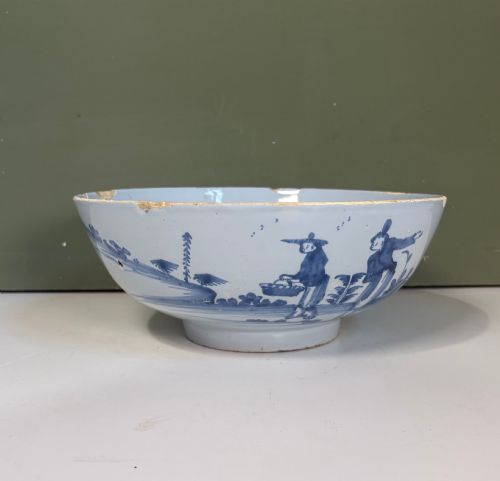
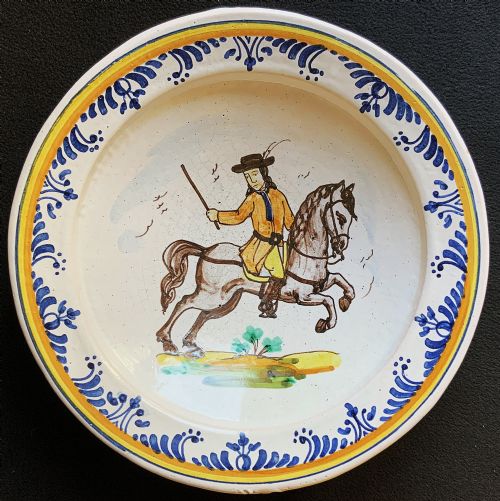
Potters shaped these vessels from earthenware clay, firing the bodies before applying decorative treatments. Many items utilise tin glaze or cobalt glaze to create opaque white or deep blue surfaces ready for hand painting or transfer printing.
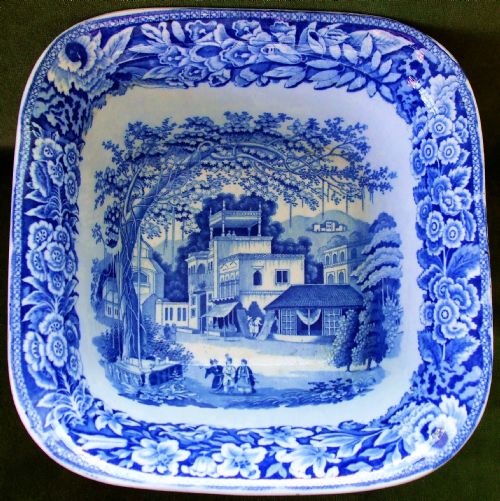
Transfer printing allowed workshops to apply intricate pictorial scenes onto the curved surfaces of tureens and bowls using engraved copper plates. Other examples display hand-painted polychrome enamel details or sponge-applied colour directly onto the ceramic body.
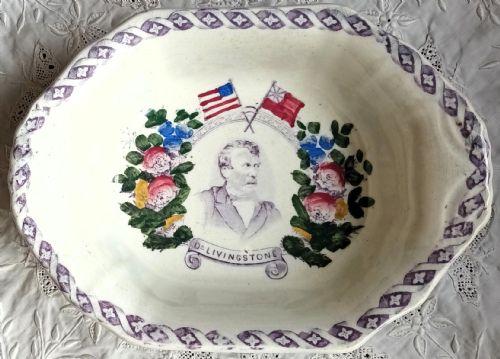
Dr Livingstone makes an unexpected appearance on Victorian commemorative dishes, immortalised in earthenware alongside castles and elephants.
What varies in quality
Quality rests in the crispness of the transfer print and the balance of the ceramic form when resting on a flat surface. Pieces produced by established makers demonstrate greater control in their glazing and firing processes.
The depth and vibrancy of the cobalt glaze or enamel colours distinguish standard utility wares from finer exhibition or commemorative pieces. Intricate hand-painted highlights over transfer outlines also elevate the visual weight of a vessel.
J. & R. Riley·J. & R. Clews·T G Green·Mann & Co·Booths·Doulton Burslem·James Wallace & Co·John Rogers and Son·Copeland and Garrett
The Earthenware Serving Bowl Glossary
- Earthenware
- A porous pottery body fired at lower temperatures than stoneware or porcelain, requiring a glaze to hold liquids. It forms the structural base for the majority of these bowls and tureens.
- Transfer Print
- A decoration technique where an engraved metal plate transfers a design onto tissue paper, which is then pressed onto the ceramic body. This method allowed for uniform production of complex topographical and figurative scenes.
- Tin Glaze
- An opaque white glaze containing tin oxide, providing a smooth canvas for painted decoration. It is characteristic of delftware and faience production.
- Tureen
- A deep covered vessel designed for serving soups, vegetables, or sauces at the dining table. Many include matching lids and integral handles or feet.
- Comport
- A raised dish or bowl used for serving fruit or sweetmeats as part of a formal table service. These pieces typically feature a pedestal base.
Earthenware Serving Bowl: Frequently Asked Questions
Can I use these antique bowls for serving food?
While these pieces were originally created for culinary and dining use, their porous earthenware bodies and historic glazes require careful handling today. Many collectors prefer to display them or use them gently for dry goods rather than everyday dining.
Thermal shock and modern dishwashers can damage antique ceramic glazes. Hand washing in warm water preserves the historic surface integrity.
How do I date an earthenware bowl?
Dating relies on examining the ceramic body, glaze characteristics, and any maker marks or registry stamps on the base. Stylistic cues such as transfer print subjects and potting techniques also point toward specific decades.
Comparing the blue and white patterns to documented factory archives helps narrow the production window. Unmarked pieces require comparison with dated examples of similar weight and clay consistency.
What is the difference between delftware and regular earthenware?
Delftware and faience utilise a specific tin glaze over an earthenware body to achieve an opaque white background, mimicking porcelain. Standard earthenware often relies on a transparent lead glaze over a buff or cream-coloured clay body.
The tin glaze creates a slightly softer surface susceptible to edge chipping. Standard transfer-printed earthenware usually presents a harder, more vitrified outer layer.
Why do some tureens include ladles?
Serving tureens were manufactured to hold liquids or moist vegetables at the table, necessitating a matching spoon or ladle for service. The inclusion of a fitted lid kept the contents warm during long meals.
Surviving sets with both base, cover, and original ladle represent complete dining service units. These matching components are prized for their visual unity.