
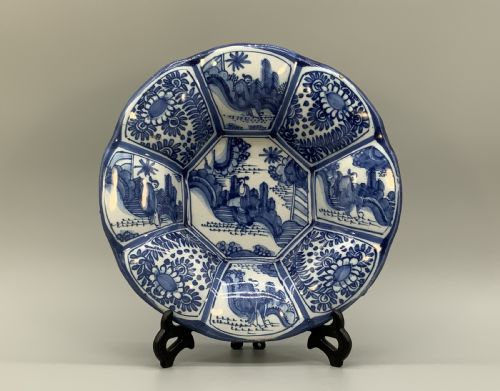
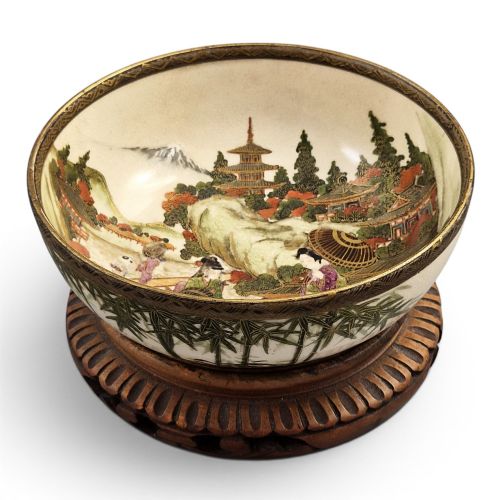
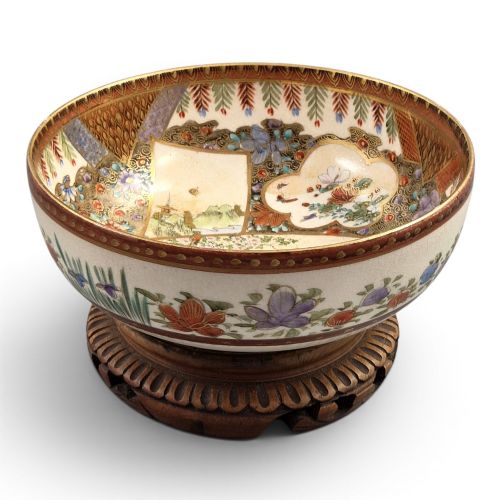


Earthenware Ceramic Display Bowl
These earthenware ceramic display bowl pieces bring striking pattern and historic form into a room, offering rich glaze work and traditional hand-painted detail.
Earthenware Ceramic Display Bowl
When searching for an earthenware ceramic display bowl, buyers encounter decorative vessels spanning centuries of global ceramic tradition. The examples available range from early Nishapur buffware pottery and Dutch Delft tin-glazed wares to intricate Meiji period Japanese Satsuma bowls.
Origins stretch from Islamic and Dutch workshops to Kyoto and regional Japanese kilns, showing diverse aesthetic traditions. Buyers will most frequently find nineteenth-century Satsuma bowls painted with detailed figural scenes, flowers, and birds alongside classic blue and white delftware.
Materials and construction methods
Potters shaped these earthenware ceramic display bowl pieces from clay bodies finished with specialised glazes and pigments. Tin glaze provides an opaque white surface for blue and white Dutch delftware, while creamware utilises a refined pale earthenware body.
Decoration relies on cobalt pigment for blue and white schemes, alongside enamel and gold leaf applied over the glaze. Satsuma pieces employ elaborate polychrome enamel painting combined with gilt highlights to depict figures, samurai, and natural motifs.
Listings feature earthenware pieces spanning the tenth century to the Edwardian era, utilising tin glaze, gold leaf, and cobalt pigment.
Assessing quality and execution
Quality in an earthenware ceramic display bowl rests upon the precision of the hand-painted brushwork and the clarity of the glaze. Finer Satsuma bowls exhibit exceptionally detailed figural painting and controlled application of gold leaf across complex compositions.
The sophistication of the potting and the stability of the earthenware body distinguish superior examples from simpler utilitarian vessels. Potter signatures, such as those from Kyoto workshops, often accompany higher levels of artistic execution and decorative ambition.
Gyokkō·Kozan·Kinkozan
The Earthenware Ceramic Display Bowl Glossary
- Tin-Glazed Earthenware
- Pottery coated with a glaze containing tin oxide to produce a white, opaque surface suitable for painting. This technique forms the basis of traditional Dutch delftware.
- Satsuma Ware
- Japanese earthenware pottery originating from Satsuma Province, typically characterised by an ivory crackle-glaze finish decorated with polychrome enamels and gold. These pieces were extensively produced for export during the Meiji period.
- Creamware
- A refined earthenware developed in England during the eighteenth century featuring a pale yellowish cream colour and a transparent lead glaze. It offered a lighter and more uniform alternative to earlier coarse pottery.
- Buffware
- Pottery fashioned from a light brownish-yellow clay body left unglazed or finished with simple mineral pigments. Early examples include tenth-century Nishapur ceramics from Islamic regions.
- Cobalt Pigment
- A metallic blue colourant used under the glaze to produce deep blue painted designs on pottery. It remains stable at high kiln temperatures, making it ideal for detailed ceramic decoration.
Earthenware Ceramic Display Bowl: Frequently Asked Questions
How do I date a satsuma bowl?
Dating typically relies on stylistic analysis of the painted motifs, the presence of specific artisan signatures, and the characteristics of the crackle glaze. Late nineteenth-century pieces often display dense polychrome enamel work and heavy gilding.
Kiln marks and workshop stamps found on the base also help narrow down the period of production, particularly for pieces made during the Meiji era.
Where were dutch delft bowls made?
Dutch delftware was produced primarily in the city of Delft and surrounding areas in the Netherlands during the seventeenth and eighteenth centuries. These workshops imitated Chinese porcelain styles using local earthenware and tin glazes.
The resulting blue and white dishes reflected widespread European demand for Asian trade goods during the Dutch Baroque period.
Are these bowls meant for food?
Most pieces listed under this category serve as decorative items rather than functional tableware. Historic surfaces, particularly those with delicate gold leaf and overglaze enamels, can suffer damage from daily use and washing.
Displaying them on stands or mounting them securely protects the fragile earthenware bodies and painted decoration from wear.
How should I display my bowl?
Displaying a decorative bowl safely requires a stable stand designed to support the specific weight and curvature of the vessel. Positioning the piece away from direct sunlight prevents fading of delicate enamels and pigments.
Ensuring adequate support for larger monumental pieces avoids structural stress on the antique earthenware body over time.