



Early Victorian Chest Drawers
An early victorian chest drawers brings solid proportions and warm timber to a room, offering practical storage built to last.
Early Victorian Chest Drawers
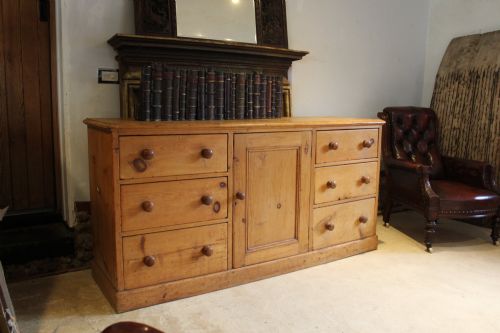
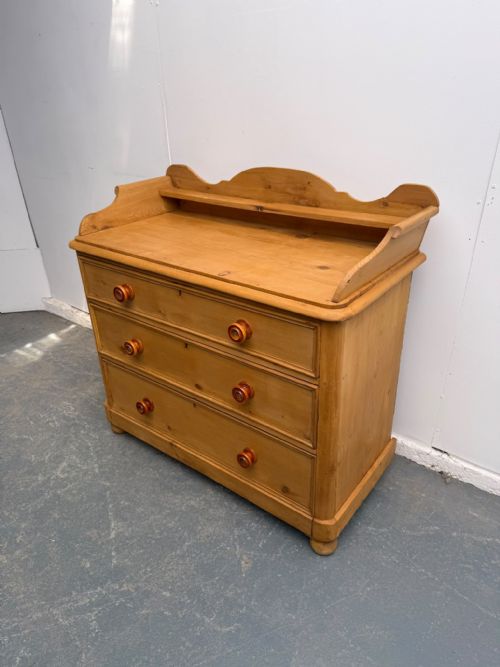
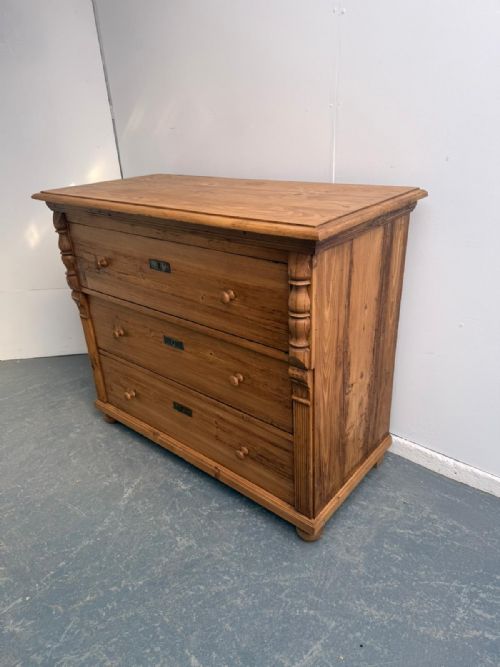
An early victorian chest drawers is a domestic storage piece dating from the mid-nineteenth century, typically constructed with two short drawers over three long ones. These pieces emerge in styles ranging from formal mahogany designs to country pine versions with waxed finishes.
Buyers encounter both full-sized bedroom furniture and smaller scale items like bow fronts, tall tallboys, and miniature apprentice pieces. The form prioritises sensible compartment organisation, frequently incorporating concealed top drawers or configuration splits.
Originating in the Victorian period, these items reflect the domestic carpentry standards of the mid-1800s, utilising regional woods and straightforward joinery to serve household needs.
How They Were Made
Cabinet makers relied heavily on mahogany, walnut, and pine, often selecting figured veneers for drawer fronts while using softer secondary woods for drawer linings and carcases. Surfaces received hand wax finishes or paint treatments, complemented by turned wooden knobs, brass pulls, or porcelain handles.
Construction involved sturdy dovetail joints on the drawer corners to withstand daily pulling and pushing, alongside panelled backs and substantial framing. Specialised versions integrated turned columns, secret compartments, or curved bow fronts requiring skilled timber bending.
Early Victorian Chest Drawers Retail Price Guide 2026
Typical asking prices for early victorian chest drawers among the pieces listed under this phrase on Sellingantiques today, from the lower quarter to the upper quarter. They describe what is for sale here now, not the wider market.
Listings feature mahogany, pine, walnut, and oak, demonstrating both formal urban cabinet work and country vernacular styles from the Victorian period.
What Varies in Quality
Quality rests in the choice of timber and the crispness of the cabinet work, particularly how evenly the grain matches across the drawer tiers. Superior examples maintain original handles, smooth drawer runners, and well-preserved backboards without extensive timber replacement.
Proportion and scale distinguish finer formal pieces from simpler country workshop output, with well-balanced cornices and neat bracket feet elevating the design. The integrity of the surface finish, whether deep flame mahogany or clean old paint, determines the visual strength of the piece.
Wilkinson London
The Early Victorian Chest Drawers Glossary
- Bow front
- A cabinet front curved outward in a convex sweep. This curved shape appears frequently on nineteenth-century bedroom chests to soften the room profile.
- Dovetail
- An interlocking joint formed by interlocking wedge-shaped fingers. This method secures drawer corners firmly together without relying entirely on glue.
- Flame grain
- A wood figure pattern resembling flickering flames, achieved by cutting timber across the growth rings. Cabinet makers reserved this striking veneer for primary display surfaces.
- Wellington chest
- A tall, narrow set of drawers secured by a locking vertical side flap. This vertical format provides deep storage within a compact floor footprint.
- Apprentice piece
- A miniature scale model constructed by a learner to demonstrate competency. These smaller items replicate full-size joinery techniques in miniature.
Early Victorian Chest Drawers: Frequently Asked Questions
How do I identify an early victorian chest drawers?
Look for characteristic proportions, hand-cut dovetails on the drawer interiors, and timber choices typical of the mid-nineteenth century such as mahogany or pine. Secondary indicators include turned wooden knobs and simple bracket feet.
examine the construction methods at the back and drawer linings to confirm age-appropriate manufacturing techniques rather than modern machine work.
Where should I place a chest in my home?
These pieces suit bedrooms, hallways, or living rooms where timber warmth and practical drawer storage add utility. Their modest footprints allow them to fit well against alcove walls or landings.
ensure the room humidity remains relatively stable to protect older wood and prevent veneer lifting over time.
Are pine and mahogany versions from the same period?
Yes, both timbers date to the same mid-nineteenth century era, though they served different domestic settings. Mahogany was chosen for formal parlours and bedrooms, while pine served in country houses and utility rooms.
both materials share identical period joinery standards despite their differing social origins.
What maintenance does old timber require?
Waxed surfaces benefit from occasional application of traditional beeswax to nourish the wood and maintain a soft sheen. Avoid placing timber furniture near direct heat sources or strong sunlight.
gentle dusting with a dry cloth prevents dirt build-up without risking the original finish.