


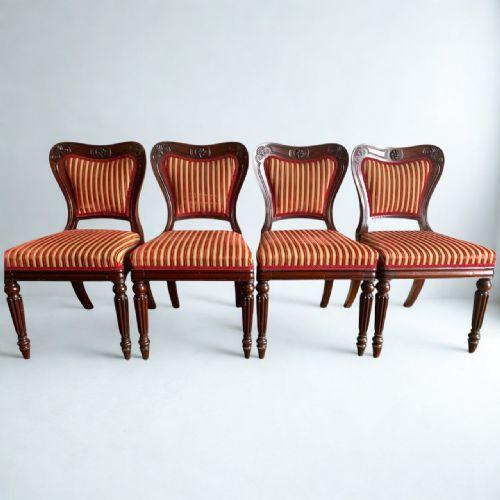


Early Victorian Balloon Backs
Early victorian balloon backs are nineteen-century seating pieces defined by curved splats, offering elegance and lumbar support for dining rooms and drawing rooms alike.
Early Victorian Balloon Backs
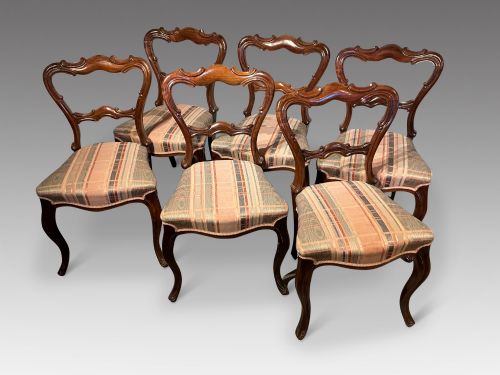
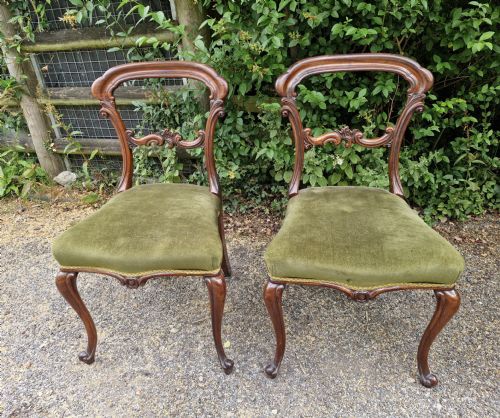
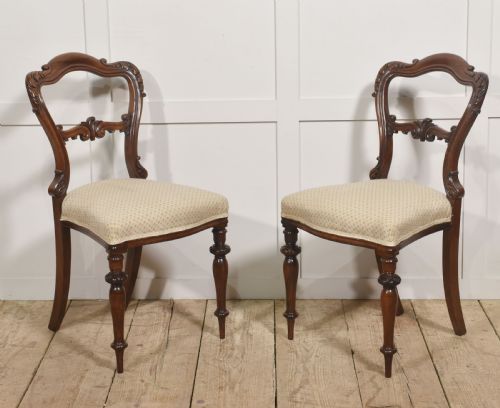
When you search for early victorian balloon backs, you are looking at nineteenth-century chairs characterised by an oval or rounded backrest resembling a balloon. These pieces emerge across the nineteenth century, bridging late Regency tastes and Victorian Rococo Revival forms.
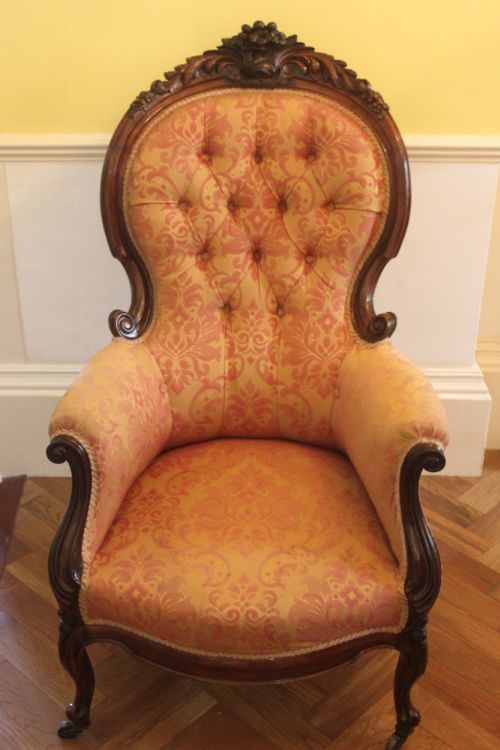
The versions you are most likely to meet on this page are dining chairs and side chairs, often found in sets or pairs. They appear in forms ranging from simple side seats to gentleman's armchairs and bedroom chairs, reflecting domestic life in the period.
Makers and workshops of the era produced these chairs in mahogany and rosewood, sometimes utilising walnut. The evidence shows groupings from the William IV period through to eighteen fifty, indicating a sustained popularity for the curved back design.
How they were made
Cabinet makers constructed the distinctive arched frames of early victorian balloon backs from dense hardwoods such as mahogany and rosewood. These timbers were steam-bent or carved from solid stock to achieve the continuous loop of the backrest without weak joints.
Upholstery formed an integral part of the construction, with drop-in seats or fixed pads covered in fabrics like velvet, damask, and general upholstery fabric. Brass fittings occasionally appear on the frames, and certain examples incorporate clever structural details such as removable backs.
Early Victorian Balloon Backs Retail Price Guide 2026
Typical asking prices for early victorian balloon backs among the pieces listed under this phrase on Sellingantiques today, from the lower quarter to the upper quarter. They describe what is for sale here now, not the wider market.
The listings on this site feature nineteenth-century seating predominantly constructed from rosewood and mahogany, spanning the William IV and Victorian periods.
What varies in quality
The distinction between standard examples and the finest work lies in the depth and crispness of the timber carving. Sets displaying intricate foliate motifs on the rosewood frames or superior grain selection command greater attention than plain mahogany counterparts.
Proportion and scale also dictate the hierarchy of these chairs. A balanced sweep to the balloon-shaped splat and sturdy joinery in the seat rail distinguish master cabinet work from more utilitarian production.
The Early Victorian Balloon Backs Glossary
- Balloon-back
- A chair back shaped in a continuous oval curve resembling a balloon. This design became the dominant seating fashion throughout the mid-nineteenth century.
- Rosewood
- A dense, heavily figured timber prized for its dark grain and reddish-brown colour. It was the preferred material for high-status Victorian dining chairs.
- William IV
- A transitional stylistic period spanning the eighteen thirties that preceded the full Victorian era. Furniture from this phase often retains heavier proportions combined with classical detailing.
- Gentleman's armchair
- A wide-seated upholstered armchair designed for men's seating comfort in parlours and studies. These chairs usually feature supportive padded arms and low backs.
- Side chair
- A chair without arms intended for dining or occasional use around a room. They were produced in large numbers to accompany matching sets of dining chairs.
Early Victorian Balloon Backs: Frequently Asked Questions
Were these chairs used for dining?
Dining rooms were the primary home for these chairs, frequently made in large sets of six or eight. Their upright stance and curved supports suited formal meals of the period.
Smaller pairs and individual armchairs were also placed in drawing rooms, bedrooms, and parlours as side seating or ladies' chairs.
How do I spot mahogany versus rosewood?
Mahogany displays a reddish-brown tone with straight grain patterns that can sometimes show flame figures. It provides a sturdy and traditional finish for nineteenth-century frames.
Rosewood is generally darker and heavier, featuring dramatic black or dark brown grain contrasting against a deep brown or purplish base.
Can I find complete dining sets?
Matching sets of chairs appear in various sizes, ranging from pairs to larger groups of six or eight pieces. These sets preserve the uniform timber and carving style of the original workshop.
Finding larger matching sets requires careful attention to the wood grain, frame proportions, and upholstery details to ensure they originated together.