

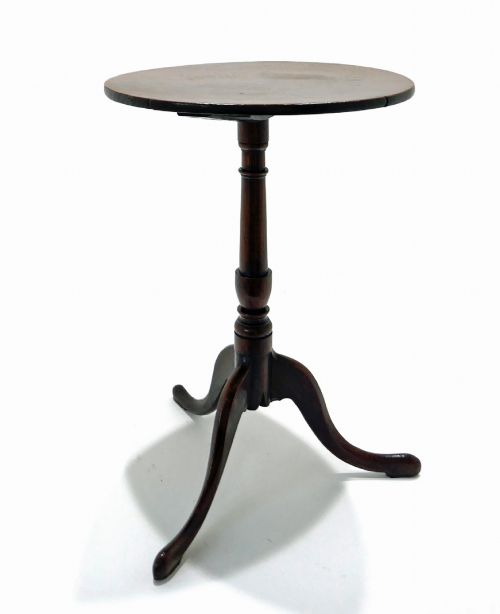


Early Period Oak Table
An early period oak table brings solid 17th-century and 18th-century timber into a room, offering honest construction and centuries of daily use.
Early Period Oak Table
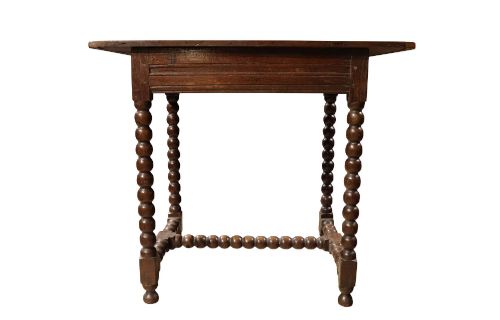
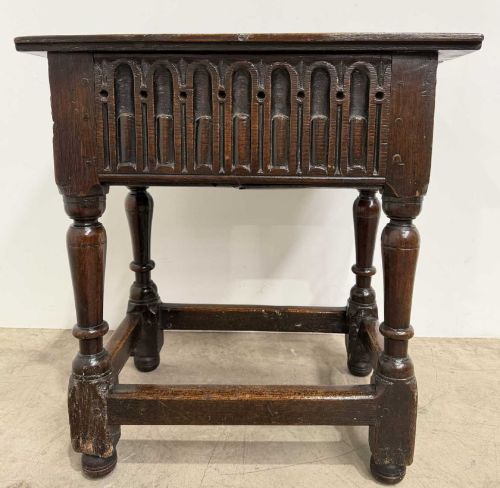
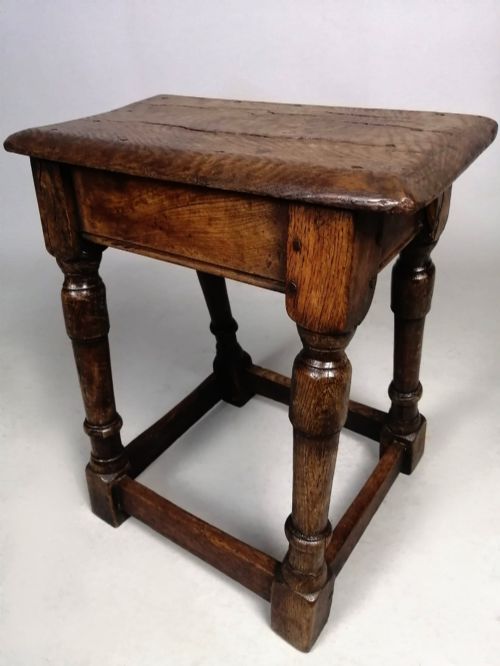
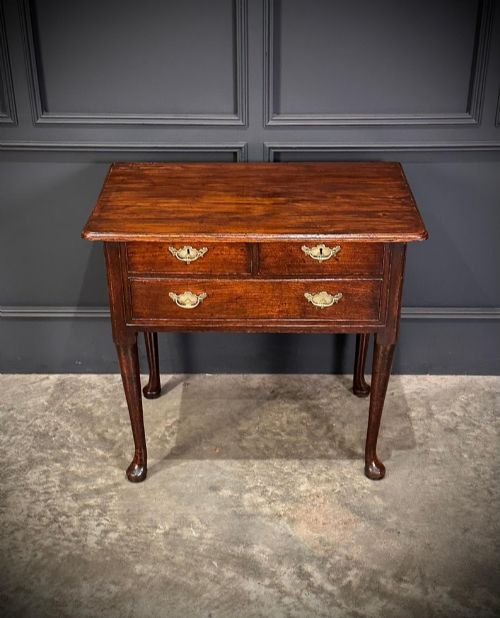
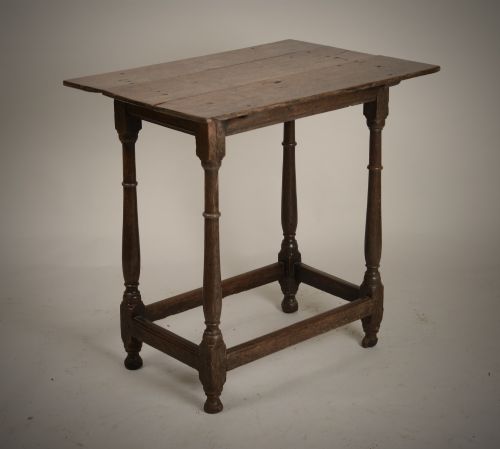
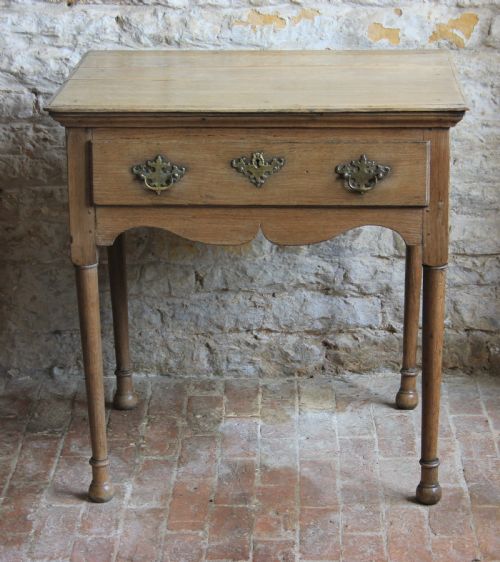
An early period oak table encompasses robust forms spanning from the 17th century through the Georgian era, utilising durable native timbers. Buyers pursuing an early period oak table frequently encounter utilitarian side tables, lowboys, joint stools, and drop-leaf formats designed for practical domestic service.
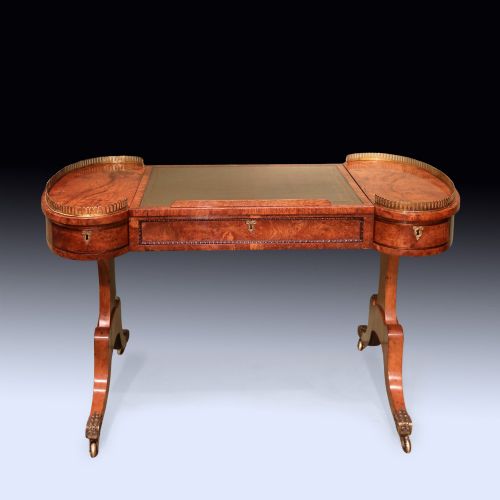
The pieces on display draw from regional English and Welsh traditions, showing simple geometric lines alongside occasional refined flourishes like Queen Anne cabriole legs or Regency veneers. These domestic items formed the functional core of historic households, serving for dining, writing, and food preparation.
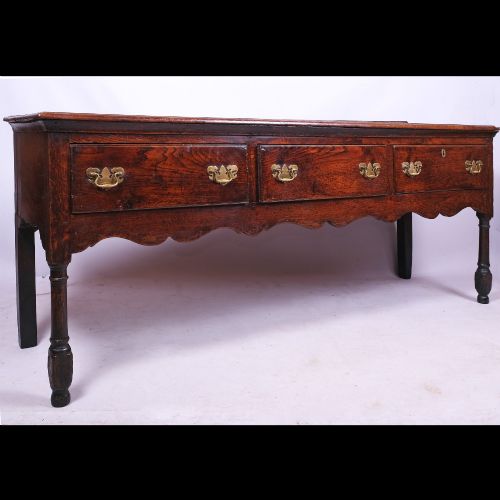
Surviving examples range from rustic joint stools to substantial library and dresser bases constructed from sturdy heartwood. This selection demonstrates how early vernacular furniture evolved from purely utilitarian forms into more decorative household furnishings over successive centuries.
Evaluating quality and construction
Superior examples maintain structural integrity with minimal timber replacement, retaining their original tops, stretchers, and hardware wherever possible. Master carpenters selected quarter-sawn oak displaying prominent medullary rays, which provided both visual distinction and superior resistance to warping.
Proportion and execution separate utilitarian workshop output from finer domestic pieces commissioned for wealthier homes. Refined surface patination developed through centuries of handling distinguishes authentic historic wear from later alterations or aggressive cleaning.
Early Period Oak Table Retail Price Guide 2026
Typical asking prices for early period oak table among the pieces listed under this phrase on Sellingantiques today, from the lower quarter to the upper quarter. They describe what is for sale here now, not the wider market.
Period designations across these listings span the 17th century, 18th century, 19th century, and specific Regency and Georgian eras.
The Early Period Oak Table Glossary
- Joint stool
- A sturdy wooden stool constructed with mortise and tenon joints pegged together rather than turned legs glued in place. These served primarily as seating or small occasional surfaces in early households.
- Lowboy
- A small oak or walnut table featuring a finished top and one or more rows of drawers beneath, typically standing on four slender legs. They functioned as dressing tables or side tables in 18th-century interiors.
- Dresser base
- A long, low wooden table fitted with drawers along the front, designed originally for food preparation and serving in large kitchens. They anchor modern dining rooms and hallways with substantial storage capacity.
- Drop leaf table
- A table with a fixed central section and hinged flaps on either side that can be raised and supported to expand the surface area. This versatile format adapted easily to varying room sizes.
- Cricket table
- A small, lightweight occasional table traditionally built with three splayed legs and a round top. The three-legged design remained stable on uneven flagstone floors.
Early Period Oak Table: Frequently Asked Questions
How do I clean an early oak table?
Dust regularly with a soft, dry cloth to prevent particulate buildup on the historic timber. Avoid modern chemical sprays or silicone polishes that can degrade the aged wax finish.
Apply a traditional beeswax sparingly when the timber appears dry, buffing gently to maintain the natural sheen. Keep the table away from direct heat sources and strong sunlight to prevent wood movement.
Can I use an antique lowboy as a desk?
Many lowboys feature comfortable knee clearance and practical drawer space suitable for occasional correspondence or laptop work. Check the height from the floor to the underside of the drawer rails before use.
Pair the lowboy with a simple stool or chair that matches the historic scale. Placing a protective pad inside the drawer prevents modern stationery from scratching the historic timber base.
How do I spot a replacement top?
Examine the underside of the table where the top meets the frame for mismatched timber grain, modern screw fixings, or plugged screw holes. Original tops usually show consistent wear patterns and accumulation of grime matching the base.
Look for shrinkage gaps and board movement that align with centuries of environmental exposure. Replacement boards often lack the rich patination found on the primary structure.
Where should I place a joint stool?
Joint stools serve as flexible seating around a dining table or function independently as bedside stands and plant supports. Their compact footprint fits narrow hallways and alcoves where larger furniture cannot go.
Ensure the floor beneath is level to prevent rocking on the rigid four-legged frame. Keep them clear of damp exterior walls to protect the historic footings.