





Early English Blanket Box
An early English blanket box is a sturdy timber storage piece built to hold household textiles and valuables.
Early English Blanket Box
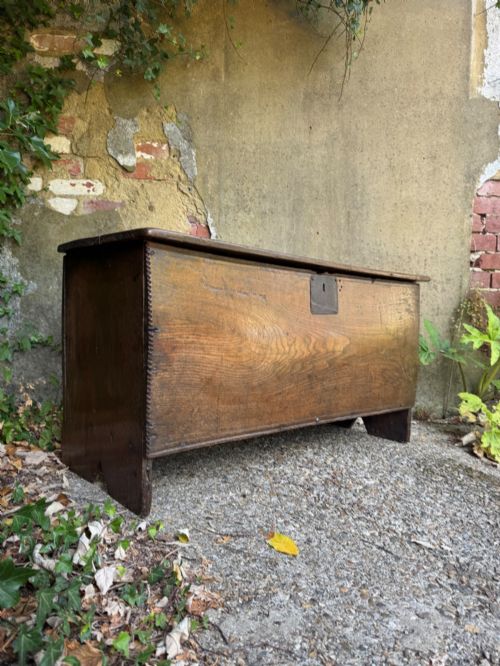
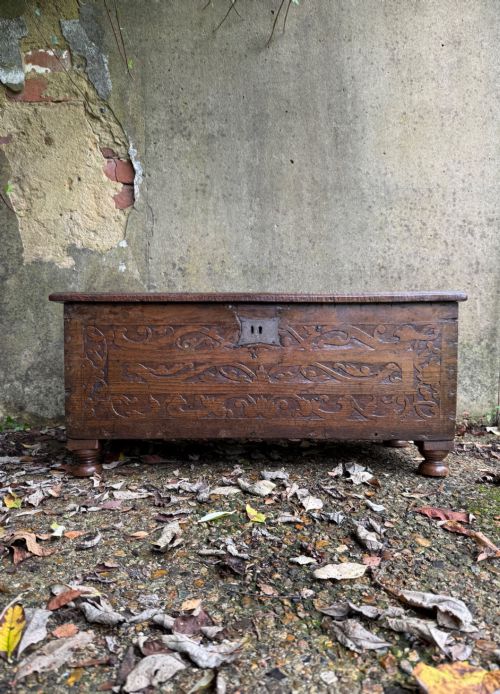
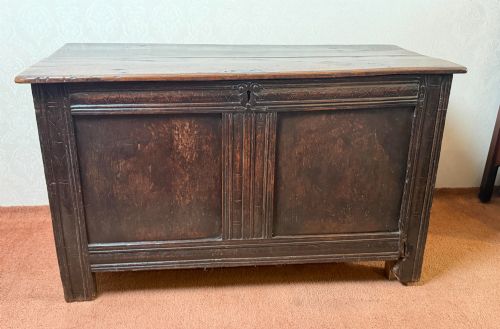
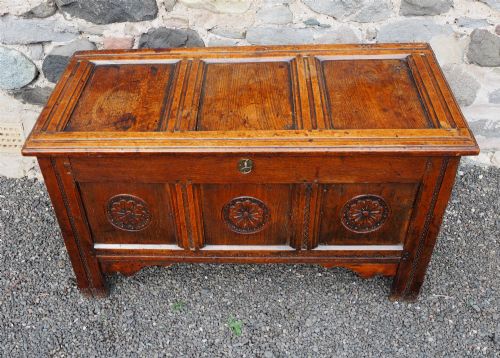
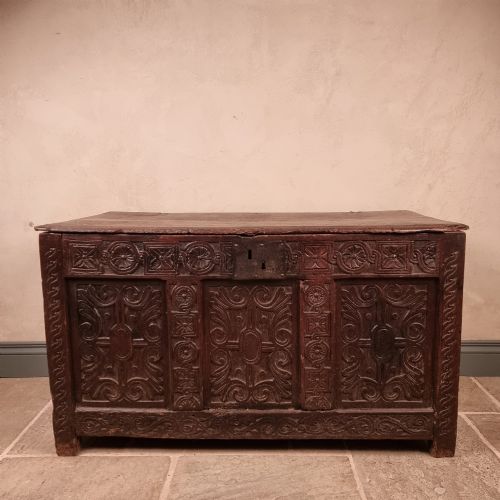
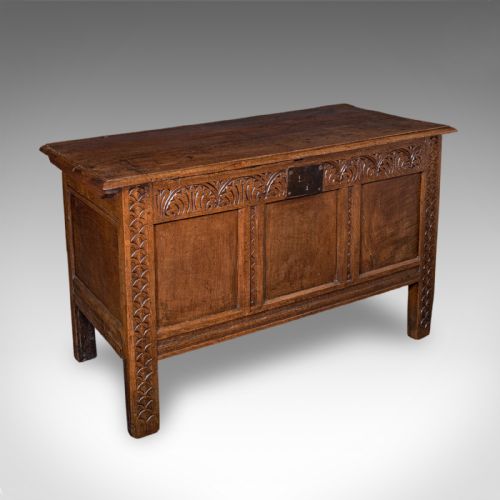
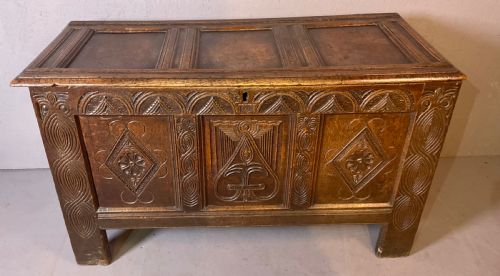
An early English blanket box, often described in listings as a coffer, chest, or linen chest, serves as a primary piece of historic storage furniture. These items appear across the sixteenth, seventeenth, and early eighteenth centuries, spanning periods such as Tudor, Jacobean, and early Georgian.
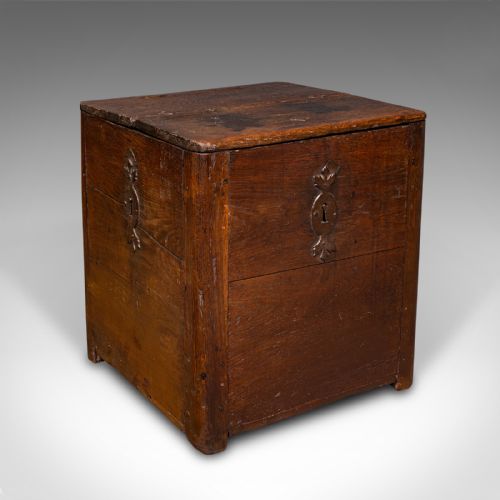
The forms range from simple six-plank constructions to sophisticated panelled and carved examples designed for domestic utility and security. Buyers encounter variations that function simultaneously as blanket chests, window seats, and strong boxes.
Construction and materials
The primary material across all examples is solid English oak, selected for its local abundance and structural durability. Joinery methods rely on traditional pegged frame and panel construction alongside simpler board-built formats.
Hardware consists of hand-forged wrought iron hinges, straps, and locks that secure the lid and reinforce the heavy timber corners.
Early English Blanket Box Retail Price Guide 2026
Typical asking prices for early english blanket box among the pieces listed under this phrase on Sellingantiques today, from the lower quarter to the upper quarter. They describe what is for sale here now, not the wider market.
Listings feature sixteenth, seventeenth, and eighteenth-century pieces built entirely from solid oak with wrought iron hardware.
Judging quality and craftsmanship
Quality reveals itself through the crispness and depth of carved ornamentation, such as linenfold motifs or arcaded panels, compared to plainer surfaces. The integrity of the original timber framing and the retention of authentic wrought iron hardware distinguish superior survivals.
Proportion and surface patination dictate the visual strength of the piece, where untouched historic finishes elevate the overall execution.
The Early English Blanket Box Glossary
- Coffer
- A traditional chest with a hinged lid, primarily used for storing valuables and textiles. These timber boxes form the foundational category for early storage furniture.
- Linenfold
- A style of carved wooden panelling that resembles folded fabric, commonly seen on sixteenth-century pieces. This decorative motif adds texture to the front panels.
- Arcaded
- A decorative series of arches carved into the woodwork, characteristic of seventeenth-century joinery. This architectural detail defines the stylistic period of the chest.
- Six-plank
- A primitive construction method utilising six individual boards joined at the edges to form a box. This technique represents an early and straightforward approach to chest building.
Early English Blanket Box: Frequently Asked Questions
How old is my blanket box?
Dating relies on construction methods, such as distinguishing simple board joints from complex frame and panel assembly, alongside stylistic clues like carved arcading or linenfold patterns.
Material analysis of the oak and the style of the wrought iron hardware further help anchor the piece within the sixteenth, seventeenth, or early eighteenth centuries.
Were these used just for blankets?
These versatile chests held valuable domestic textiles, clothing, and household goods rather than everyday linens alone. Their heavy construction and iron locks also suited them for storing documents and valuables securely.
In domestic settings, they doubled as seating furniture, particularly when placed beneath bay windows.
What is a six-plank chest?
A six-plank chest is a basic form of box construction made from individual timber boards for the front, back, ends, top, and bottom. This method requires minimal joinery and represents early furniture making.
Survival examples often date to the sixteenth and seventeenth centuries.
How do I care for historic oak?
Maintain stable indoor humidity levels and keep timber furniture away from direct heat sources and strong sunlight. Gentle cleaning with a soft cloth preserves the dry historic finish without stripping natural patination.
Avoid modern liquid polishes that can penetrate old oak pores.