

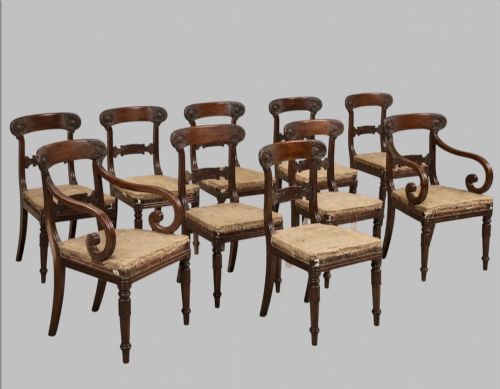
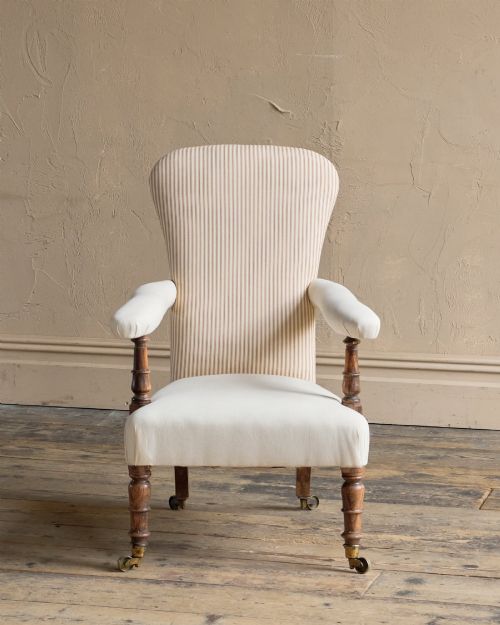
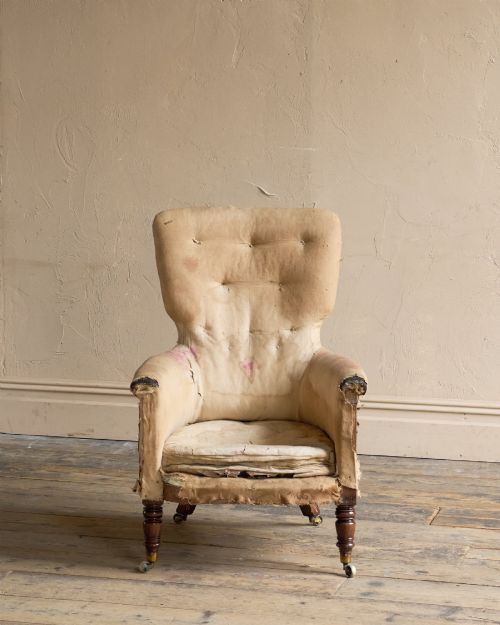
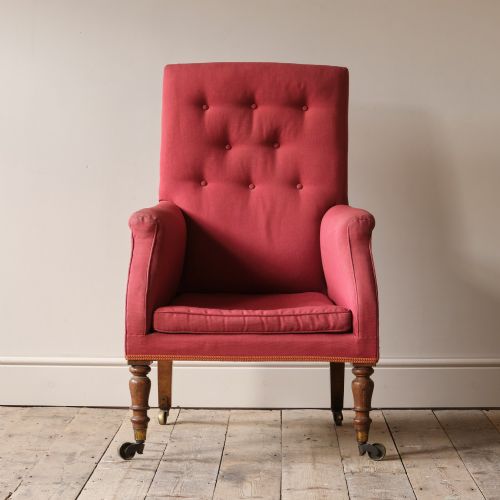

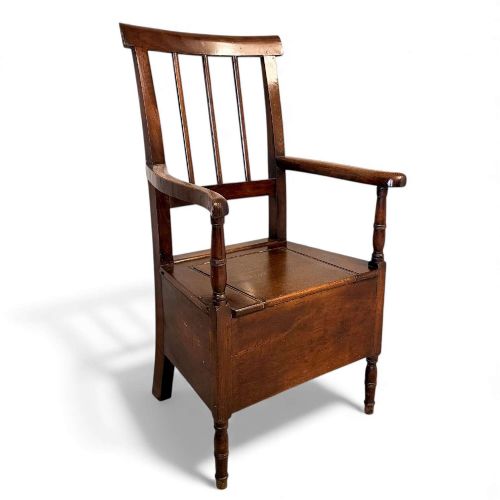


Early English Armchair
An early english armchair brings substantial timber, honest joinery, and centuries of domestic history straight into a room.
Early English Armchair
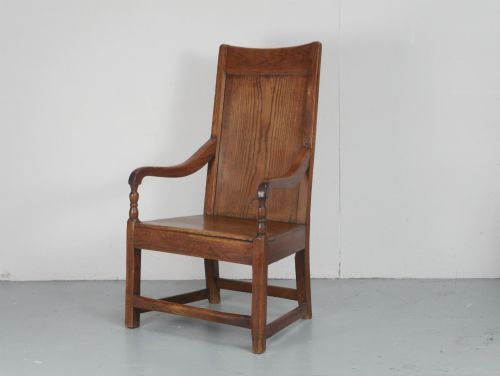
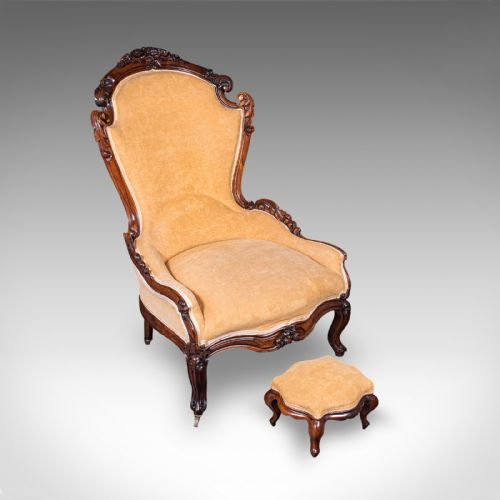
When you search for an early english armchair, you encounter heavy wooden seating spanning from the sixteenth century through the Victorian era. These pieces range from boarded box forms and joined wainscot types to regional Windsor chairs fashioned from native timbers.
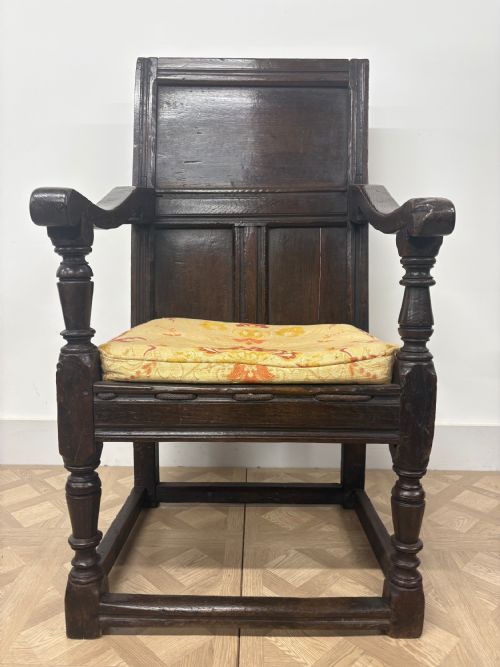
The versions you meet most frequently on this page belong to the seventeenth-century joined oak tradition or the nineteenth-century country Windsor family. Vernacular examples utilise local woods like yew, elm, and ash, whilst formal iterations employ mahogany, walnut, and rosewood.
Styles stretch across Elizabethan, Charles I, Jacobean, Georgian, and Victorian periods, reflecting shifting domestic habits from high-backed panelled seating to low parlour chairs and deep library seating.
How they were made
Early joinery relied on mortise and tenon joints secured with wooden pegs, forming rigid frames of solid oak or ash without metal fasteners. Turnery shaped spindles and legs on a lathe, whilst panels were rebated into grooves to allow for seasonal wood movement.
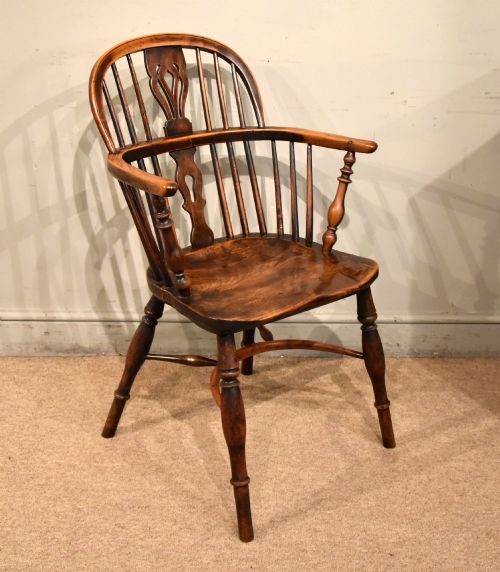
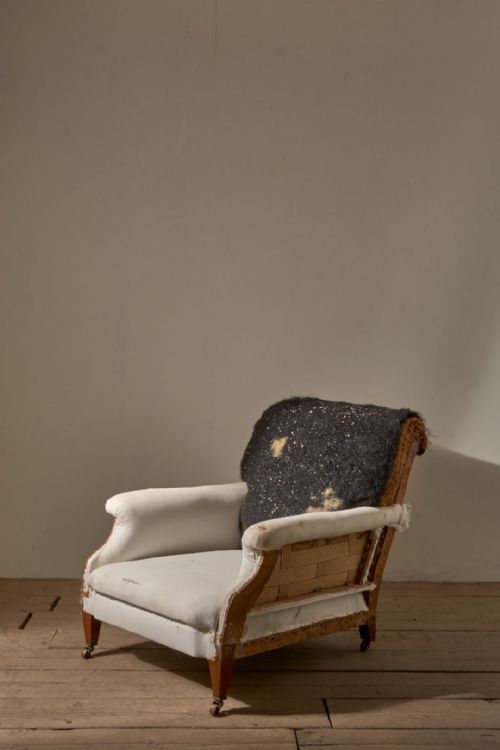
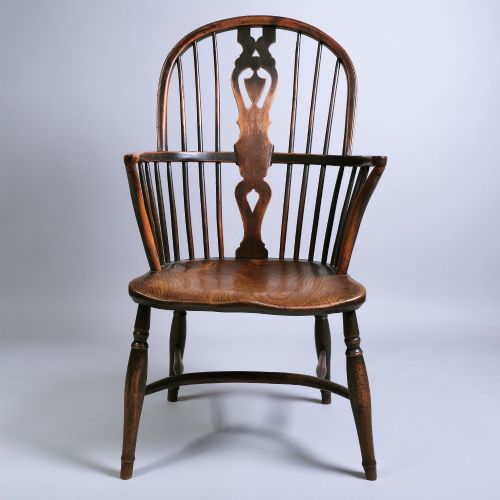
Windsor construction combined a solid saddle-shaped wooden seat with steam-bent hoops, arms, and spindle backs wedged directly into the plank. Upholstered pieces built up stuffing over webbed or rush bases, using brass tacks to secure fabric coverings.
Surface treatments depended on natural timber characteristics, developing deep patination through wax polishing and handling over generations rather than heavy modern varnishes.
Early English Armchair Retail Price Guide 2026
Typical asking prices for early english armchair among the pieces listed under this phrase on Sellingantiques today, from the lower quarter to the upper quarter. They describe what is for sale here now, not the wider market.
Listings span multiple centuries, uniting sixteenth-century box chairs with seventeenth-century wainscot forms, eighteenth-century commode chairs, and nineteenth-century Windsor variations.
What varies in quality
The integrity of the original timber and the extent of replacement parts define the standing of early seating. Joined oak chairs retain higher value when their panels, arms, and lower stretchers survive without extensive timber grafting.
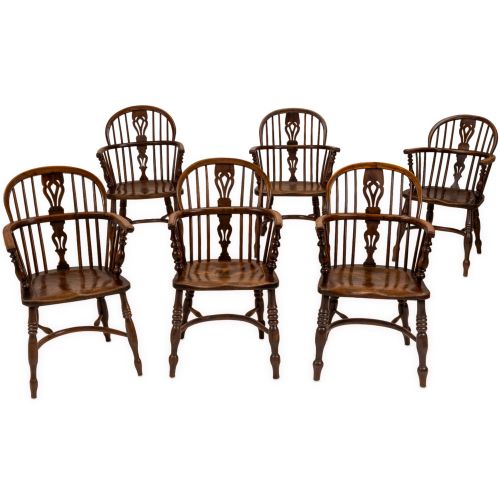
Proportion and execution distinguish regional vernacular work from standard production. Windsor chairs vary according to the crispness of the turnery, the figuring of the yew or elm seat, and whether the frame retains its original crinoline stretcher.
The retention of original upholstery foundations and maker stamps influences the standing of nineteenth-century pieces, separating standard parlour seating from workshop-attributed library chairs.
Howard and Sons·Robert Daws
The Early English Armchair Glossary
- Wainscot
- A heavy wooden armchair constructed with panelled backboards and joined frame members, typical of the seventeenth century. These solid chairs served as principal seats of authority in domestic interiors.
- Windsor
- A traditional chair built with a solid wooden seat into which independent legs, spindles, and a back bow are fitted. Regional variations include hoop backs, stick backs, and draught backs.
- Crinoline stretcher
- A bowed or curved lower stretcher connecting the legs of a Windsor chair to provide structural rigidity. Its shape often aids in identifying regional production areas.
- Rush seat
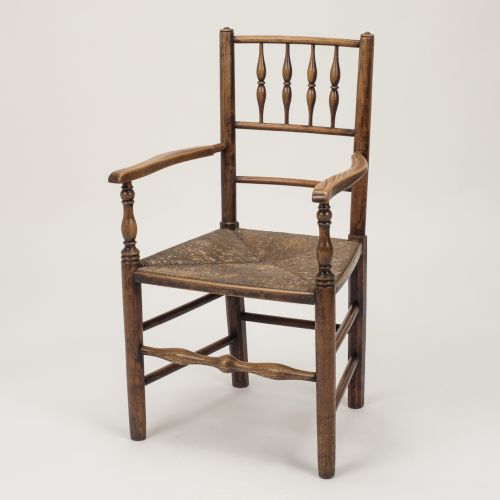
- A seating platform woven from dried marsh rushes around a wooden frame. This technique appears frequently on country armchairs and vernacular seating.
- Box chair
- An early form constructed with solid wooden boards forming an enclosed base beneath the seat. This sixteenth-century style predates fully framed joined seating.
Early English Armchair: Frequently Asked Questions
How do I identify a seventeenth century wainscot chair?
Seventeenth century wainscot chairs are constructed from heavy solid oak using peg-secured mortise and tenon joints. They feature panelled backs, often carved with strapwork or foliage, flanked by chunky armrests supported on turned fore-posts.
Over the centuries, the timber develops a dark, dry surface patination that synthetic finishes cannot replicate. The construction feels exceptionally rigid, relying entirely on traditional joinery rather than metal nails.
What is the difference between an elm and a yew Windsor chair?
Yew wood typically displays striking grain patterns with rich amber and golden tones, whilst elm offers a tougher, more twisted grain often selected for the solid saddle seat. Yew was frequently reserved for the upper bentwood hoops and spindles due to its flexibility.
Windsor chairs often combine both woods within a single frame, using elm for the base plank and yew or ash for the superstructure. This combination exploited the specific physical properties of each native timber.
Where should I place an early armchair in a modern home?
These armchairs function effectively as standalone accent pieces in hallways, studies, or living rooms where their sculptural wooden forms can be appreciated. Pairing a heavy wainscot or Windsor chair with simple surroundings allows the historic timber work to stand out.
Avoid placing antique wooden seating near direct heat sources or in fluctuating humidity to protect the ancient timber and joinery from splitting. Regular waxing maintains the moisture balance of the wood surface.
How can I tell a regional Windsor chair type?
Regional attribution depends on construction details, turning profiles, and the choice of native woods such as ash, elm, or yew. West Country and Nottinghamshire examples exhibit distinct framing styles and spindle arrangements developed by local chair bodgers.
The shape of the crinoline stretcher and the profiling of the arm supports offer further clues to the workshop origin. Examining the underside of the solid seat often reveals tool marks unique to specific regional traditions.