

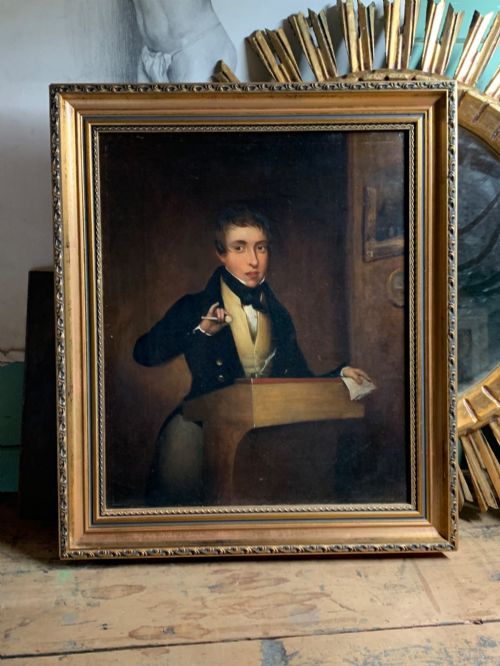


Early 19th C Artwork
Early 19th c artwork brings together paintings, watercolours, silhouettes, and sketches spanning Georgian, Regency, and Victorian periods.
Early 19th C Artwork
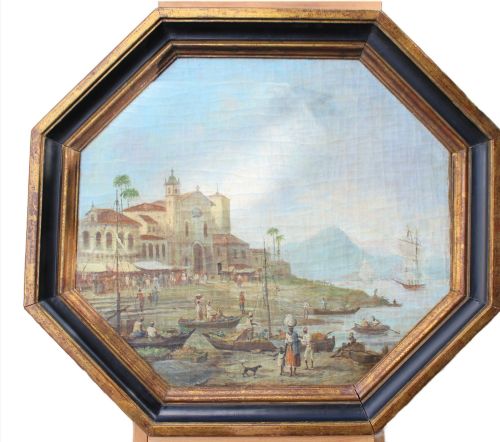
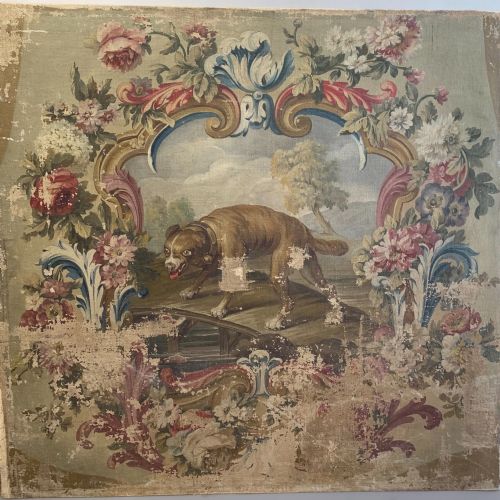
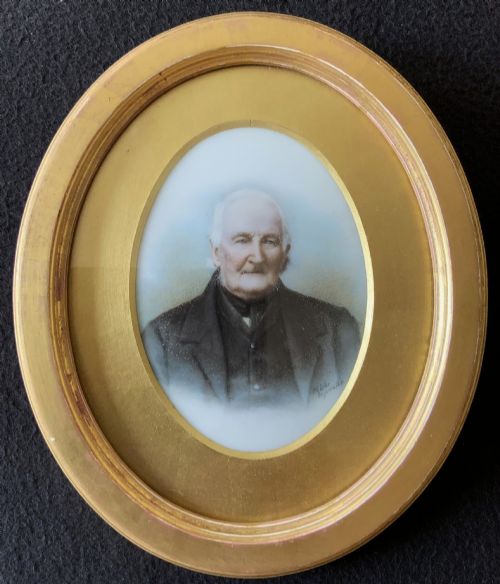
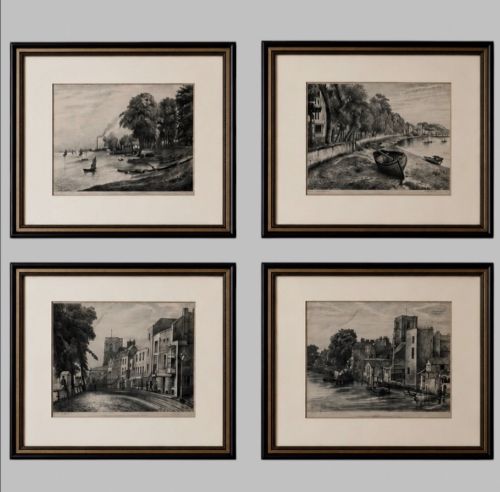
This selection of early 19th c artwork spans oil paintings, watercolours, portraits, and sketches created across the Georgian, Regency, and Victorian periods. Buyers encounter framed pieces ranging from intimate portrait miniatures and silhouette profiles on paper to expansive coastal scenes in oil on canvas.
The inventory includes landscapes, maritime views, tavern interiors, and botanical studies originating from British, European, and colonial workshops. Works encompass both signed academic compositions and primitive folk art expressions reflecting the diverse visual culture of the era.
Materials and construction
Makers utilised canvas, paper, glass, and wood as grounds for oil, watercolour, gouache, pencil, and silhouette cuttings. Oils are frequently applied to woven canvas or laid-down board, while watercolours utilise fine paper supports protected beneath glass.
Framing often incorporates period giltwood or gilt wood mouldings that complement the pictorial surface. Pigments and media reflect traditional studio practices of the period, from transparent washes to heavy impasto oils.
Early 19th C Artwork Retail Price Guide 2026
Typical asking prices for early 19th c artwork among the pieces listed under this phrase on Sellingantiques today, from the lower quarter to the upper quarter. They describe what is for sale here now, not the wider market.
One cheerful item captures a historic game of battledore and shuttlecock in progress.
Judging quality in the range
Quality rests upon the execution of the hand, the preservation of the medium, and the strength of the composition. Masterly brushwork, accurate anatomical rendering, and vivid tonal balance distinguish accomplished academic output from stiffer naive efforts.
Condition plays a central part, with stable paint layers, minimal foxing on paper supports, and original framing maintaining the integrity of the piece. Works retaining clear provenance or identifiable attribution command greater attention.
Frederick Buck·William James Hubard·Johann Moritz Rugendas·J M W Turner·Umberto Volpato·William Egley
The Early 19th C Artwork Glossary
- Watercolour
- A painting method where fine pigment is suspended in a water-soluble binder applied to paper. It allows for delicate washes and translucent effects.
- Giltwood
- Wood that has been coated with a thin layer of gold leaf or gilt powder. This finish is typical of period picture frames.
- Portrait miniature
- A small, highly detailed painting depicting a person, executed on materials such as vellum, card, paper, or ivory. They were often housed in protective cases.
- Gouache
- An opaque water-based paint medium that combines watercolours with a white pigment filler. It produces a dense, matte surface.
- Silhouette
- A two-dimensional profile portrait filled in with a solid dark colour, frequently cut from paper or painted on card. They gained popularity during the Regency period.
Early 19th C Artwork: Frequently Asked Questions
How do I care for watercolour art?
Keep watercolours away from direct sunlight to prevent the pigments from fading over time. Ensure they hang in rooms with stable humidity levels to protect the paper and backing.
What defines the Regency style?
Regency pieces reflect neoclassical influences combined with a lighter, more refined aesthetic following classical antiquity. The palette often utilises crisp watercolours and delicate portraiture.
Are these oil paintings on canvas?
Many examples are executed in oil on canvas, though some instances feature canvases later laid onto board for structural support. Supporting grounds also include panel and paper.
How do I identify a silhouette?
Silhouettes feature a profile outline filled with a solid dark tone, sometimes enhanced with gilded highlights. They appear on paper, card, or glass within period frames.