




Early 1900s Art
Early 1900s art captures a rich variety of paintings and seating from Edwardian and later decades that bring historical character to any room.
Early 1900s Art
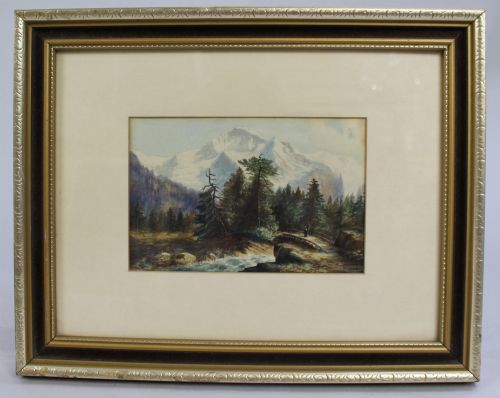
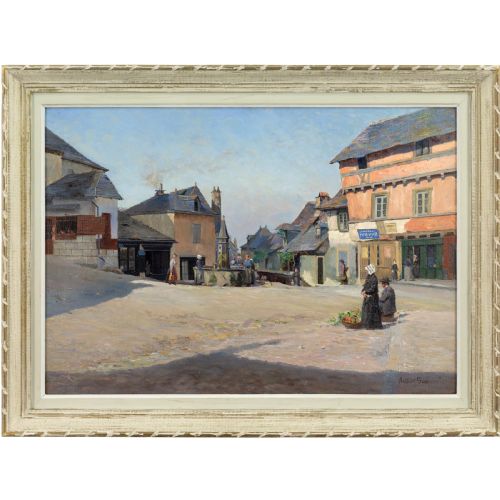
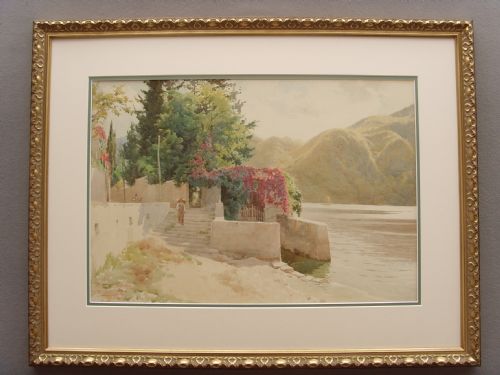
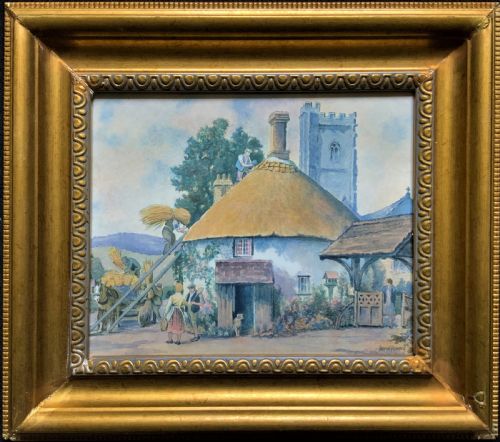
Early 1900s art spans a diverse range of works, primarily featuring oil paintings and watercolours on paper and canvas alongside occasional oak seating. Buyers exploring this phrase will encounter works executed in styles from Impressionism and Post-Impressionism to Folk Art and Maritime Realism.
The selection reflects the broader artistic output of the early twentieth century, including landscapes, townscapes, and figurative pieces. Creators represented range from named painters working in specific European locations to traditional craftsmen producing Gothic Revival oak chairs.
Materials and Techniques
Paintings from this era utilise oil paint or watercolour applied to canvas, paper, or panel, often preserved in period frames of wood and gilt wood. The physical components reflect standard artistic practices of the period, employing traditional pigments and stretched canvas.
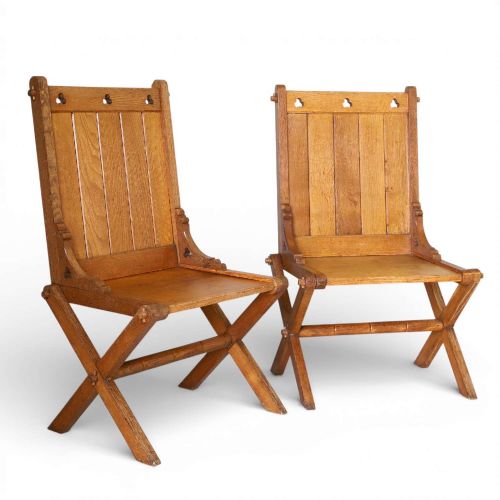
Furniture pieces utilise solid oak construction, shaped and joined with detailed elements such as trefoil carvings. The physical execution relies on conventional carpentry and joinery techniques suited to domestic seating.
Early 1900s Art Retail Price Guide 2026
Typical asking prices for early 1900s art among the pieces listed under this phrase on Sellingantiques today, from the lower quarter to the upper quarter. They describe what is for sale here now, not the wider market.
Listings include oil paintings, watercolours, gouache, and solid oak seating across multiple early twentieth-century decades.
Assessing Quality
Quality in these artworks is determined by the handling of medium and composition, distinguishing confident brushwork and clear topographical detail from simpler renderings. The distinction lies in the artist's ability to capture light, atmosphere, and perspective.
For furniture, quality rests on the integrity of the timber and the precision of the carved details rather than surface finish alone. Stronger examples maintain structural stability and crispness in their decorative motifs.
Robert George Talbot Kelly·Arthur Gué·Rowland Henry Hill·William Grant Murray·AJ Thornton·David Heward
The Early 1900s Art Glossary
- Watercolour
- A painting method where fine pigment is suspended in water-based solution on paper. This medium allows for transparent washes and delicate tonal shifts.
- Oil on Canvas
- Pigment mixed with drying oil applied to a woven fabric support. This technique provides rich colour depth and durable texture.
- Gothic Revival
- An architectural and decorative style drawing inspiration from medieval design. It often incorporates pointed arches and trefoil motifs.
- Post-Impressionism
- An art movement extending Impressionism while rejecting its limitations. Artists explored vivid colours and distinct geometric forms.
Early 1900s Art: Frequently Asked Questions
What periods do these pieces date from?
The items generally date from the Edwardian era through the early decades of the twentieth century, aligning with periods like 1900, 1910, 1920, 1930, and 1940.
This broad span includes varied stylistic movements from traditional maritime scenes to early modernist approaches.
How should I care for watercolour paintings?
Watercolours require protection from direct sunlight to prevent fading of the pigments and discolouration of the paper support. Framing under conservation glass with proper mount boards ensures adequate preservation.
Keeping them in rooms with stable humidity levels further prevents warping or foxing on the paper.
Where were these types of art displayed?
Paintings from this era were typically created for domestic interiors, country houses, and urban parlours. They served as primary decoration for walls in sitting rooms and studies.
Seating such as the oak chairs would have been used around dining tables or within specific reception rooms.
How do I identify a gesso frame?
Gesso frames utilise a plaster-like mixture applied over a wooden base to form relief decorations and mouldings before gilding. Examining the corners and edges reveals the moulded composition work characteristic of period framing.
Over time, this material develops a distinct crackleur pattern that helps indicate age.