




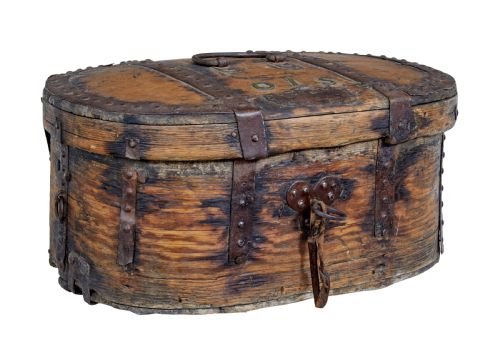


Early 18th Century Trunk
An early 18th century trunk is a heavy, utilitarian container made to store household goods, and you buy one for the deep patination of its timber and its absolute honesty.
Early 18th Century Trunk
When you search for an early 18th century trunk, you are looking at substantial storage pieces spanning the late seventeenth century through the George I period. These objects appear primarily as heavy oak coffers, mule chests with drawers, and camphor caskets.
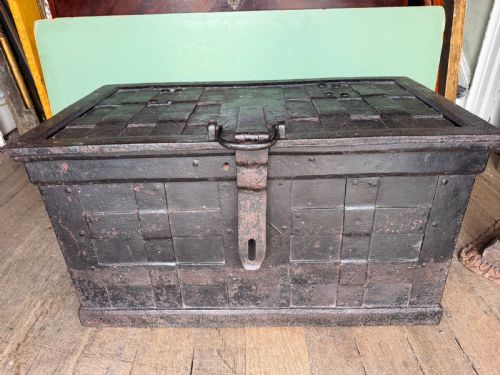
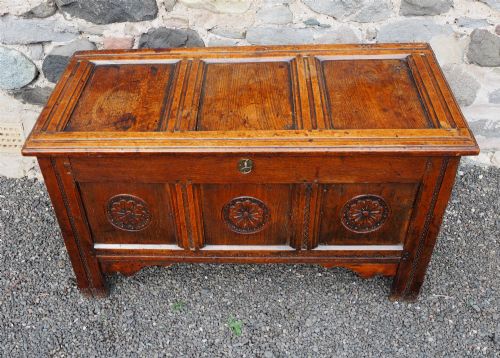
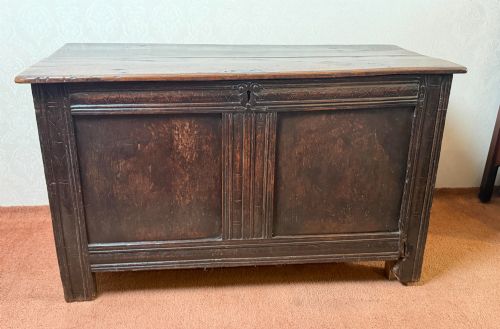
The version you are most likely to meet on this page is the carved oak coffer or chest, often featuring raised panels and occasionally incorporating a long drawer beneath the main compartment. Regional variants such as pine coffer bachs and Scandinavian baroque iron-bound boxes also surface.
Makers constructed these sturdy receptacles to withstand heavy domestic use in domestic interiors long before fitted wardrobes existed. Their primary function was to hold linens, documents, and valuable personal possessions safely away from damp floors.
How they were made
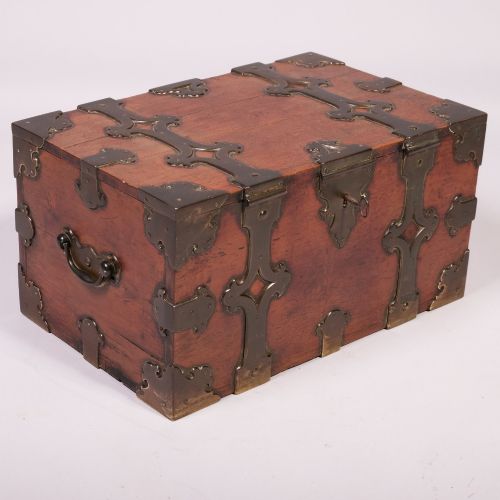
Iron and brass provided essential reinforcement through strap hinges, decorative escutcheons, and heavy carrying handles. Wrought iron bands bound boxes meant for travel or secure storage, whilst surfaces received hand waxing or simple carved enrichment.
Early 18th Century Trunk Retail Price Guide 2026
Typical asking prices for early 18th century trunk among the pieces listed under this phrase on Sellingantiques today, from the lower quarter to the upper quarter. They describe what is for sale here now, not the wider market.
Listings for this phrase feature oak, pine, walnut, and camphor wood across the 18th century and Georgian periods.
What varies in quality
The division between standard domestic utility and superior craftsmanship rests in the depth of the timber's figure and the ambition of the joinery. Simpler pine and oak boxes with plain boards sit at one end, whilst walnut chests on stands and finely carved oak panels represent a higher tier of workmanship.
Originality of surface finish and hardware largely dictates the character of these pieces. Retained brass mounts, original hinges, and untouched waxed patination elevate an example far above one stripped bare or heavily restored with modern timber.
The Early 18th Century Trunk Glossary
- Cofer
- A large wooden chest used for storing valuables or household goods. They typically feature heavy lids and robust construction.
- Mule chest
- A chest fitted with one or more drawers at the base beneath the main compartment. This form bridges the gap between a traditional coffer and a chest of drawers.
- Casket
- A smaller box, often domed or fitted with carrying handles, used for precious items. They frequently display finer materials like camphor wood or decorative metal mounts.
- Raised panel
- A wooden panel with edges thinned down to fit into a grooved frame. This technique allows the wood to expand and contract with humidity without splitting.
Early 18th Century Trunk: Frequently Asked Questions
What fits inside an early 18th century trunk?
These containers were originally built to hold heavy woolen blankets, household linens, and family documents. Today they serve well at the foot of a bed for spare duvets or in a hallway for shoes.
Because the internal spaces are deep and undivided, they suit bulky items rather than small accessories. You will find they hold large volumes without cluttering a room.
How do I care for old oak wood?
Keep these timber pieces away from direct heat sources and sudden humidity changes to prevent the oak from splitting. A traditional beeswax application maintains the dry sheen without sealing the pores.
Avoid modern silicon polishes that build up sticky residues over decades. Gentle dusting with a dry cloth is usually all the surface requires.
Are these trunks safe for heavy daily use?
While built to endure centuries of domestic life, the original hinges and timber joints deserve gentle handling. Sitting on the lid places stress on old ironwork and can weaken the hinges.
Use them primarily for storage rather than as everyday seating furniture. Opening and closing the heavy lids slowly preserves the original pivot points.
How do I distinguish regional styles?
British country pieces rely heavily on native oak with simple paneling and minimal carving. Scandinavian examples often incorporate heavy iron strapwork and baroque decorative touches.
Colonial pieces introduce exotic timbers like camphor wood alongside brass mounts. Examining the secondary woods inside often reveals the true origin of the workshop.