

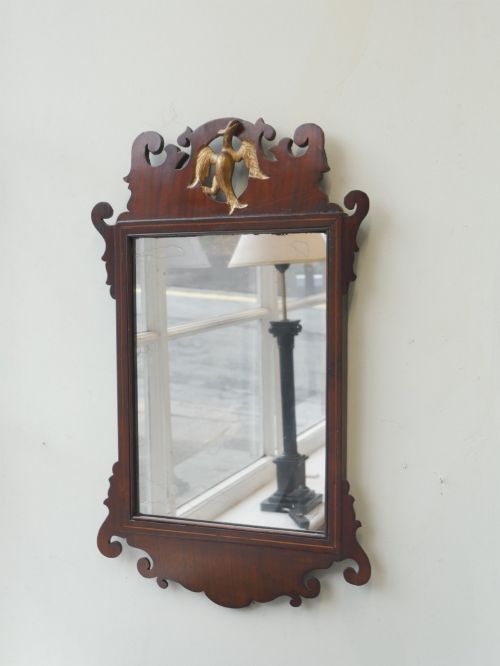
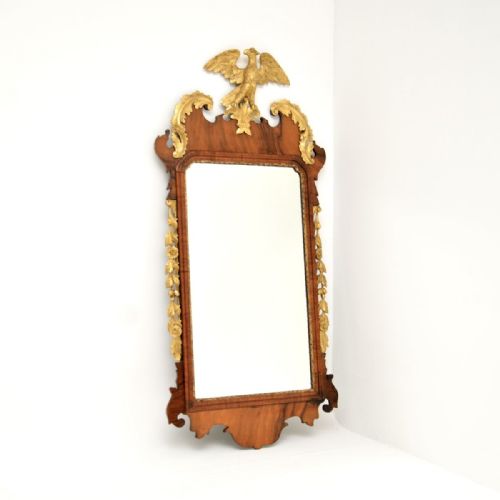
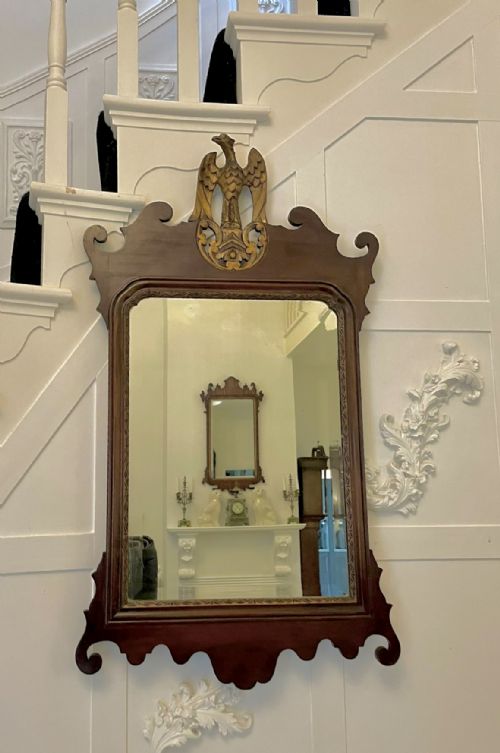


Eagle Fretwork Mirror
An eagle fretwork mirror brings a commanding focal point to a room through traditional carved timber and gilded accents.
Eagle Fretwork Mirror
An eagle fretwork mirror is a traditional wall hanging defined by its pierced wooden frame and carved crest featuring an eagle motif. These pieces date across multiple periods, including the Georgian era, the Victorian period, and Edwardian revivals.
Buyers browsing this selection will most frequently encounter mahogany and walnut timbers, often accented with parcel gilding, gesso, and satinwood inlay. The wall mirrors range from large statement pieces to more modest proportions.
The style draws heavily from George II and Chippendale traditions, incorporating intricate fretwork silhouettes alongside the characteristic bird finial. Each iteration reflects the aesthetic preferences of its specific century.
Materials and Construction
Cabinetmakers constructed these frames primarily using dense hardwoods such as mahogany and walnut, which tolerated delicate fret-sawn detailing. Artisans then applied gesso and gold leaf to highlight specific carved elements like the crest and inner mouldings.
Glass plates were set into the wooden carcasses, occasionally utilising Vauxhall bevelling techniques to create angled edges. Satinwood inlay was also incorporated into later Edwardian interpretations to add tonal contrast to the timber surface.
Eagle Fretwork Mirror Retail Price Guide 2026
Typical asking prices for eagle fretwork mirror among the pieces listed under this phrase on Sellingantiques today, from the lower quarter to the upper quarter. They describe what is for sale here now, not the wider market.
Listings feature wall mirrors spanning from the 18th century through to Edwardian revivals, constructed in mahogany, walnut, giltwood, and satinwood inlay.
Judging Quality
The distinction between standard and superior examples lies in the crispness of the fret-sawn pierced work and the depth of the carving. Finer pieces demonstrate precision in the shaping of the scrolls and the naturalistic rendering of the eagle crest.
The integration of the gilding relative to the exposed timber grain further separates the tiers of workmanship. Original glass plates and well-preserved secondary framing woods also indicate higher artisanal skill during construction.
The Eagle Fretwork Mirror Glossary
- Fretwork
- Ornamental design created by piercing thin wood with a saw. This technique forms the geometric and scrollwork outlines characteristic of these wall mirrors.
- Gesso
- Plaster-based mixture applied to wood surfaces to form a smooth base for gilding. Artisans carved intricate relief decorations directly into this material.
- Vauxhall Mirror
- Historic mirror plate featuring a distinctive bevelled edge. These plates are associated with high-grade English looking glasses from earlier centuries.
Eagle Fretwork Mirror: Frequently Asked Questions
How do I date a fretwork mirror?
Dating relies on examining the secondary timbers, the construction methods of the fret-sawn frame, and the characteristics of the glass plate. Georgian examples display different joinery and edge bevelling compared to Edwardian revivals.
Looking closely at the backing boards and nail types provides additional clues regarding the manufacturing era.
Are these mirrors heavy to hang?
The density of hardwoods like mahogany and walnut makes these frames substantial in weight. Secure wall fixings attached directly to structural studs are essential for safe hanging.
Professional mirror hangers often utilise specialised brackets to distribute the load evenly across the wall surface.
What is the difference between Georgian and revival styles?
Original Georgian pieces date from the eighteenth century and exhibit period-specific cabinetmaking techniques and hand-cut joinery. Revival pieces, such as those from the Edwardian period or Victorian era, emulate these earlier designs using contemporary tools and slightly different secondary woods.
Both categories share the iconic fret-sawn silhouette and carved eagle motif.