





Dutch Painted Chest Drawers
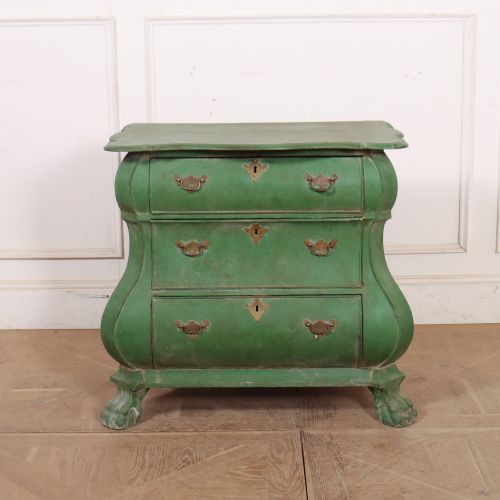
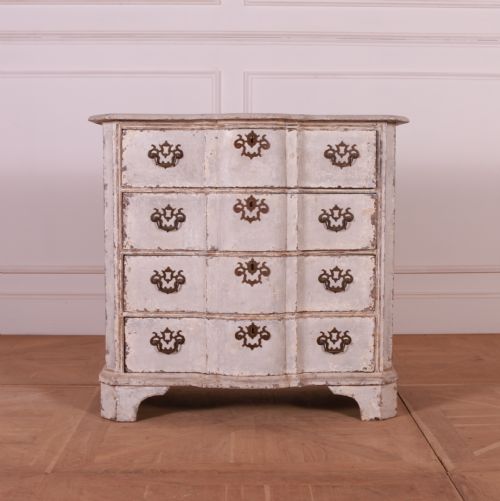
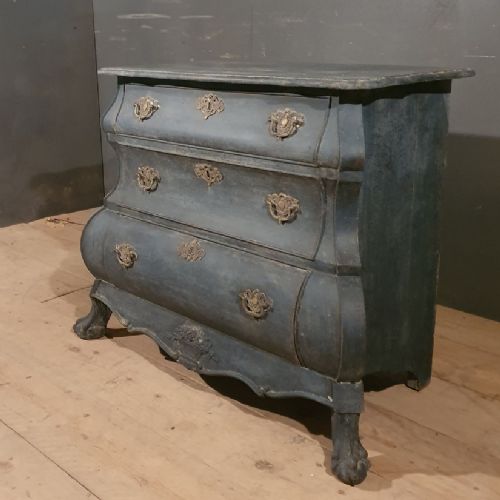
These Dutch painted chest drawers bring continental presence and rich surface decoration into a room, offering both substantial storage and character.
Dutch Painted Chest Drawers
A dutch painted chest drawers brings together robust storage furniture and decorative surface artistry from the eighteenth and nineteenth centuries. Buyers searching for these items encounter various forms, most commonly commodes and bombe commodes alongside occasional tall boys and display cabinets.
The pieces on this page span the eighteenth and nineteenth centuries, including items from around eighteen hundred. Styles range from provincial work to baroque, rococo, and neoclassical designs created across the Netherlands.
Commodes and chests of drawers form the core of the selection, often featuring serpentine or bombe fronts. These pieces serve as focal points in a room while providing functional storage space.
How they were made
Carpenters utilised oak and timber as the primary structural materials for these carcasses and drawers. Artisans then applied paint directly to the wood surface, frequently incorporating decorative schemes that defined the visual style.
Metalwork played a key functional role, with brass fixtures such as handles and escutcheons fitted to the timber drawers. Certain examples also integrated marble tops and glass elements, particularly in pieces combining storage with display cabinets.
Dutch Painted Chest Drawers Retail Price Guide 2026
Typical asking prices for dutch painted chest drawers among the pieces listed under this phrase on Sellingantiques today, from the lower quarter to the upper quarter. They describe what is for sale here now, not the wider market.
Some seventeenth-century tradesmen used whalebone handles on their drawers when brass was scarce, though oak and paint remained the faithful companions.
What varies in quality
The sophistication of the painted decoration separates standard provincial examples from finer pieces. Artisans who executed intricate floral or pictorial schemes achieved a level of depth that elevates the entire object.
Cabinetmaking skill dictates the success of complex forms like bombe and serpentine silhouettes. The crispness of the shaping and the integration of brass hardware demonstrate the original maker's expertise.
The Dutch Painted Chest Drawers Glossary
- Bombe
- A bulging, convex shape characteristic of continental furniture fronts. This swelling contour requires advanced timber-bending and shaping techniques.
- Serpentine
- A furniture front curving outward at the centre and inward at the sides. This rhythmic line appears frequently on eighteenth-century commodes.
- Commode
- A decorative chest of drawers standing on relatively short legs. The term originates from French furniture terminology but applies widely to continental pieces.
- Provincial
- A style associated with regional workshops rather than metropolitan centres. These pieces often display charming local interpretations of major artistic movements.
Dutch Painted Chest Drawers: Frequently Asked Questions
How do I care for painted wood?
Painted wood surfaces require protection from direct sunlight and excessive moisture. Dust the timber gently with a soft, dry cloth rather than chemical polishes.
Maintaining stable room humidity prevents the timber beneath the paint from expanding or contracting. This protects the painted decoration from cracking over time.
Where should I place a commode?
A commode works well in a hallway, bedroom, or living room as a primary storage unit and surface display area. Their decorative painted fronts make them natural focal points against plain walls.
Ensure the room has adequate space around the piece to appreciate the curved or bombe profiles without obstruction.
Are these pieces eighteenth or nineteenth century?
The selection includes examples from both the eighteenth and nineteenth centuries, alongside pieces dated around eighteen hundred. Stylistic details help indicate the specific era of manufacture.
Baroque and rococo influences tend to appear in earlier pieces, while neoclassical traits emerge towards the turn of the nineteenth century.