
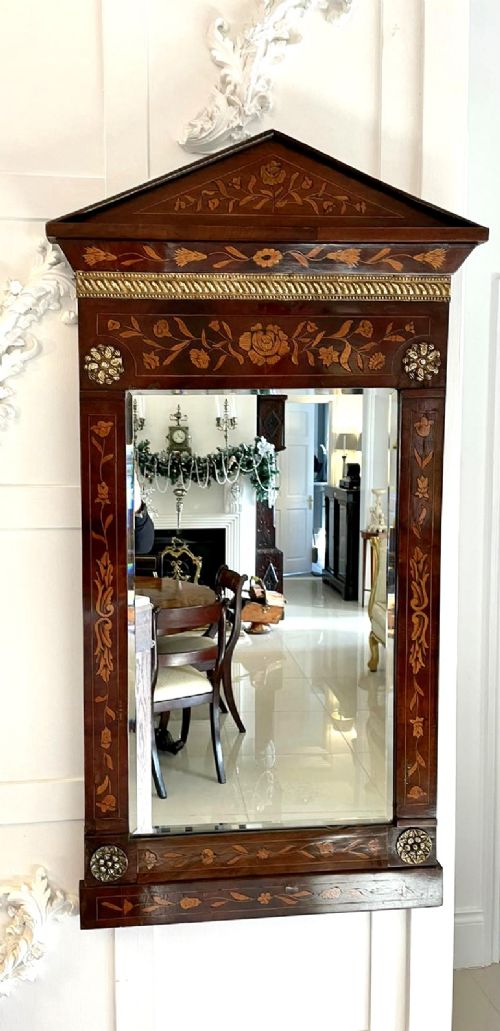


Dutch Inlaid Mirror
These dutch inlaid mirror examples bring complex marquetry and warm woods into a room, offering both function and decorative depth.
Dutch Inlaid Mirror
A dutch inlaid mirror combines structured wooden framing with intricate floral or geometric marquetry. You will frequently find dressing table mirrors, toilet swings, and wall mirrors across these listings.
The objects date primarily from the eighteenth and nineteenth centuries, spanning George III periods and Victorian interpretations. Walnut, mahogany, and fruitwood form the foundation of these surviving examples.
Forms range from compact table mirrors with pivoting swing frames to larger hanging wall mirrors. Most pieces incorporate rich fruitwood and boxwood details set into darker primary woods.
How they were made
Cabinetmakers constructed the carcases using solid mahogany or walnut, providing a stable base for detailed surface decoration. Glass plates sat within rebated frames behind protective wooden backboards.
Makers applied intricate fruitwood and boxwood marquetry by hand, cutting floral and scroll motifs to fit flush into prepared veneers. Brass fixings often secured the pivoting mechanisms on swing mirrors.
Listings feature walnut, mahogany, and fruitwood marquetry across pieces dating from the eighteenth century through to the nineteenth century.
What varies in quality
The precision and complexity of the marquetry dictate the upper tiers of quality, where floral and scrolling details show crisp edges and minimal filler. Simpler designs rely on basic banding rather than pictorial floral scenes.
Choice of timber also separates standard workshop output from exceptional pieces, with finely figured mahogany and rich walnut commanding attention. The depth and clarity of the original mirror glass further distinguish finer examples.
The Dutch Inlaid Mirror Glossary
- Marquetry
- Decorative veneer work forming pictures or patterns by assembling small pieces of coloured wood, shell, or ivory. This technique defines the surface decoration on the frames.
- Fruitwood
- Timber derived from fruit-bearing trees such as pear, apple, or plum, valued for its fine grain and pale colour. Artisans used these woods for contrasting elements in floral inlay.
- Swing mirror
- A looking glass mounted on upright pivots allowing the angle of the glass to be adjusted. These form the functional centrepiece of dressing table and toilet mirror designs.
- Boxwood
- A dense, pale yellow wood frequently used for fine stringing and contrasting details in marquetry work. It provides sharp visual separation against darker background veneers.
Dutch Inlaid Mirror: Frequently Asked Questions
How do I clean a marquetry frame?
Dust the surface regularly with a soft, dry cloth to prevent dirt accumulation in the intricate wooden recesses. Avoid using modern chemical polishes that can degrade old wax finishes and loosen delicate veneer.
Apply a traditional beeswax sparingly when the wood appears dry, buffing gently with a soft brush. Keep the mirror away from direct sunlight and damp environments to protect the old glue and timber.
Are these mirrors original to their glass?
Many surviving examples retain their original mirror glass, often showing slight foxing or minor oxidation around the edges. This natural ageing process indicates long history rather than a fault.
Replacement glass does appear in some pieces due to breakages over centuries of use. Inspecting the silvering and the way the glass sits in the rebate helps determine its age relative to the frame.
Where should I hang a wall mirror?
Wall mirrors function best on sturdy interior walls away from direct moisture sources like bathrooms or unheated damp rooms. Secure the piece using appropriate fixings rated for the weight of the solid wood frame.
Positioning the glass opposite a window maximises natural light reflection within smaller spaces. Ensure the hanging wire or brackets engage securely with the original wooden structure.
How do I date a dressing table mirror?
Examine the construction methods of the drawer linings, backboards, and dovetails to gauge the period of manufacture. Eighteenth-century examples often feature hand-cut joints and distinct secondary timbers.
Stylistic shifts between George III designs and later Victorian interpretations show in the complexity of the marquetry and the turnings of the upright supports.