



Dutch Canal Artwork
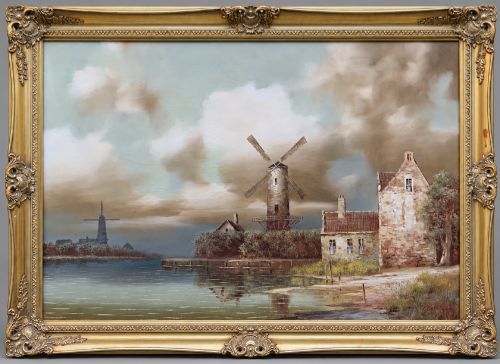
Dutch canal artwork captures historic waterways and windmills in oil and canvas, offering timeless interior character.
Dutch Canal Artwork
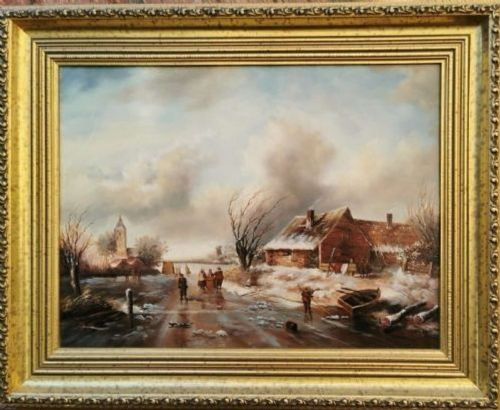
When searching for Dutch canal artwork, buyers encounter oil paintings depicting historic waterways, maritime scenes, and winter landscapes. These canvases capture scenes of urban canals, Rotterdam ports, and freezing waterways with ice skaters.
The selections available here span from Victorian interpretations to mid-century impressionist canvases and early twentieth-century views. Works originate from various periods including the nineteenth century, nineteen fifty, and nineteen sixty, alongside specific styles like the Dutch school and post-impressionism.
Most items on this page manifest as framed oil paintings on canvas, frequently incorporating wood and gesso frames. Buyers also find watercolours and depictions referencing specific locations like Oudehoofpoort in Rotterdam.
How they were made
These works rely primarily on oil paint applied to canvas supports, utilising the slow-drying medium to build rich textures and tonal depths. Painters employed brushwork ranging from tight realism to looser impressionistic strokes.
Frames form an integral part of the physical pieces, frequently constructed from wood and finished with gesso and gilt wood details. These ornate or simple wooden surrounds complement the maritime and winter subjects contained within.
Dutch Canal Artwork Retail Price Guide 2026
Typical asking prices for dutch canal artwork among the pieces listed under this phrase on Sellingantiques today, from the lower quarter to the upper quarter. They describe what is for sale here now, not the wider market.
Children ice skating on frozen Dutch waterways feature charmingly in mid-century winter landscape oils.
What varies in quality
Quality differences rest primarily in the handling of light and atmosphere by the artist, distinguishing atmospheric depth from flat replication. Skilled brushwork brings movement to water and winter skies, whereas lesser examples lack dynamic engagement.
The preservation of both the canvas and the accompanying gesso or gilt wood frame dictates overall integrity. Original frames that retain their historic finish elevate the presentation of nineteenth-century and vintage canvases alike.
William Raymond Dommersen·Jan van Couver·William Dommersen
The Dutch Canal Artwork Glossary
- Canvas
- A heavy woven fabric used as a surface for oil painting. It provides the foundational tension and texture for nineteenth-century and mid-century works.
- Gesso
- A plaster-like mixture applied to wooden frames before gilding or painting. It creates a smooth base for decorative mouldings.
- Oil paint
- A slow-drying paint made with pigments suspended in oil. This medium allows artists to blend colours seamlessly and build rich surface textures.
- Gilt wood
- Wood surfaces coated with gold leaf or a gold-coloured metallic finish. This technique enhances the decorative appeal of period frames.
- Dutch School
- A stylistic classification reflecting traditional painting methods and subjects originating from the Netherlands. It encompasses maritime views and realistic landscapes.
Dutch Canal Artwork: Frequently Asked Questions
What periods do these paintings cover?
The available inventory spans from the Victorian era and nineteenth century into the mid-twentieth century. Dates range from eighteen fifty through to nineteen sixty.
Buyers encounter various stylistic movements within this timeframe, including post-impressionism and nineteenth-century maritime traditions.
What materials were used for these artworks?
Most pieces utilise oil paint applied directly to canvas supports. Wood, gesso, and gilt wood are standard materials found in the construction of the accompanying frames.
Watercolours on paper also appear alongside traditional oil paintings.
How do I identify different styles?
Styles range from Victorian realism and the Dutch school to mid-century impressionism. Each style employs distinct brushwork and treatment of light to depict canals and winter scenes.
Examining the handling of water, skies, and figures helps determine the artistic approach.
How should I display these paintings?
These works suit traditional and eclectic interiors, typically hung on sturdy walls away from direct sunlight. Their wooden and gilt frames complement period or vintage decor schemes.
Maintaining stable indoor humidity levels helps preserve both the canvas and the frame.