



Dutch Burr Walnut
Dutch burr walnut furniture combines rich, swirling timber with bold baroque forms, offering both generous storage and striking decorative presence.
Dutch Burr Walnut
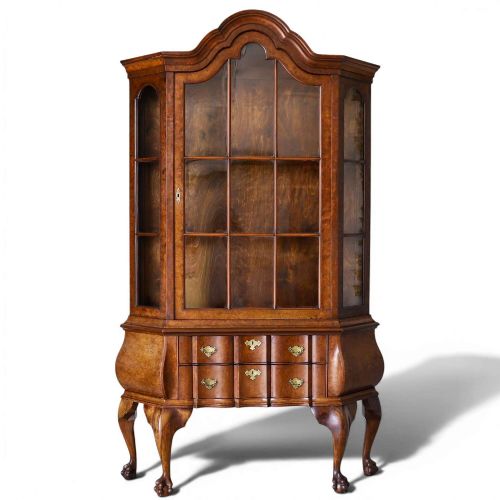
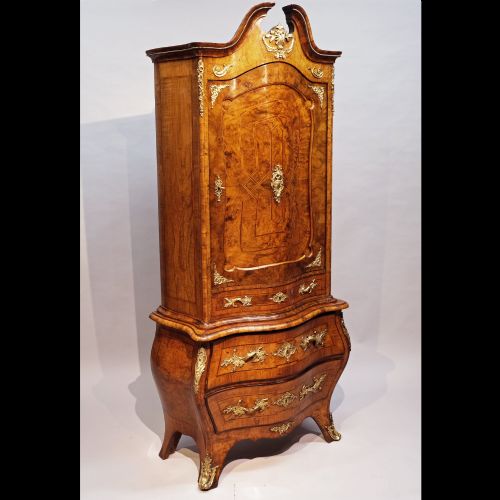
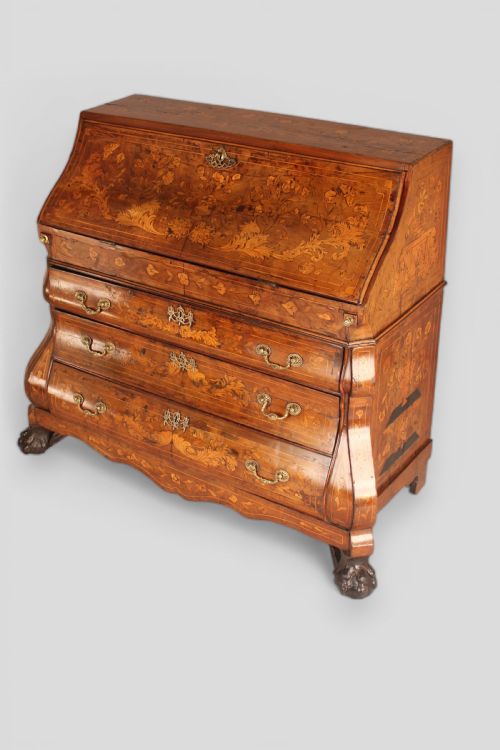
Dutch burr walnut pieces encompass robust bureaux, display cabinets, and bombé-fronted desks originating from various centuries.
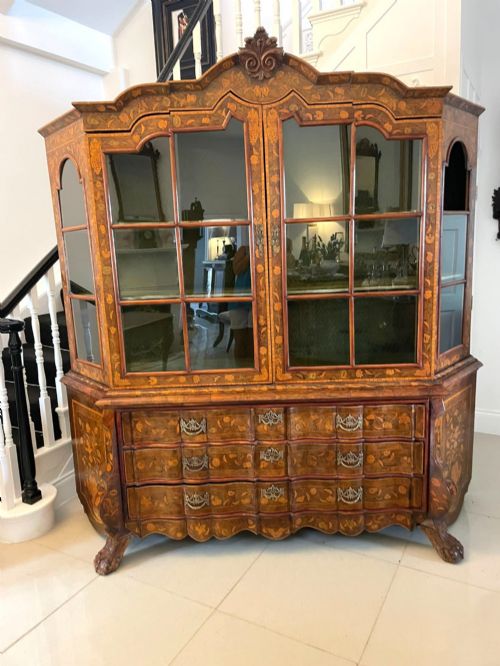
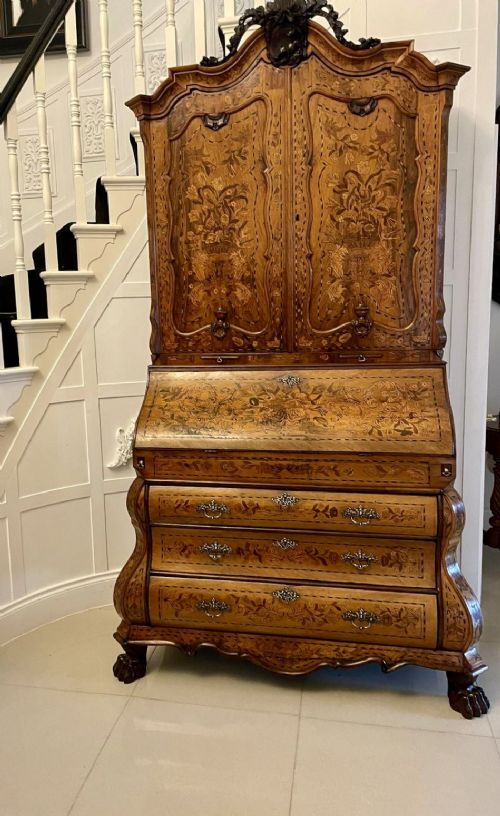
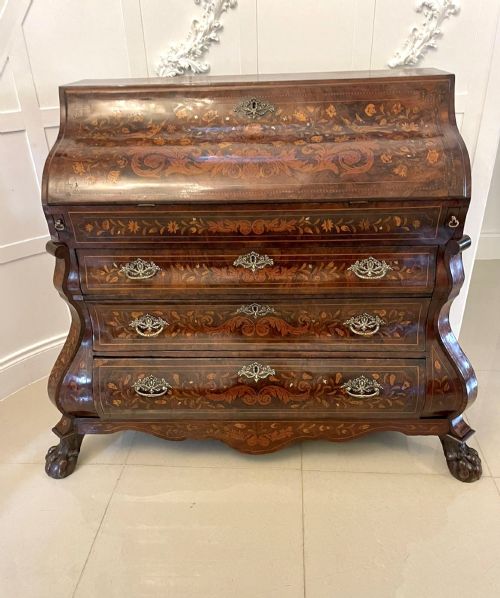
The version most commonly met on this page is the bureau or bureau bookcase, frequently decorated with elaborate floral marquetry.
Dated examples span from the mid-eighteenth century through the nineteenth century, reflecting enduring continental styles.
Materials and construction methods
Craftsmen applied thin veneers of highly figured burr walnut over secondary woods like oak and fruitwood, often incorporating intricate floral marquetry.
Structural mounts frequently utilise cast brass and ormolu to accent key functional elements like drawer pulls and escutcheons.
Dutch Burr Walnut Retail Price Guide 2026
Typical asking prices for dutch burr walnut among the pieces listed under this phrase on Sellingantiques today, from the lower quarter to the upper quarter. They describe what is for sale here now, not the wider market.
Certain floral marquetry panels hide tulip and floral stems so intricate that individual petals appear to curl outward in the walnut grain.
Factors determining quality
The visual depth of the grain and the complexity of the floral marquetry inlay distinguish superior examples from simpler ones.
Overall proportion, particularly the execution of the bombé profile, dictates the visual success of the piece.
The Dutch Burr Walnut Glossary
- Bombe
- A bulging or outward-curving swollen profile typical of continental furniture fronts. This swelling adds sculptural weight to cabinets and bureaux.
- Marquetry
- Decorative patterns formed by fitting together thin slices of various woods and other materials. Floral designs are especially prominent in this tradition.
- Bureau bookcase
- A writing desk with a sloping fall-front combined with upper shelving enclosed by doors. It provides both a working surface and display space.
- Lowboy
- A small side table with drawers, raised on tall legs. These compact pieces showcase the figured grain on a horizontal surface.
Dutch Burr Walnut: Frequently Asked Questions
How do I care for burr walnut?
Keep wooden surfaces away from direct sunlight and steady temperature shifts to protect the delicate veneer.
Apply traditional wax polish sparingly to maintain the natural sheen without building up heavy residue.
Where were these cabinets placed?
Owners positioned these striking pieces in principal reception rooms to display valuable porcelain and books.
Bureaux served private study functions, housing correspondence and important documents behind locked fall-fronts.
Are eighteenth and nineteenth century pieces different?
Earlier eighteenth-century items often exhibit more pronounced bombé curves and intricate floral marquetry details.
Nineteenth-century revival examples tend toward stricter structural lines while retaining the characteristic burr walnut veneers.
What is a floral marquetry inlay?
Craftsmen cut delicate botanical motifs from contrasting woods and set them flush into the primary walnut surface.
This technique turns functional cabinet doors and desk lids into elaborate botanical pictures.