



Duplex Burner Paraffin Lamp
A duplex burner paraffin lamp combines bright twin-wick illumination with brass, marble, and coloured glass.
Duplex Burner Paraffin Lamp
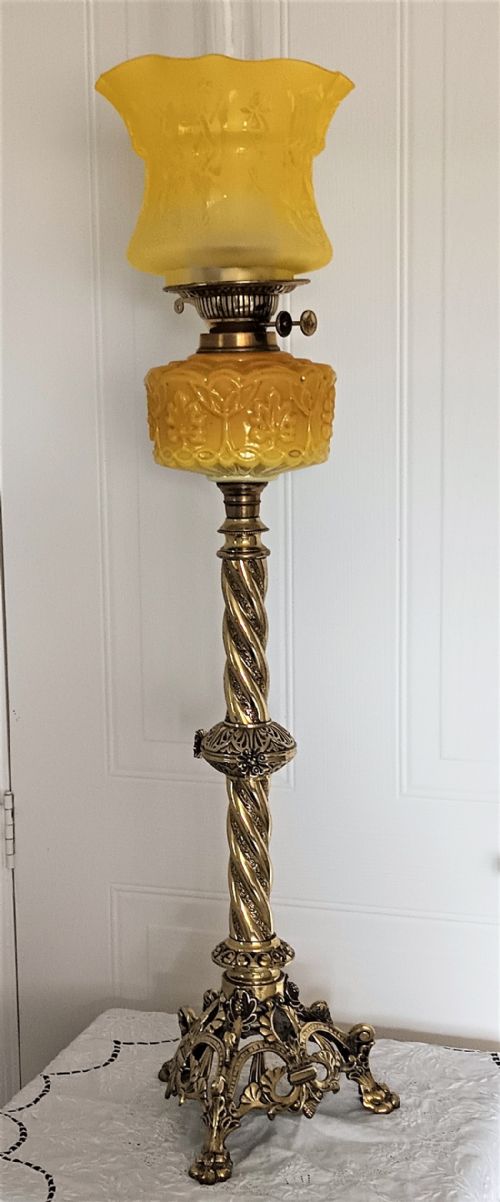
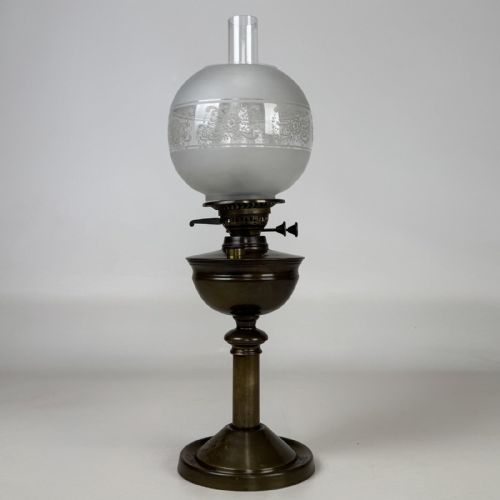
A duplex burner paraffin lamp is a domestic lighting fixture designed to burn lamp oil through two parallel wicks, producing a stronger flame than single-wick predecessors. These pieces emerge predominantly from the Victorian and Edwardian eras, spanning the nineteenth and early twentieth centuries. The listings show forms ranging from heavy brass columns to ceramic and glass reservoirs.
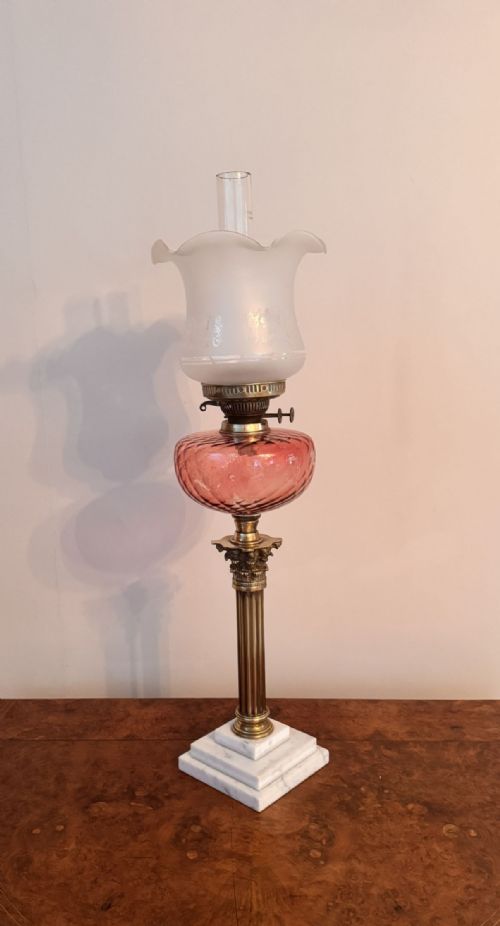
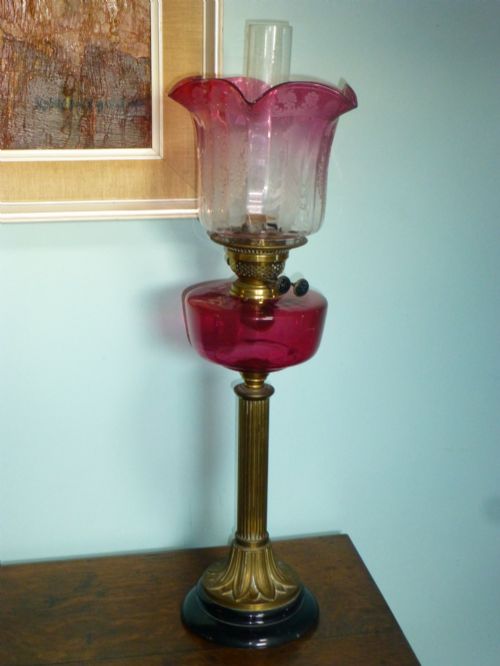
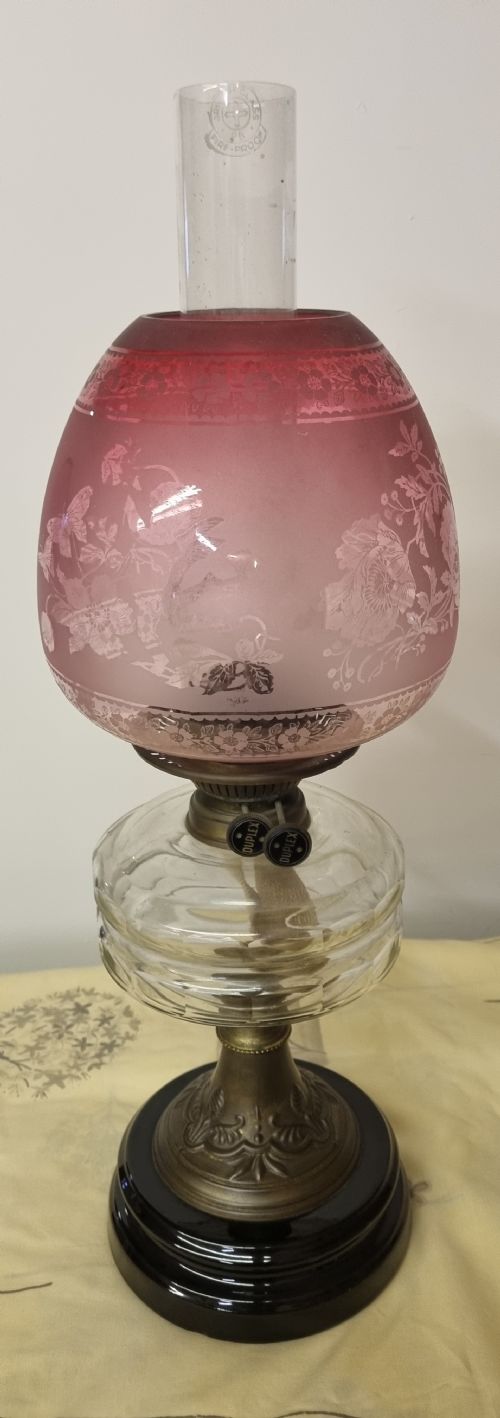
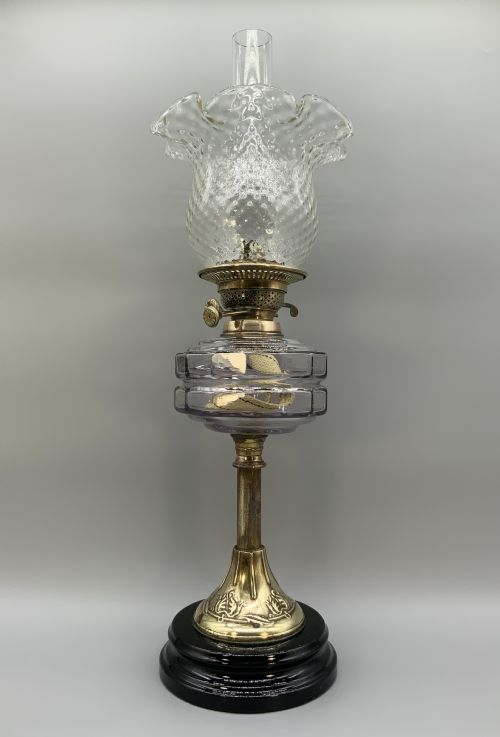
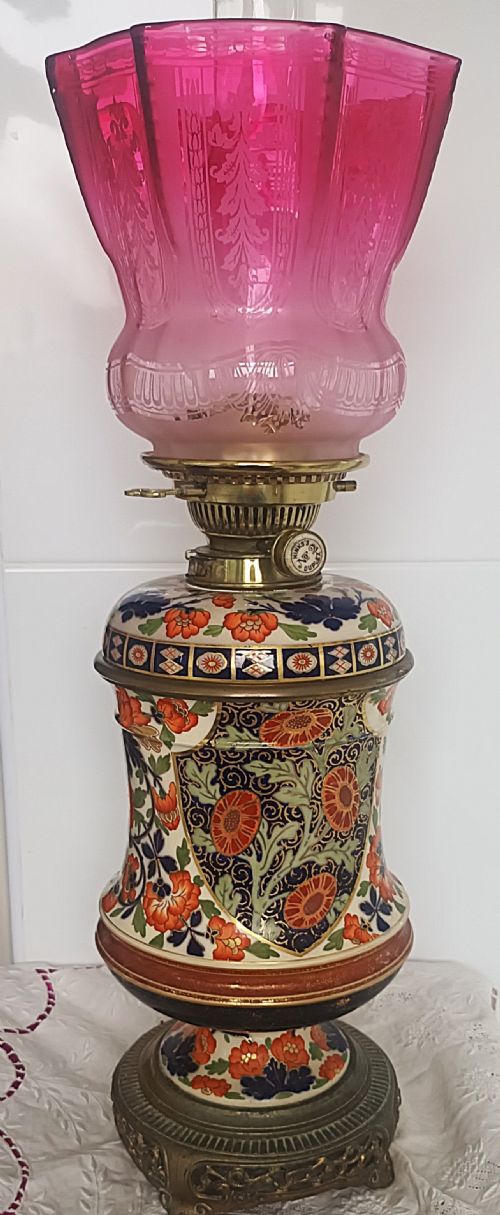
The most common examples encountered on this page feature polished brass bases paired with coloured glass shades, such as cranberry, pink, or frosted glass. Tall column designs, including Corinthian and reeded styles, appear frequently alongside table lamps with hand-blown or etched shades. Some examples incorporate adjustable stands or ceramic fonts supplied by specific makers.
Origins centre on English production from the mid-nineteenth century onward, reflecting a period when paraffin lighting became standard in domestic interiors. Collectors find both simple household models and elaborate examples featuring ormolu mounts, crystal fonts, and botanical glass shades. Each piece demonstrates the transition from earlier oil and candle lighting to more efficient petroleum systems.
How they were made
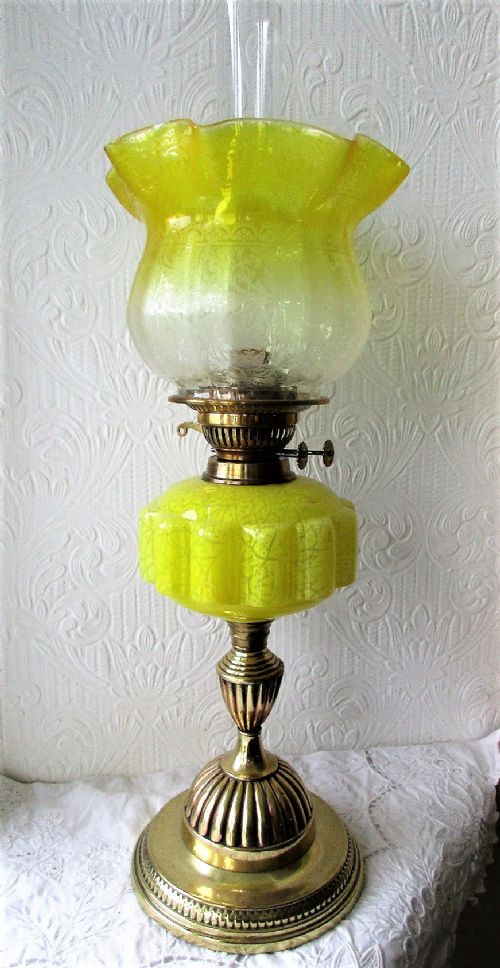
Construction relies heavily on cast and spun brass for columns, bases, and burner mechanisms, providing the necessary weight and stability for tall table lamps. Manufacturers combined metalwork with moulded or hand-blown glass, creating contrasting reservoirs and shades in cranberry, opaline, and frosted finishes. Ceramic and marble components added further structural support and varied colour to the base.
Burners incorporate twin flat wicks operated by thumbwheels, designed to draw paraffin efficiently and disperse light evenly through the glass chimney and shade. Metal parts often receive protective plating or retain their original ormolu and polished brass finishes. Glass shades feature etched botanical patterns or hand-blown forms shaped while hot.
Duplex Burner Paraffin Lamp Retail Price Guide 2026
Typical asking prices for duplex burner paraffin lamp among the pieces listed under this phrase on Sellingantiques today, from the lower quarter to the upper quarter. They describe what is for sale here now, not the wider market.
Nineteenth-century lighting displays significant variety in height, ranging from compact table models to tall telescopic stands.
What varies in quality
Quality in a duplex burner paraffin lamp rests on the substance of the materials and the crispness of the casting. Heavy brass columns, substantial marble bases, and thick, resonant glass fonts or shades denote better production standards than lighter, pressed-metal alternatives. The precision of the burner mechanism and the weight of the metal components set finer pieces apart.
The artistry of the shade significantly influences the character of the lamp. Hand-blown cranberry glass, intricate acid-etched tulip designs, and crystal fonts command attention for their visual depth and manufacturing skill. Plain frosted glass or standard clear fonts represent simpler domestic utility rather than decorative ambition.
Hinks·Taylor Tunnicliff·Messenger
The Duplex Burner Paraffin Lamp Glossary
- Duplex burner
- A lighting mechanism utilising two parallel flat wicks to create a wider, brighter flame than single-wick burners. This double wick system required a dedicated twin-slot gallery.
- Paraffin
- A hydrocarbon liquid fuel derived from petroleum or shale, commonly used in nineteenth-century lamps after the decline of whale oil and camphene. It provided a steady, accessible light source for domestic interiors.
- Cranberry glass
- A rich red-pink transparent glass coloured by the addition of gold chloride during melting. It appears frequently in Victorian lamp shades and fonts.
- Opaline glass
- A pale, translucent white glass that diffuses light softly without total opacity. It was popular for Victorian and Edwardian lamp shades.
Duplex Burner Paraffin Lamp: Frequently Asked Questions
How do duplex burners work?
A duplex burner uses two parallel flat wicks housed side by side in a single gallery, fed by the oil reservoir below. Turning the control knobs raises or lowers both wicks simultaneously to adjust the flame height.
Air tubes beneath the burner supply oxygen to both flames, ensuring a steady, bright light without excessive smoke. A glass chimney sits atop the burner to stabilise the draught and protect the flame.
What fuel should I use?
Modern paraffin lamp oil or purified liquid paraffin is suitable for nineteenth-century burners. Avoid standard kerosene or motor fuels, as they produce heavy soot and unpleasant odours.
Ensure the wicks are trimmed level and fully saturated with oil before lighting to prevent burning the cotton fabric. Allow fresh wick to soak for at least ten minutes prior to first ignition.
How are chimneys measured?
Chimneys are measured by the outside diameter of the fitter base where it inserts into the brass gallery. Height is also measured from the base to the top flare of the glass.
Matching the correct fitter size is essential for a secure fit in the duplex gallery. A proper fit ensures stable airflow and prevents the chimney from wobbling during use.
Can these lamps be wired for electricity?
Many collectors prefer to keep duplex lamps in their original oil-burning state to preserve historical integrity. However, some owners choose to pass a cord through the central column for electric conversion.
Professional conversion allows the use of standard bulbs while retaining the burner and shade. Reversible methods are recommended to avoid permanent alteration of antique metal components.