





Duet Sheet Music Stand
A duet sheet music stand holds two scores side by side, bringing elegance and shared performance space to any music room.
Duet Sheet Music Stand
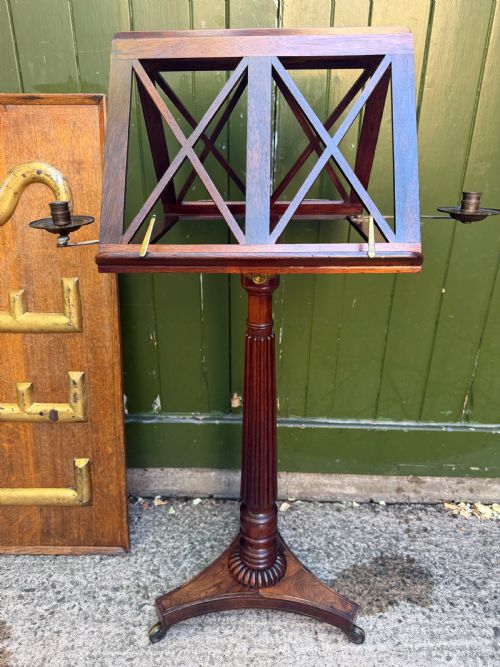
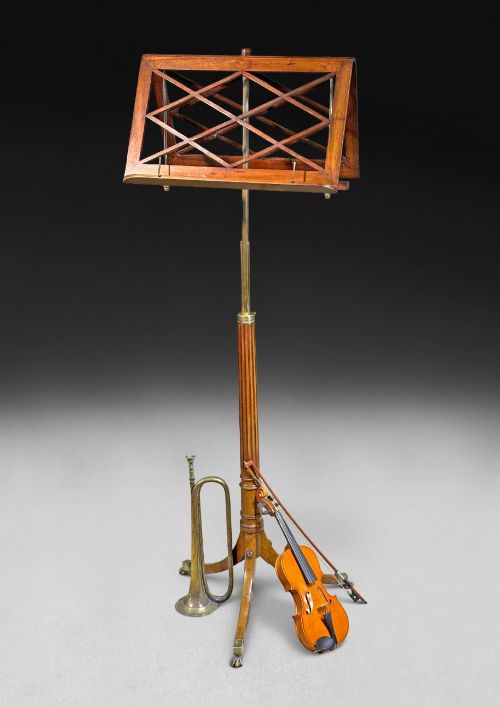
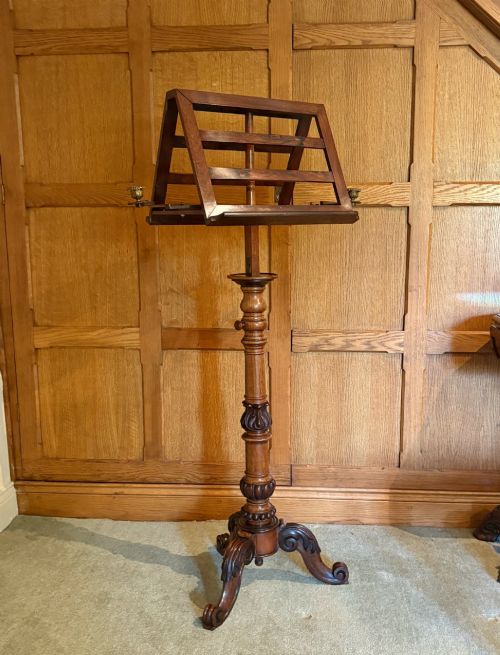
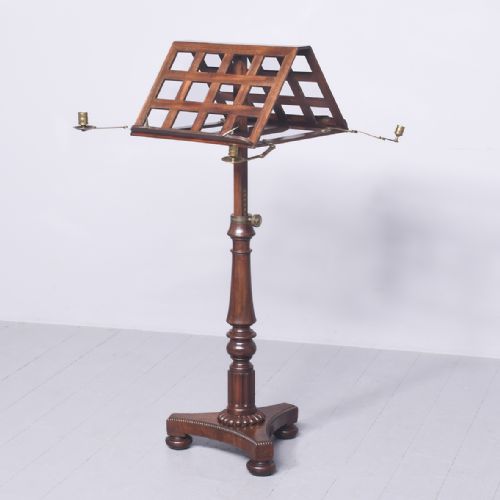
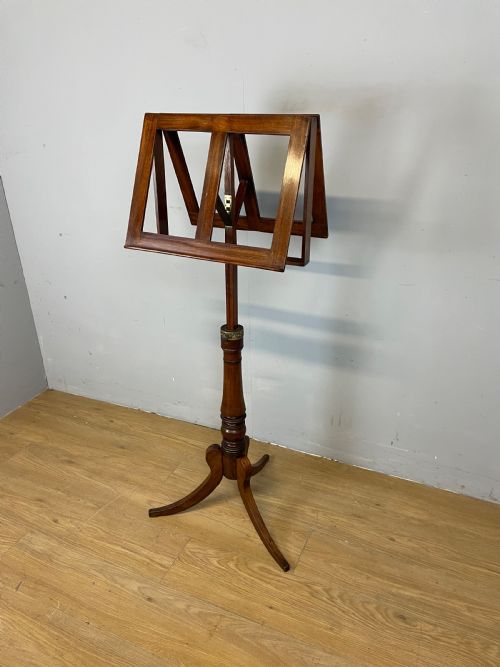
A duet sheet music stand provides a sturdy and adjustable double desk designed for two musicians to play together from shared or separate scores. These pieces date across the Georgian, Regency, and Victorian periods, spanning the nineteenth century.
The most common examples on this page are fashioned from mahogany and rosewood, often featuring adjustable mechanisms and tripod bases. Makers such as Gillows produced notable pieces during these eras, uniting practical utility with refined cabinetmaking.
How they were made
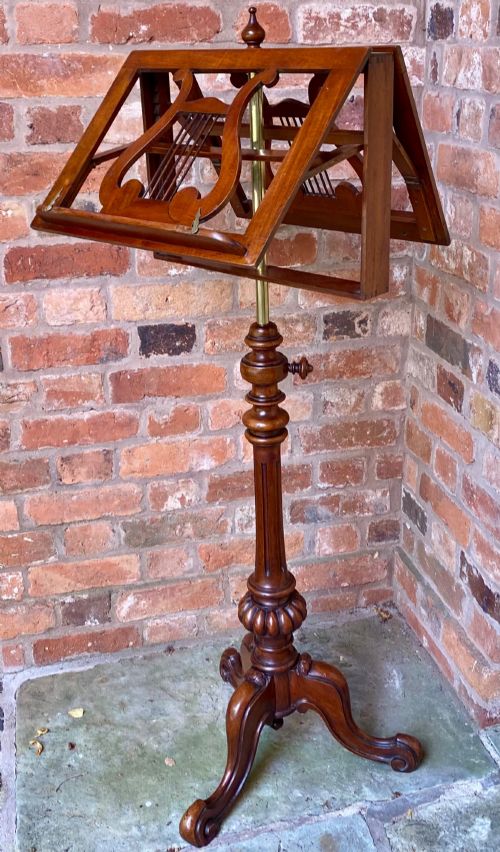
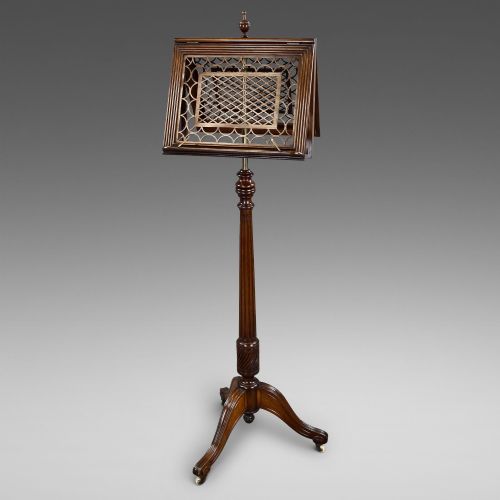
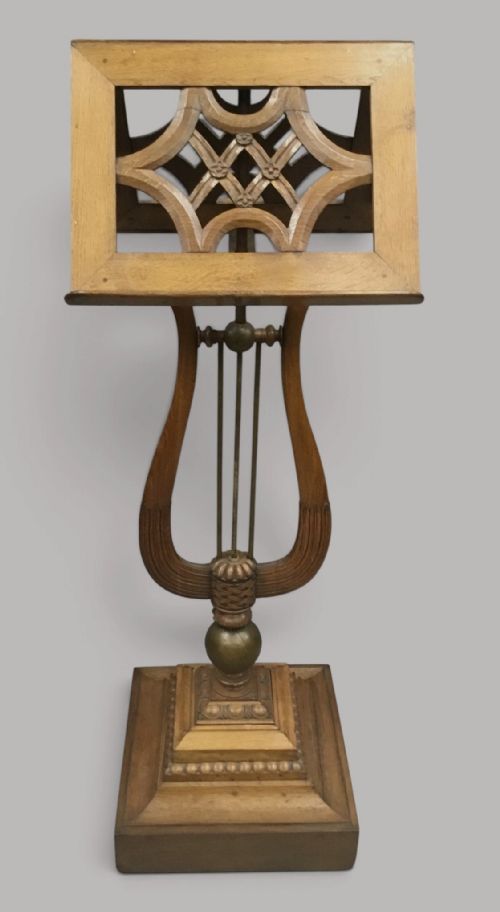
Cabinetmakers utilised dense timbers like mahogany, rosewood, burr walnut, and oak to build these stands, frequently incorporating intricate fretwork and decorative inlay. The structural integrity relies on substantial turned columns and tripod bases designed to support heavy bound volumes.
Adjustable brass fittings enable the dual desks to tilt and rise, demonstrating the precise metalwork and mechanical ingenuity of nineteenth-century workshops. The surfaces display rich polished grains that highlight the natural figure of the wood.
Duet Sheet Music Stand Retail Price Guide 2026
Typical asking prices for duet sheet music stand among the pieces listed under this phrase on Sellingantiques today, from the lower quarter to the upper quarter. They describe what is for sale here now, not the wider market.
What varies in quality
The distinction between standard and exceptional pieces rests upon the finesse of the timber selection and the complexity of the carving or inlay. Elaborate fretted music desks and finely figured burr walnut surfaces mark out the superior examples from simpler utilitarian designs.
Subtleties in the brass adjustment mechanisms and the sculptural grace of the tripod bases further differentiate the output of renowned makers like Gillows from anonymous workshop production.
Gillows
The Duet Sheet Music Stand Glossary
- Tripod base
- A three-legged support structure providing stability for tall standards. This configuration ensures the stand remains balanced while holding heavy scores.
- Fretted
- Ornamentation pierced through the wood to create openwork patterns. This decorative technique lightens the visual weight of the music desk.
- Burr walnut
- Timber taken from the warted growth of a walnut tree, yielding swirling grain patterns. Cabinetmakers prized this veneer for high-status furniture.
- Lectern
- A reading stand designed to hold books or manuscripts at an angle. In these listings, sturdy oak versions double in form as lecterns.
Duet Sheet Music Stand: Frequently Asked Questions
What is a duet sheet music stand?
A duet sheet music stand is a specialised nineteenth-century stand featuring two adjoining desks designed for paired musicians.
These pieces emerged across the Georgian, Regency, and Victorian eras to accommodate shared piano or vocal practice.
How do you adjust the height?
Adjustment typically relies on a central brass screw mechanism or sliding stem integrated into the turned wooden column.
Turning the key or collar allows the dual desks to rise or lower according to the player's preference.
Which woods were used?
Cabinetmakers utilised dense hardwoods including mahogany, rosewood, burr walnut, and oak.
Mahogany and rosewood dominate the surviving pieces, often complemented by brass fittings and intricate inlay.
Are these stands stable?
The tripod base design distributes weight evenly across three feet to support heavy bound music books.
Heavier timber choices like oak and mahogany further enhance the overall balance of the structure.