





Dropleaf Side Table
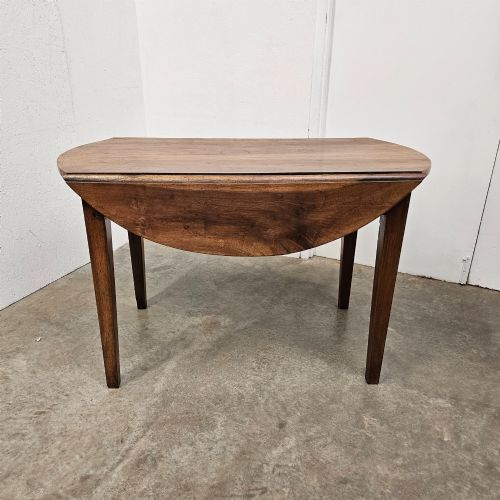
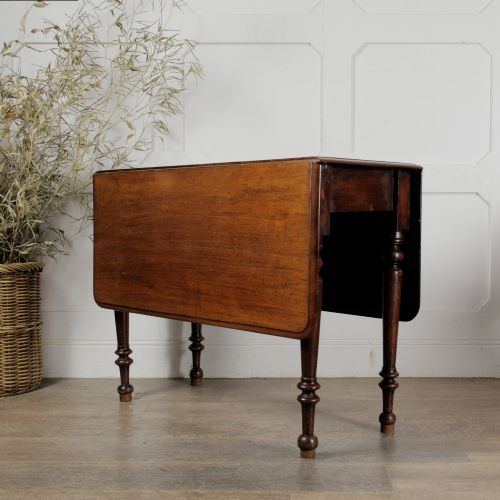
A dropleaf side table brings folding leaves and compact proportions together, offering surface space that expands when needed and tucks away cleanly.
Dropleaf Side Table
When searching for a dropleaf side table, a buyer encounters pieces designed to save space while providing practical surfaces for lamps, drinks, or books. The selection ranges from compact Edwardian coffee tables to Georgian mahogany formats and earlier oak gateleg variants.
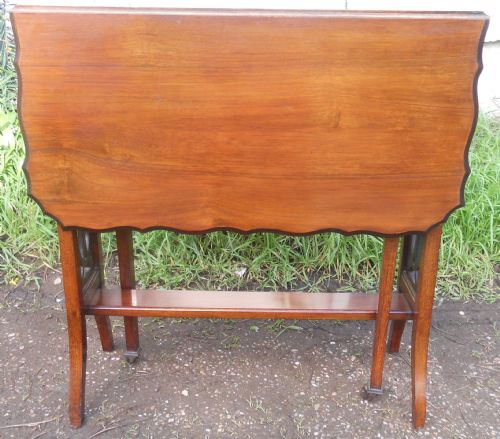
The most common examples on this page are Edwardian mahogany coffee tables featuring folding flaps supported by hinged wooden brackets or swing legs. These lighter pieces sit alongside heavier Georgian dining and Pembroke formats built from solid timber.
Origins stretch across the eighteenth, nineteenth, and early twentieth centuries, encompassing styles from Regency and William IV to Chinoiserie and Rustic Farmhouse. Each period brings distinct turning, joinery, and timber choices to the folding leaf mechanism.
How they were made
Joinery relies heavily on solid hardwoods such as mahogany, oak, and walnut, often enhanced with satinwood, boxwood inlay, or burr walnut veneers. Frames utilise traditional mortise and tenon joints to withstand the repeated movement of folding leaves.
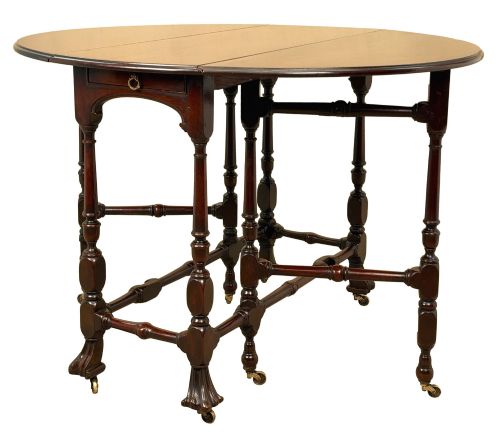
Hinges and pivoting supports secure the drop leaves to the fixed central top, whether through simple wooden gate legs swinging outward or brass rule joints that conceal the pivot mechanism when flat. Secondary materials like iron and brass appear in fittings, handles, and castor wheels.
Dropleaf Side Table Retail Price Guide 2026
Typical asking prices for dropleaf side table among the pieces listed under this phrase on Sellingantiques today, from the lower quarter to the upper quarter. They describe what is for sale here now, not the wider market.
Listings span multiple eras from the eighteenth century to the 1920s, featuring oak, mahogany, walnut, and satinwood across side, coffee, and Pembroke forms.
What varies in quality
The sophistication of the timber selection and decorative detail dictates the standing of each piece, moving from plain farmhouse oak to finely figured burr walnut and intricate Chinoiserie lacquering. Superior examples display seamless matching of grain across the leaves and the central top when fully extended.
Construction integrity hinges on how smoothly the drop leaf supports operate and whether the hinges remain flush with the timber surface. Tables with rigid gateleg actions or precise rule joints demonstrate a higher grade of cabinetmaking than simpler folding brackets.
The Dropleaf Side Table Glossary
- Drop leaf
- A table top with hinged flaps on one or two sides that fold down to save space or lift up to enlarge the surface.
- Gateleg table
- A table with hinged legs that swing outward like a gate to support the drop leaves when raised.
- Pembroke table
- A small rectangular table with two hinged leaves and usually one or two drawers, popular in the Georgian period.
- Rule joint
- A moulded joint connecting a table top to its drop leaf, designed to hide the gap and the hinge mechanism in both positions.
- Satinwood
- A durable, yellowish-gold timber frequently utilised for decorative banding and stringing on mahogany furniture.
Dropleaf Side Table: Frequently Asked Questions
How do you support the leaves on a dropleaf side table?
Most leaves are supported by either a swinging wooden gateleg that pivots out from the central frame or by wooden rule-joint brackets that slide or flip into position underneath.
These mechanisms distribute weight evenly across the extended surface, allowing the flaps to bear moderate weight without sagging.
Where should I place a dropleaf side table in a room?
Their folding design makes them ideal for tight spots beside sofas, beds, or in hallways where full-size furniture blocks movement.
Drop one leaf against a wall to conserve floor space, then lift both sides when guests arrive or extra surface area is needed.
How do I tell a Georgian dropleaf table from an Edwardian one?
Georgian tables typically utilise solid mahogany or walnut with deep patination and heavier framing suited for dining or Pembroke use. Edwardian versions frequently appear as lighter coffee tables or occasional pieces, often featuring boxwood inlay and satinwood banding.
Construction details also help distinguish the eras, with Georgian cabinetmakers relying on hand-cut dovetails and older jointing techniques.