
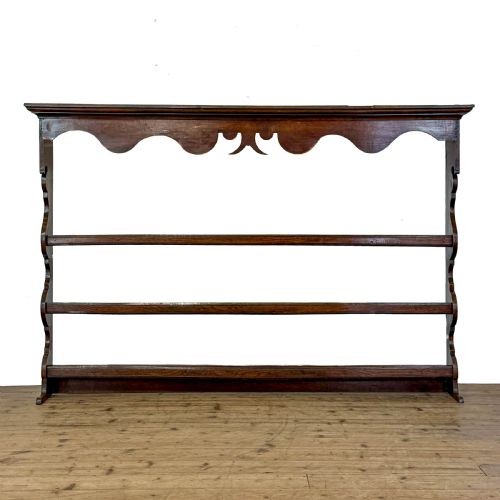
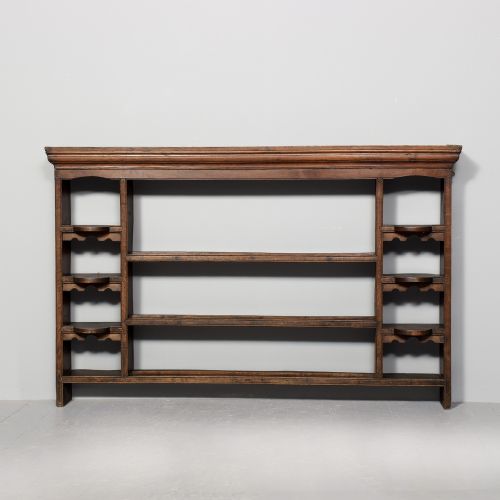


Dresser Top Rack
A dresser top rack provides open shelving to display plates and storage for kitchen ceramics.
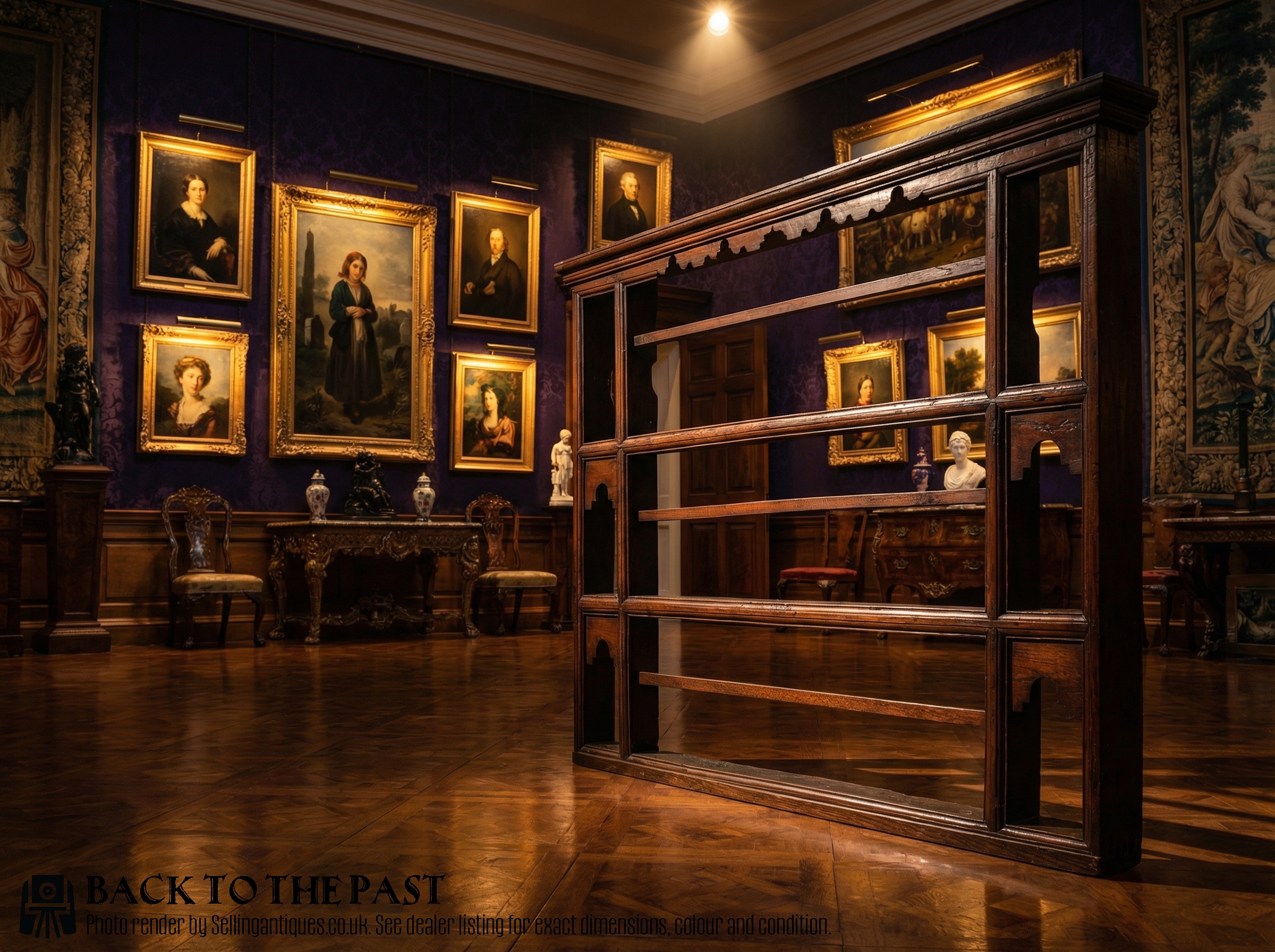
Dresser Top Rack
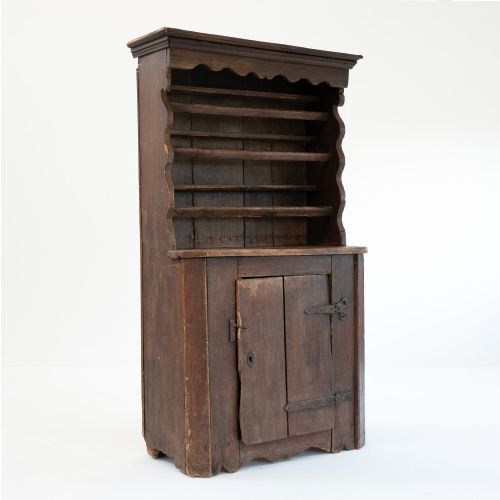
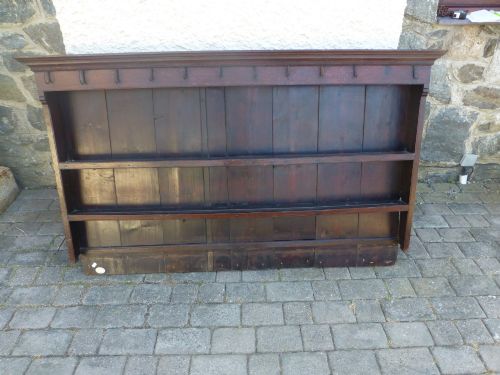
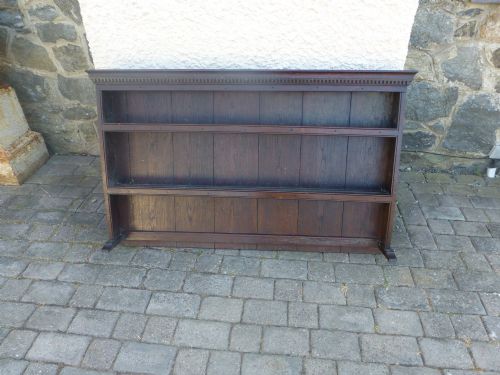
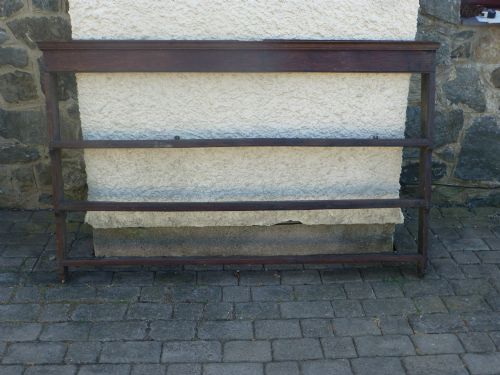
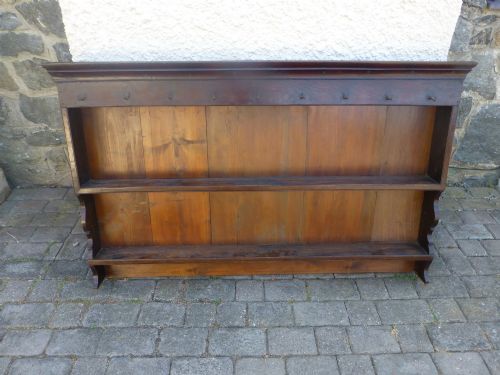
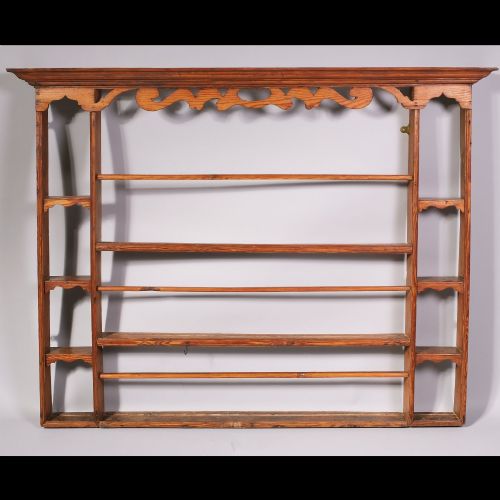
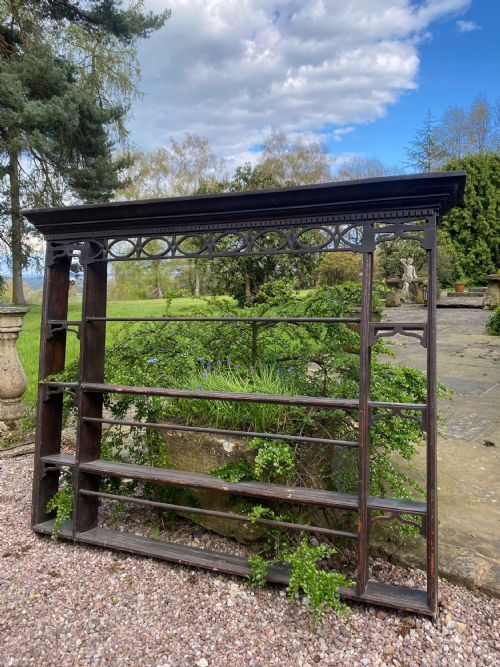
A dresser top rack is a wall-mounted or base-supported open shelf unit designed specifically to hold ceramic plates and platters. When you search for a dresser top rack, you encounter open timber frameworks meant to sit atop a matching base or hang directly from a wall.
The pieces appearing here span the eighteenth and nineteenth centuries, taking the form of wall-mounted shelves, open cabinets, and upper sections separated from their original dresser bases. Oak and pine dominate the structural forms, reflecting utilitarian kitchen origins in English, Irish, and country houses.
Most examples function as standalone wall racks or removable upper sections designed to display delftware and china. These pieces bring functional historic shelving into contemporary spaces, preserving domestic storage traditions from the Georgian and Victorian eras.
What varies in quality
Quality in a dresser top rack rests upon the integrity of the timber, the subtlety of moulding profiles, and the retention of original surfaces. Finer pieces display careful joinery in their plate grooves and cornice details, whereas utilitarian examples remain plain and functional.
The presence of original backboards, hanging fixings, and early painted or waxed surfaces distinguishes superior survivals from later adaptations. Proportion and timber selection also set apart modest country workshop output from more ambitious regional cabinetmaking.
Some historic racks retain faint traces of flour dust and historic spice stains trapped deep within the plate grooves.
The Dresser Top Rack Glossary
- Delft rack
- A specialised wall shelf featuring grooves or rails designed to hold tin-glazed earthenware plates upright. These racks keep decorative ceramics visible and secure in domestic kitchens.
- Welsh dresser
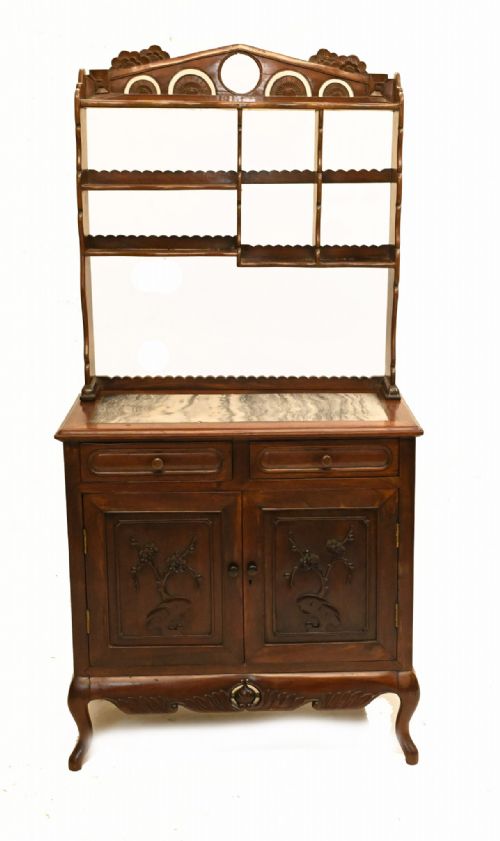
- A traditional dining room or kitchen furniture form combining a lower base of cupboards and drawers with an upper plate rack. The upper rack frequently exists separately as a standalone wall unit.
- George III
- A British stylistic period spanning the mid to late eighteenth century, known for robust proportions and straightforward construction in regional oak furniture. Pieces from this era prioritize utility and sturdy joinery.
- Spice shelf
- A small subsidiary tier or compartment incorporated within a larger rack structure for storing condiments and small kitchen vessels. These additions introduce compartmented storage to open shelving.
- Pine
- A softwood commonly utilised in country furniture and regional kitchen pieces for its accessibility and workable nature. Pine sections often accept historic painted finishes.
Dresser Top Rack: Frequently Asked Questions
Are dresser top racks meant for walls?
Many examples function as wall-hanging shelves designed to mount directly onto kitchen or dining room walls. Other variants serve as the upper component of a larger dresser combination.
Buyers should examine the backboards and hanging points to determine whether a specific piece requires wall support or sits upon a sideboard base.
How do I date an oak rack?
Dating relies upon construction methods, timber characteristics, and edge mouldings visible across the framework. Eighteenth-century examples often display hand-sawn board marks and pegged joinery.
Later nineteenth-century pieces tend to show more uniform machining techniques and standardised dimensions in the plate grooves.
Can these racks hold heavy plates?
Solid hardwood racks constructed from oak possess the structural strength required to support heavy ceramic platters and dinner services. The depth of the plate groove and the angle of the retaining rail prevent items from sliding forward.
Pine and lighter softwood versions suit decorative earthenware and lighter display pieces rather than heavy stoneware.
Did these racks belong to dressers?
Several pieces functioned originally as the upper detachable superstructure of a two-part kitchen dresser. Over time, upper racks frequently separated from their base cabinets to serve as standalone wall shelving.
Evidence of former attachment points or flush lower edges often reveals whether a rack once sat atop a matching cupboard.